How this is written
Sources and method
Mythology is a field where the sources disagree with each other constantly. This page says how that is handled, so you can judge any claim on the site for yourself.
Every claim on this site is meant to be checkable by you, which means the working has to be visible. This page sets out how sources are chosen, how conflicts between them are handled, what counts as too uncertain to state, and where the pictures come from.
The hierarchy of evidence used here
Not all sources for a myth are equal, and the ranking is not a matter of taste.
- The ancient text itself, in a standard critical edition or a translation made from one. Hesiod's Theogony for Greek succession myth; the Poetic Edda for Norse; the Pyramid Texts, Coffin Texts and Book of the Dead for Egyptian; the Kojiki and Nihon Shoki for Japanese; the critical edition of the Mahabharata for the epic material.
- Ancient compilers and mythographers — Apollodorus, Ovid, Snorri Sturluson, Plutarch, Pausanias. Indispensable, because in many cases they preserve stories nothing else does, but each is centuries removed from what he describes and each has an agenda. They are cited by name for exactly this reason.
- Documentary and material evidence: inscriptions, dedications, temple archives, votive deposits, the lead oracle tablets from Dodona, the Ugaritic and cuneiform tablets. This is the strongest evidence for what people actually did, as against what poets wrote.
- Modern scholarship, for context, dating and the state of a debate — never as a source for a myth's content, only for how the field reads it.
Comparative reconstruction sits outside the hierarchy. Proto-Indo-European parallels are genuinely illuminating and are mentioned where they are widely accepted, but a reconstructed *dyeus ph2ter is a linguistic argument, not a myth anybody told, and it is never presented as one.
When two sources disagree
The rule is that a conflict is displayed, never averaged. In practice that means a page will do one of three things.
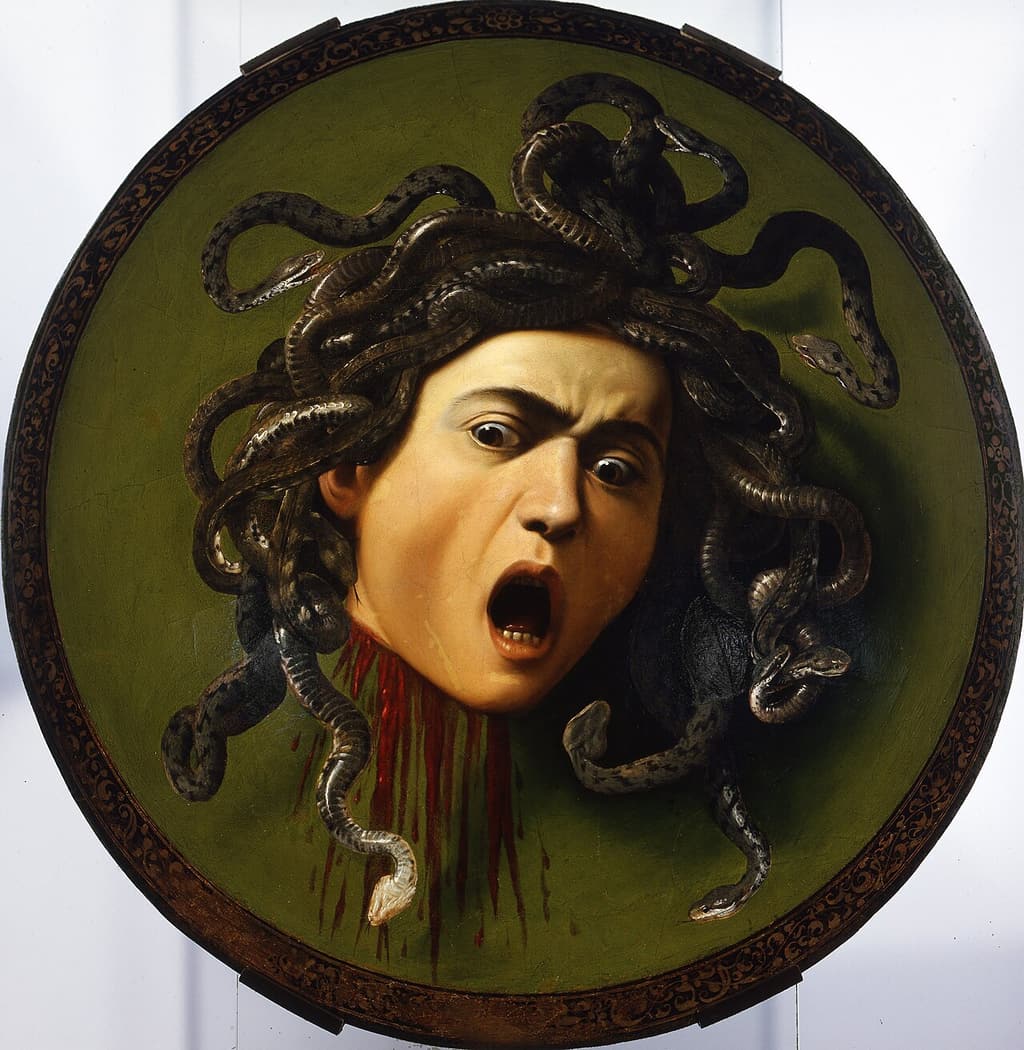
- Give both versions with the works named, where both are well attested and neither is obviously derivative. Medusa is a good example: Hesiod's Theogony simply lists her as one of three Gorgon sisters, mortal where her sisters were not, with no suggestion she was ever anything but a monster. Ovid's Metamorphoses, written some seven centuries later, supplies the famous version in which she is a beautiful woman assaulted in Athena's temple and punished for it. The second version is the one everybody knows and the first is the one the Greeks had.
- Follow one version and say so in the text, where a page needs a single narrative thread to be readable — as the myth retellings do. The retelling names the version it follows and notes where the alternatives diverge.
- State that the evidence does not settle it. Loki's place in the Norse cosmos, the relationship between the various Egyptian creation theologies of Heliopolis, Memphis and Hermopolis, and almost everything about pre-Christian Celtic religion fall here.
The specific problem with each tradition
Every one of the eight traditions on this site reaches us through a distorting medium, and the distortion is different in each case.
- Greek material is abundant but literary: most of it survives because Athenian dramatists and Alexandrian scholars found it useful, which over-represents Athens and the fifth century.
- Roman myth is entangled with Greek by deliberate ancient policy. Distinguishing an authentically Italic god from a Greek one wearing a Latin name is a live scholarly problem, and pages here flag it rather than resolving it silently.
- Norse myth survives almost entirely through thirteenth-century Christian Iceland, above all through one man, Snorri Sturluson, who was systematising the material for poets who no longer believed it.
- Egyptian religion spans three thousand years and several competing theological centres; there is no single Egyptian pantheon, and a page saying "the Egyptians believed" without a period attached is usually wrong.
- Celtic myth is the hardest case: medieval Irish and Welsh manuscripts written by Christian monks, plus Roman-era inscriptions from Gaul, plus a great deal of romantic invention from the last two centuries that has entered popular circulation as fact.
- Japanese myth comes from two eighth-century court chronicles compiled to legitimise an imperial line, so the political shaping is explicit in the sources themselves.
- Hindu material is not a dead tradition but a living religion, and the site says so: the same figures are worshipped today, and pages distinguish narrative from devotional practice rather than treating a Purana as a folk tale.
- Mesopotamian myth is recovered from broken tablets. Gaps are real, restorations are conjectural, and where a famous line depends on a reconstructed sign, that matters.
What is deliberately not stated
If a detail cannot be traced to a source, it does not appear, however often it circulates. That excludes a large body of familiar-sounding material: invented "Celtic tree calendars", modern neopagan festival cycles presented as ancient, colour and crystal correspondences attached to deities in the twentieth century, and the popular claim that any given god was "originally" a moon goddess. Where such a claim is widespread enough that its absence would look like an oversight, the page names it and explains where it actually came from.
Numbers, dates and transliteration
Dates are given as they are conventionally given in the field, with BCE/CE, and are approximate where the field is uncertain. Transliterations follow the most commonly recognised English form in the page title, with scholarly forms and native script given in the at-a-glance panel — so the Norse god is Odin in the text and Óðinn in the panel, and the Egyptian goddess is Isis in the text with the Egyptian Aset noted.
Corrections
A correction that names a text and a passage can be checked and made the same day; one that says a page is wrong cannot. The contact page gives the address. Substantive corrections change the page, not a comment thread under it.
The principal works, by tradition
These are the bodies of text each tradition's pages are built from. Individual pages name the specific work and, where it is short enough to point to, the specific book, hymn or passage.
Greek mythology
Homer, Iliad; Homer, Odyssey; Hesiod, Theogony; Hesiod, Works and Days; the Homeric Hymns; Apollodorus, Bibliotheca; Pausanias, Description of Greece; the Athenian tragedians.
Norse mythology
the Poetic Edda; Snorri Sturluson, Prose Edda; Heimskringla; Gesta Danorum; the Icelandic sagas; skaldic verse.
Egyptian mythology
the Pyramid Texts; the Coffin Texts; the Book of the Dead; the Contendings of Horus and Seth; temple inscriptions at Edfu and Dendera; Plutarch, On Isis and Osiris.
Roman mythology
Virgil, Aeneid; Ovid, Metamorphoses; Ovid, Fasti; Livy, Ab Urbe Condita; Varro (fragments); Roman religious calendars and inscriptions.
Celtic mythology
the Book of Invasions (Lebor Gabála Érenn); the Ulster Cycle; the Mythological Cycle; the Mabinogion; the Dindsenchas; Gallo-Roman inscriptions.
Japanese mythology
the Kojiki; the Nihon Shoki; the Fudoki; the Engishiki norito; Konjaku Monogatarishū; later kaidan and yōkai catalogues.
Classical Hindu mythology
the Rigveda; the Mahabharata; the Ramayana; the Bhagavata Purana; the Vishnu Purana; the Shiva Purana; the Devi Mahatmya.
Mesopotamian mythology
the Epic of Gilgamesh; Enuma Elish; the Descent of Inanna; Atrahasis; the Sumerian temple hymns; the Descent of Ishtar.
Where the pictures come from
Every image on this site is an out-of-copyright artwork, and the list below is the complete record of them: 99 plates, each with its artist, its date, the collection that holds the original where that is recorded, the page the details were read from, and the reason the work is in the public domain. No figure or myth page carries an image that is not on this list, and a page with no suitable public-domain artwork carries no image rather than a substitute.
Two-dimensional works — paintings, prints, papyri, manuscript pages — make up most of the list. A faithful photograph of a flat public-domain artwork was held to create no new copyright in the United States in Bridgeman Art Library v. Corel Corp. (1999), and the European Union legislated in the same direction in Article 14 of Directive (EU) 2019/790, but that position is not settled everywhere. So the test applied here is stricter than either: every file used also carries its own explicit public-domain or CC0 tag on its source record, which disclaims the reproduction right rather than arguing it away. Where an object is three-dimensional — a statue, a carved relief, an excavated artefact — a photograph of it is a separate work, so those appear only as pre-1929 published engravings or as photographs the holding institution has itself released.
If an attribution here is wrong or incomplete, that is a correction worth sending.
Greek mythology
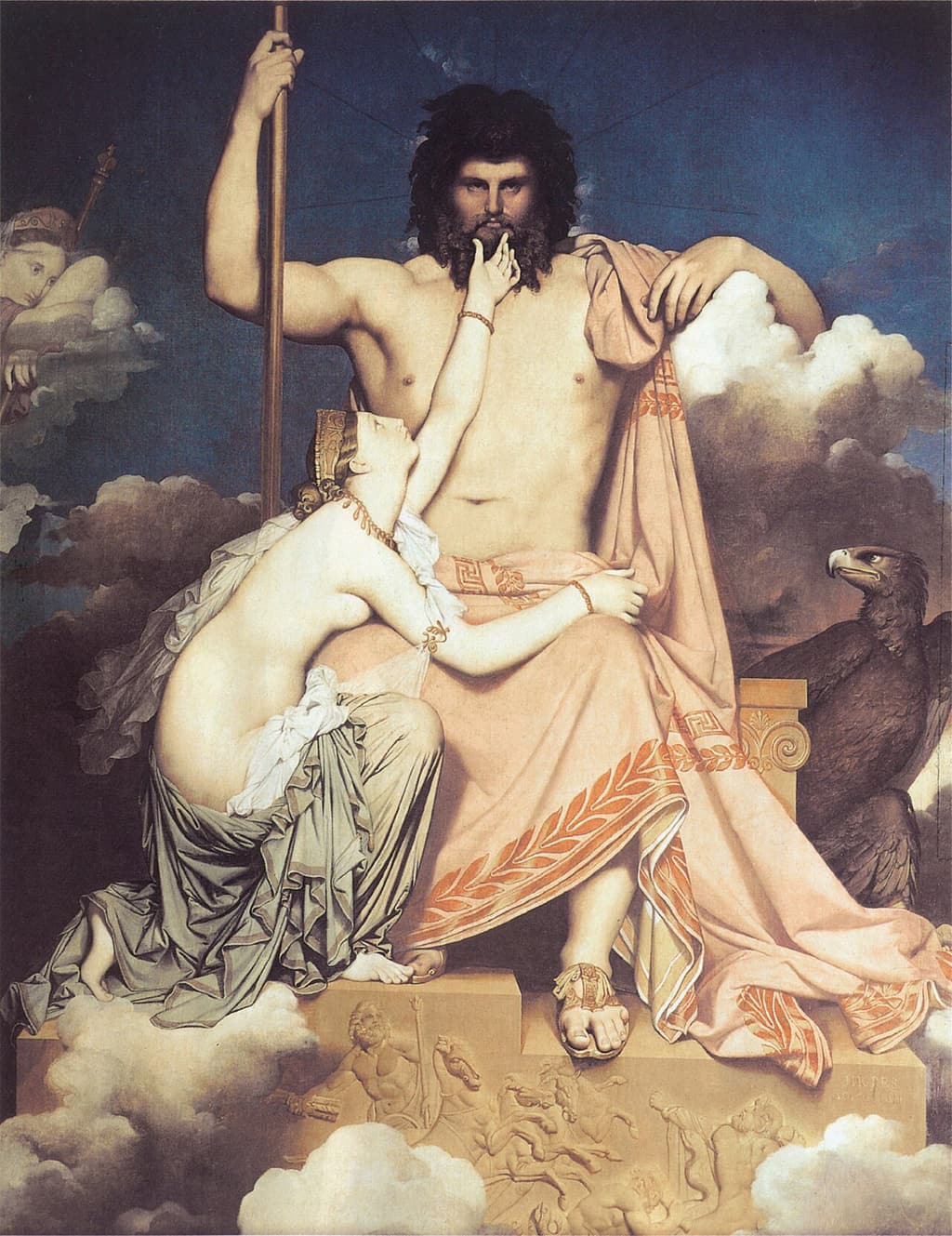
Jean-Auguste-Dominique Ingres (d. 1867), Jupiter and Thetis, 1811. Oil on canvas. Musée Granet.
Jean-Auguste-Dominique Ingres died 1867, so the life-plus-70 term expired in 1938 (death year from the linked Wikidata creator item). Licence as recorded on the source page: Public domain. Source record · file on this site
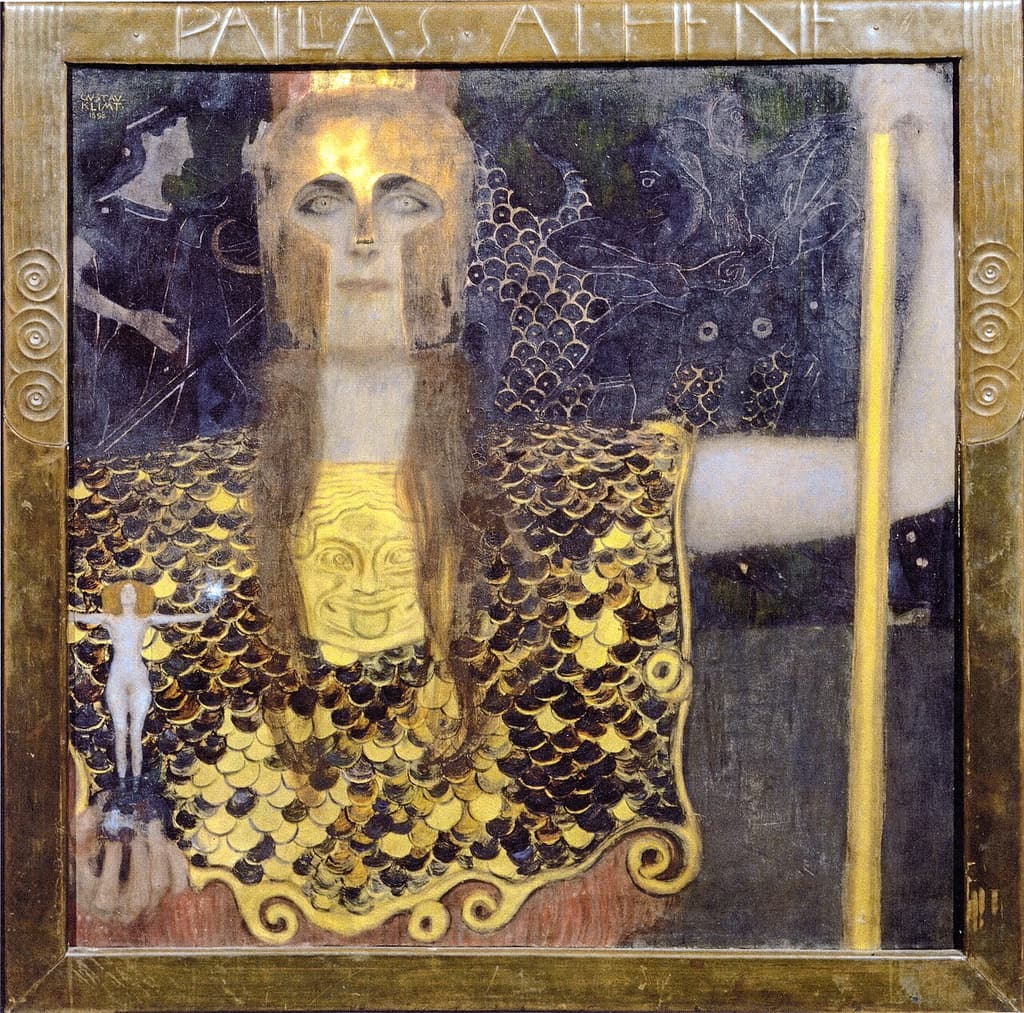
Gustav Klimt (d. 1918), Pallas Athene, 1898–1899. Oil on canvas. Vienna Museum.
Gustav Klimt died 1918, so the life-plus-70 term expired in 1989 (death year from the linked Wikidata creator item). Licence as recorded on the source page: Public domain. Source record · file on this site
Caravaggio (d. 1610), Medusa, 1597–98. Oil on canvas mounted on a convex poplar tournament shield. Uffizi Gallery.
Caravaggio died 1610, so the life-plus-70 term expired in 1681 (death year from the linked Wikidata creator item). Licence as recorded on the source page: Public domain. Source record · file on this site
Sandro Botticelli (d. 1510), The Birth of Venus, c. 1480–85. Tempera on canvas. Uffizi Gallery.
Sandro Botticelli died 1510, so the life-plus-70 term expired in 1581 (death year from the linked Wikidata creator item). Licence as recorded on the source page: Public domain. Source record · file on this site
Peter Paul Rubens (d. 1640), The Rape of Proserpina, c. 1636–37. Oil on canvas. Museo del Prado.
Peter Paul Rubens died 1640, so the life-plus-70 term expired in 1711 (death year from the linked Wikidata creator item). Licence as recorded on the source page: Public domain. Source record · file on this site
Dante Gabriel Rossetti (d. 1882), Proserpine, 1874. Oil on canvas. Tate Britain.
Dante Gabriel Rossetti died 1882, so the life-plus-70 term expired in 1953 (death year from the linked Wikidata creator item). Licence as recorded on the source page: Public domain. Source record · file on this site
Caravaggio (d. 1610), Bacchus, c. 1593–98. Oil on canvas. Uffizi Gallery.
Caravaggio died 1610, so the life-plus-70 term expired in 1681 (death year from the linked Wikidata creator item). Licence as recorded on the source page: Public domain. Source record · file on this site
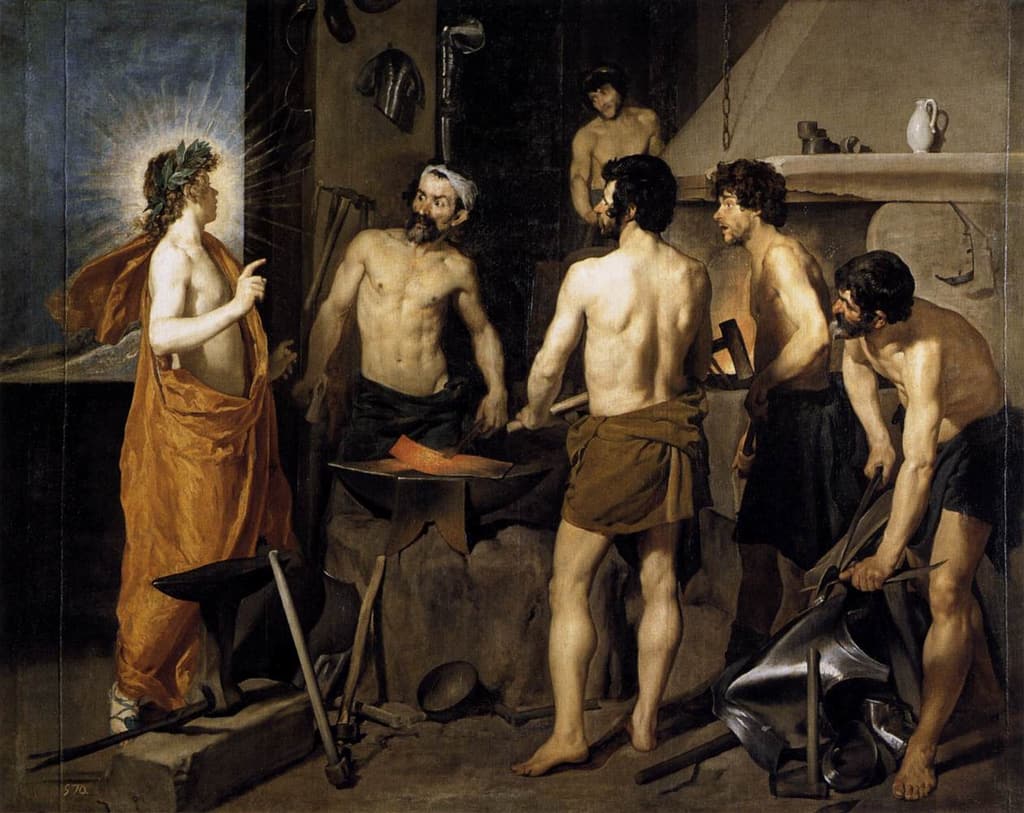
Diego Velázquez (d. 1660), Apollo in the Forge of Vulcan, 1630. Oil on canvas. Museo del Prado.
Diego Velázquez died 1660, so the life-plus-70 term expired in 1731 (death year from the linked Wikidata creator item). Licence as recorded on the source page: Public domain. Source record · file on this site
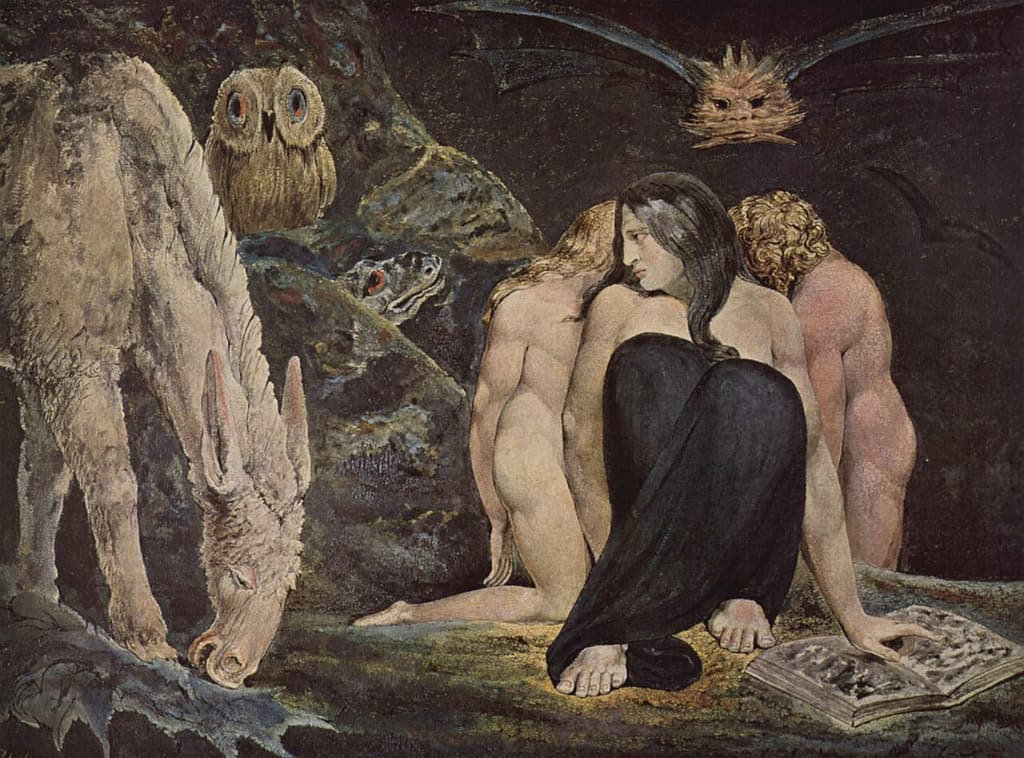
William Blake (d. 1827), Hecate, or The Night of Enitharmon's Joy, c. 1795. Colour print finished in ink and watercolour. Tate.
William Blake died 1827, so the life-plus-70 term expired in 1898 (death year from the Wikidata record for William Blake, whose lifespan (1757–1827) covers the year the work was made). Licence as recorded on the source page: Public domain. Source record · file on this site
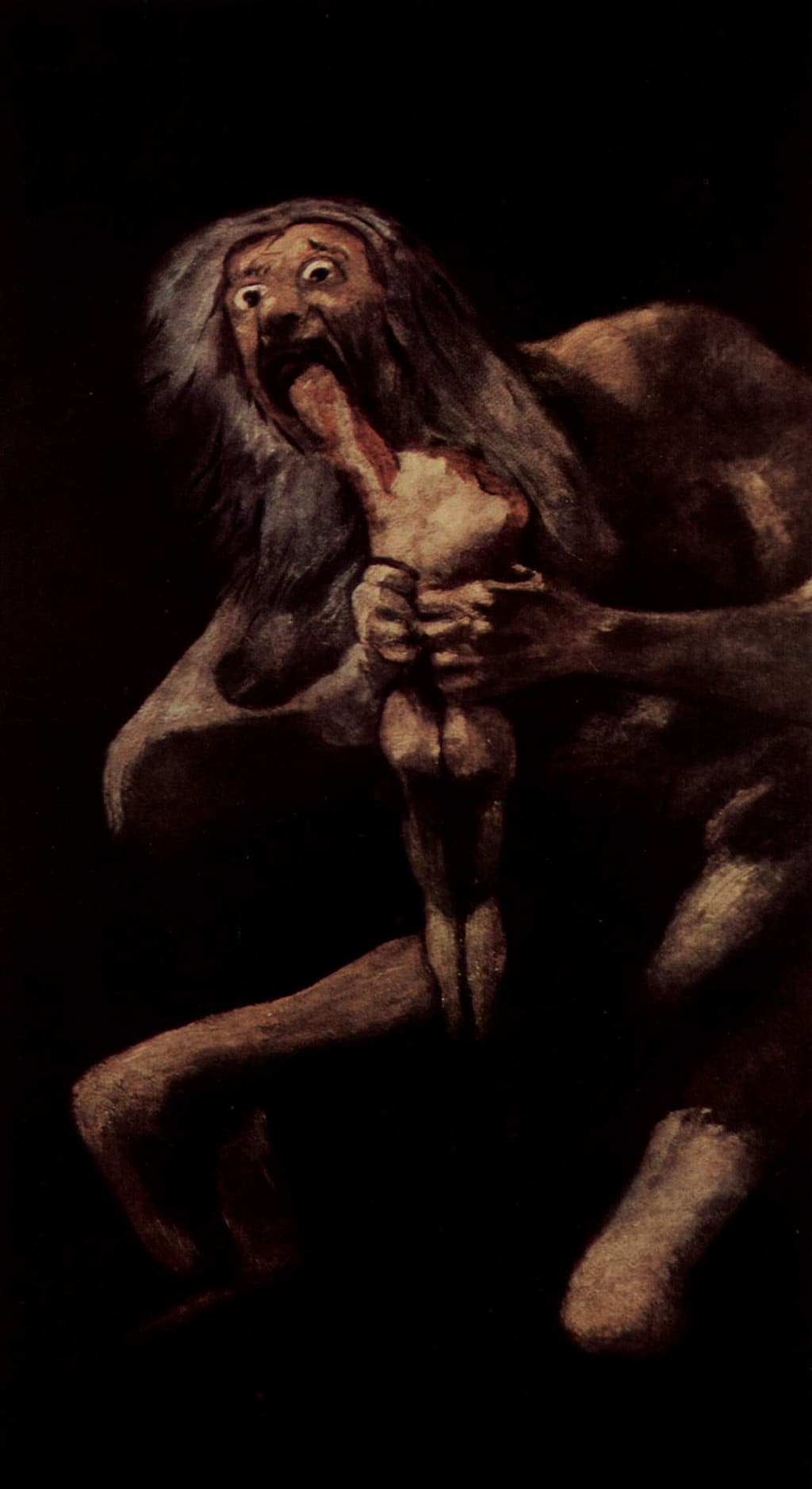
Francisco Goya (d. 1828), Saturn Devouring His Son, 1819–23. Mixed media, transferred from plaster wall to canvas. Museo del Prado.
Francisco Goya died 1828, so the life-plus-70 term expired in 1899 (death year from the linked Wikidata creator item). Licence as recorded on the source page: Public domain. Source record · file on this site
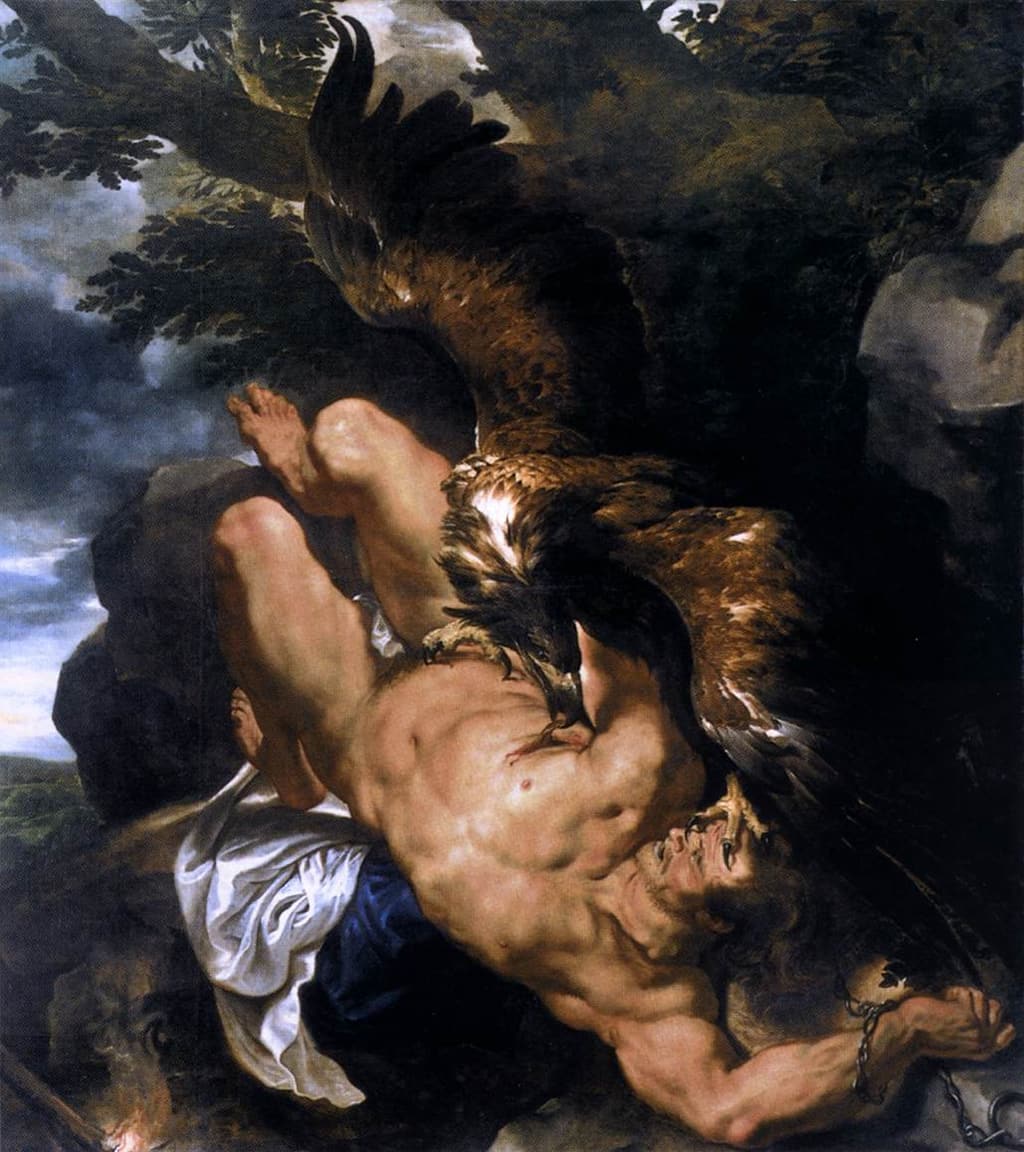
Peter Paul Rubens (d. 1640), Prometheus Bound, c. 1610–18. Oil on canvas. Philadelphia Museum of Art.
Peter Paul Rubens died 1640, so the life-plus-70 term expired in 1711 (death year from the linked Wikidata creator item). Licence as recorded on the source page: Public domain. Source record · file on this site
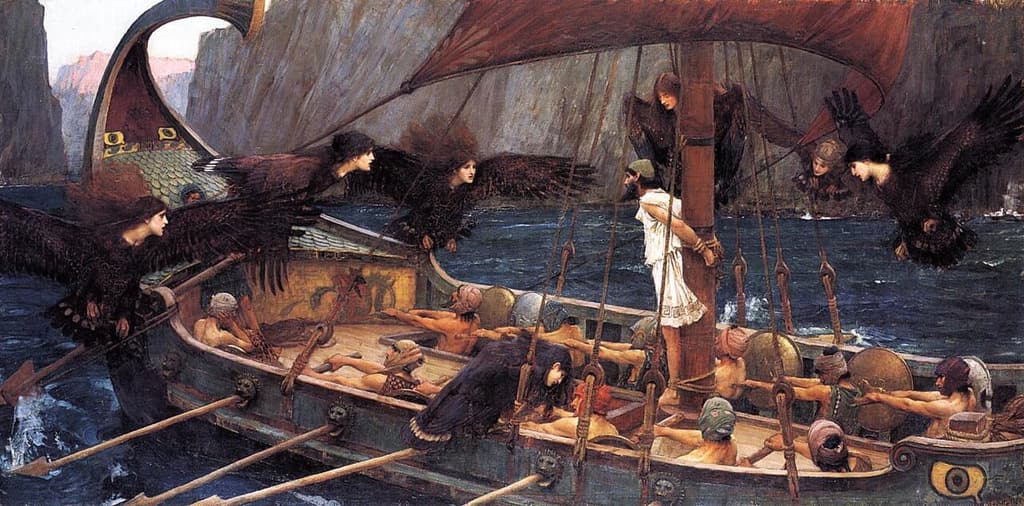
John William Waterhouse (d. 1917), Ulysses and the Sirens, 1891. Oil on canvas. National Gallery of Victoria.
John William Waterhouse died 1917, so the life-plus-70 term expired in 1988 (death year from the linked Wikidata creator item). Licence as recorded on the source page: Public domain. Source record · file on this site
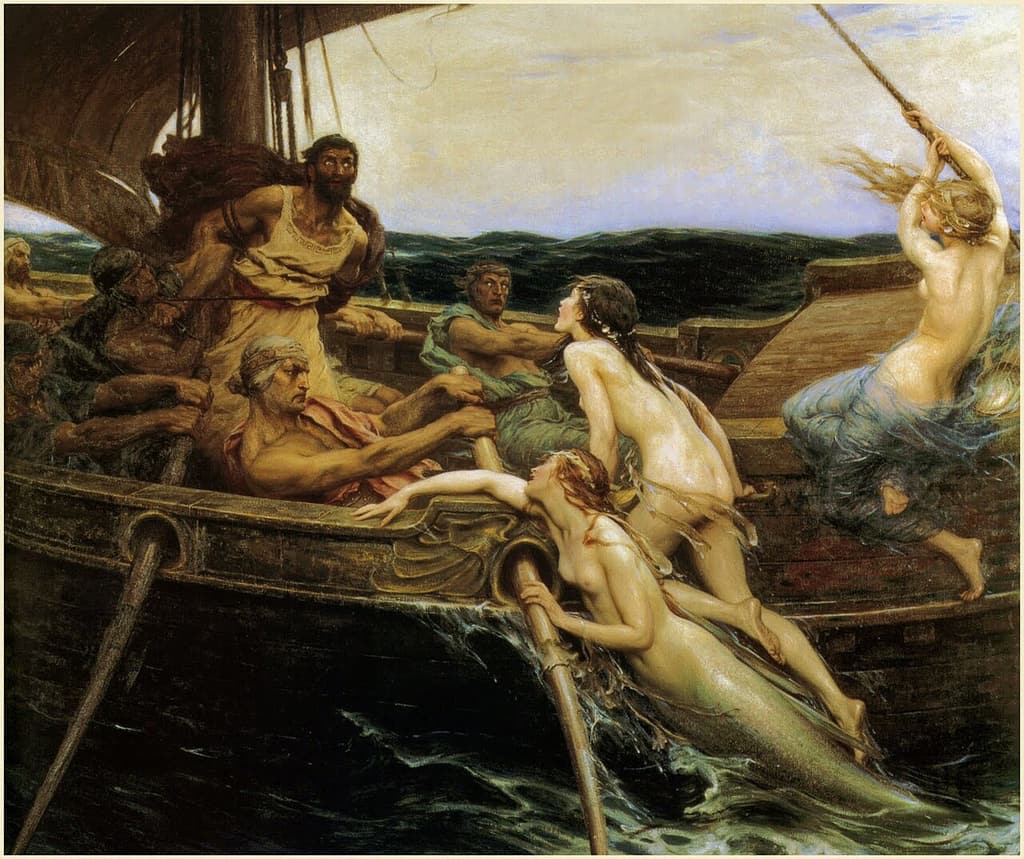
Herbert James Draper (d. 1920), Ulysses and the Sirens, c. 1909. Oil on canvas. Ferens Art Gallery.
Herbert James Draper died 1920, so the life-plus-70 term expired in 1991 (death year from the linked Wikidata creator item). Licence as recorded on the source page: Public domain. Source record · file on this site
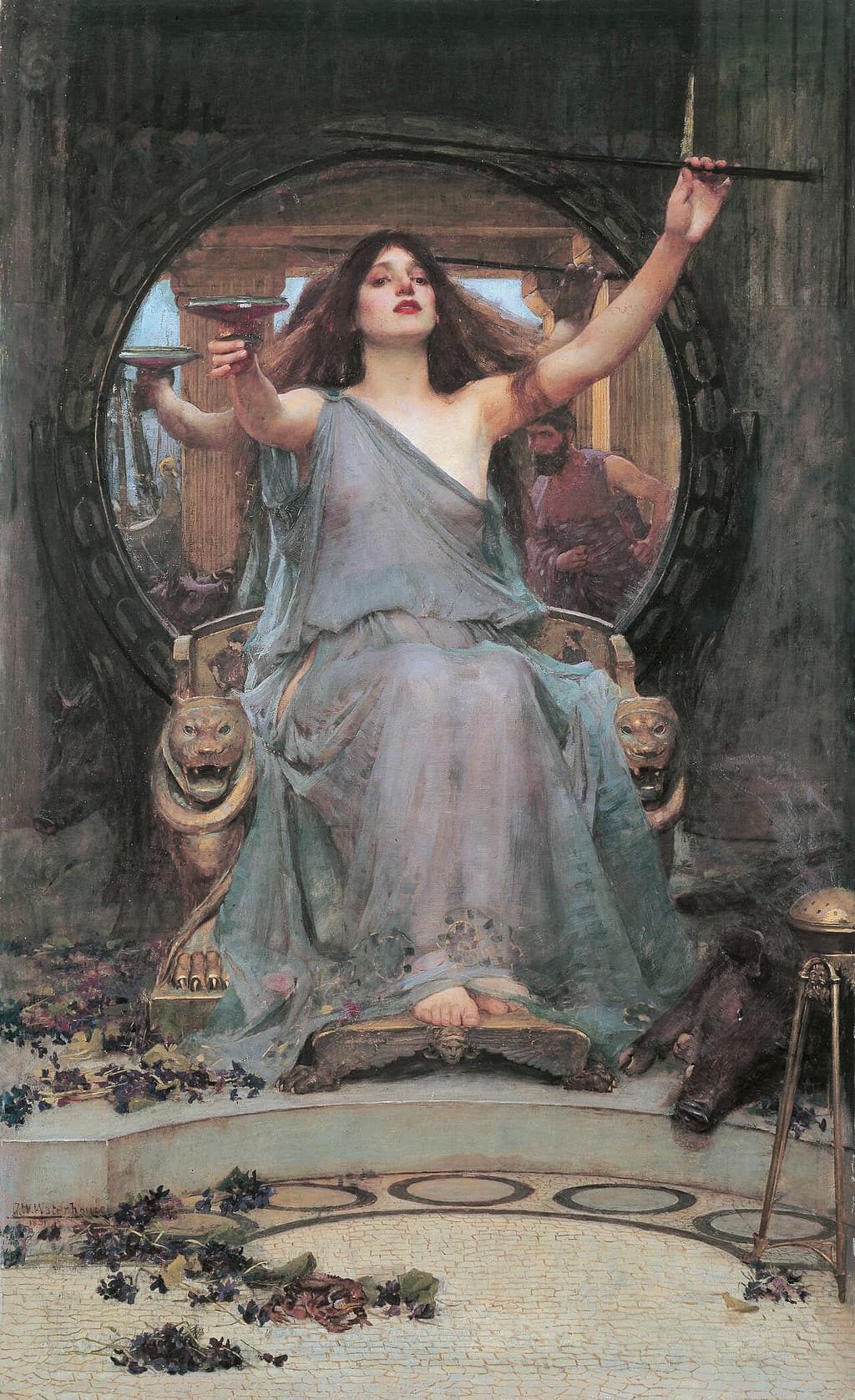
John William Waterhouse (d. 1917), Circe Offering the Cup to Ulysses, 1891. Oil on canvas. Gallery Oldham.
John William Waterhouse died 1917, so the life-plus-70 term expired in 1988 (death year from the Wikidata record for John William Waterhouse, established from another work by the same hand in this set). Licence as recorded on the source page: Public domain. Source record · file on this site
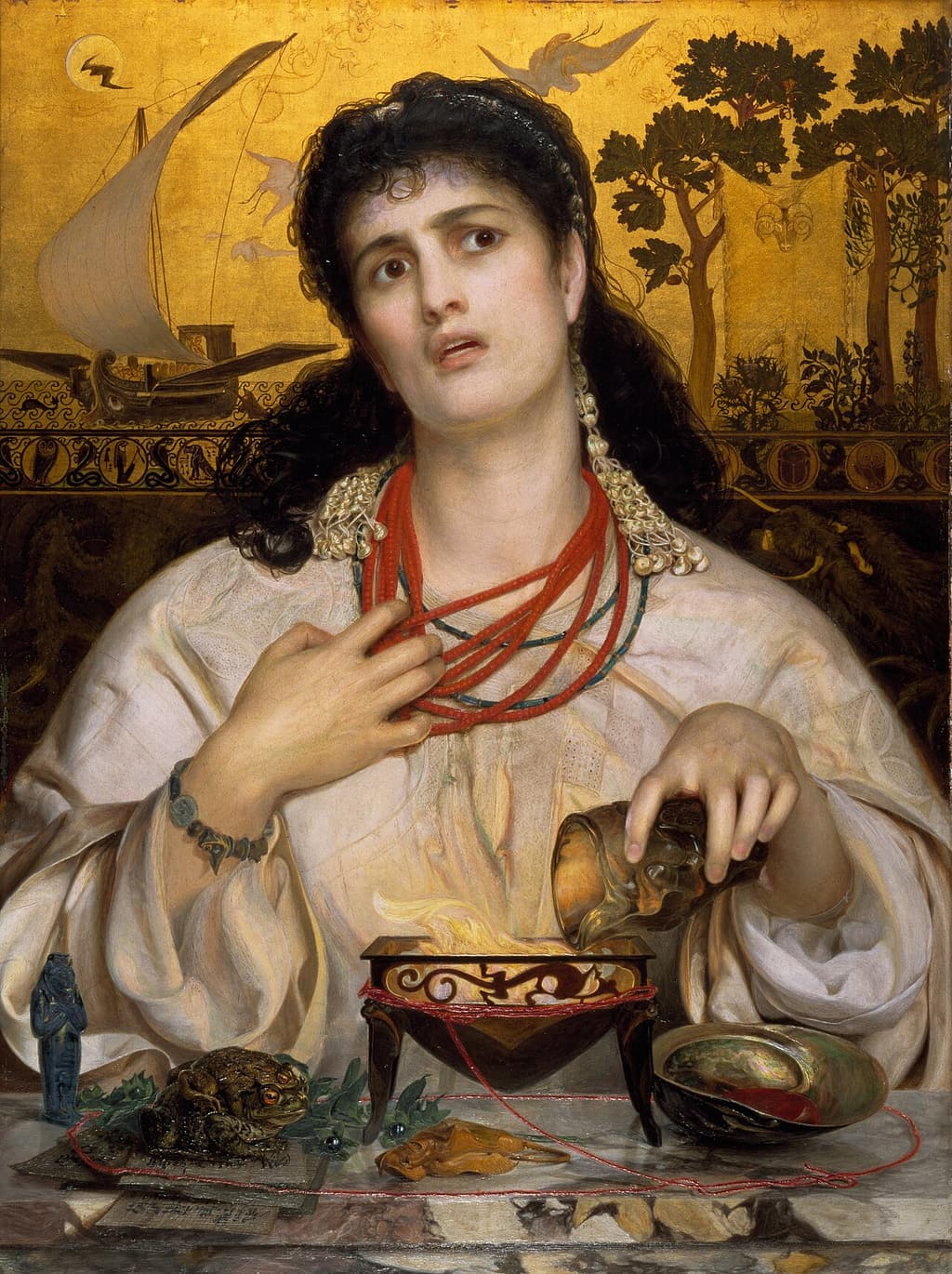
Frederick Sandys (d. 1904), Medea, 1868. Oil on panel with gold leaf. Birmingham Museums Trust.
Frederick Sandys died 1904, so the life-plus-70 term expired in 1975 (death year from the linked Wikidata creator item). Licence as recorded on the source page: Public domain. Source record · file on this site
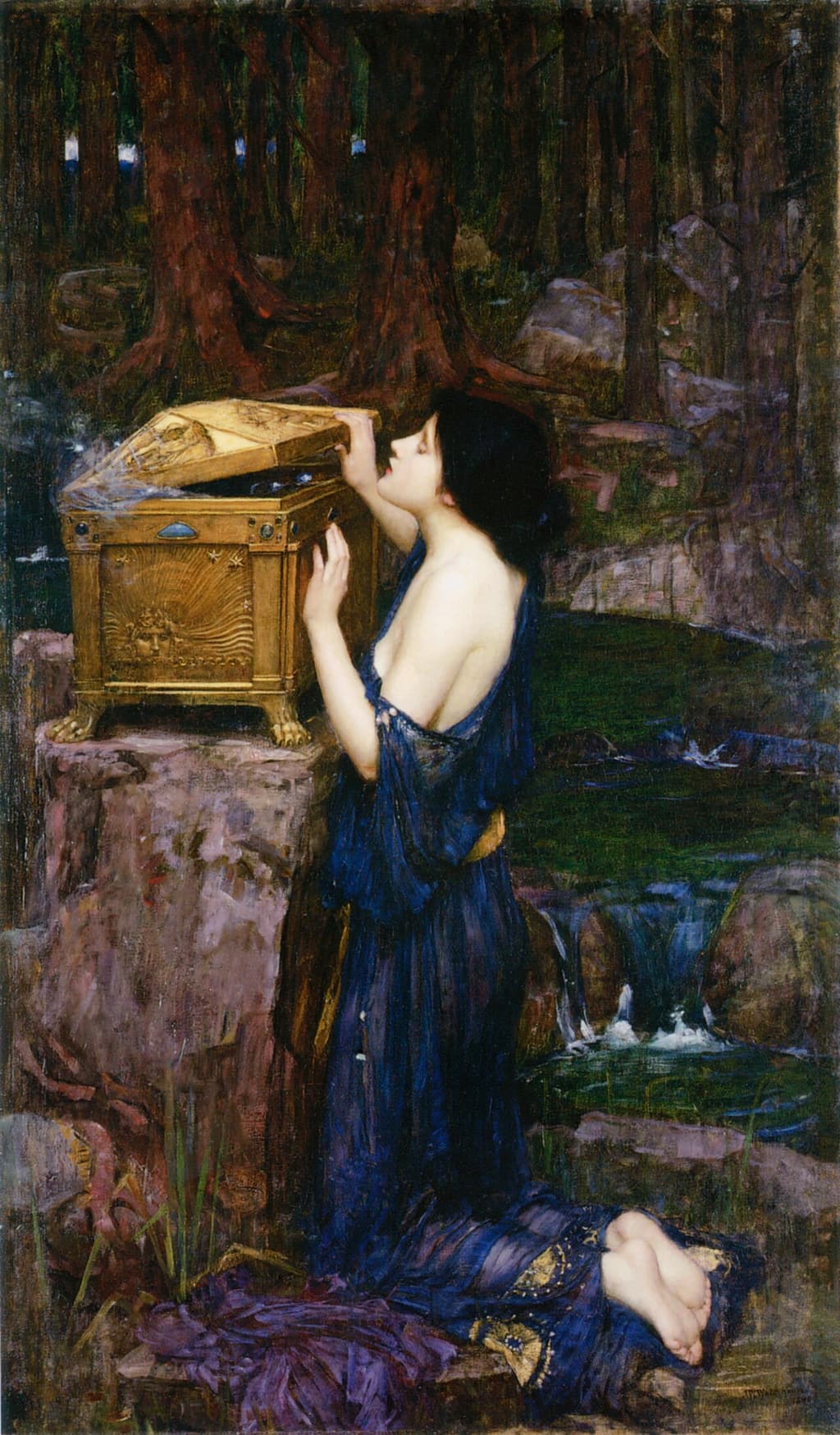
John William Waterhouse (d. 1917), Pandora, 1896. Oil on canvas.
John William Waterhouse died 1917, so the life-plus-70 term expired in 1988 (death year from the linked Wikidata creator item). Licence as recorded on the source page: Public domain. Source record · file on this site
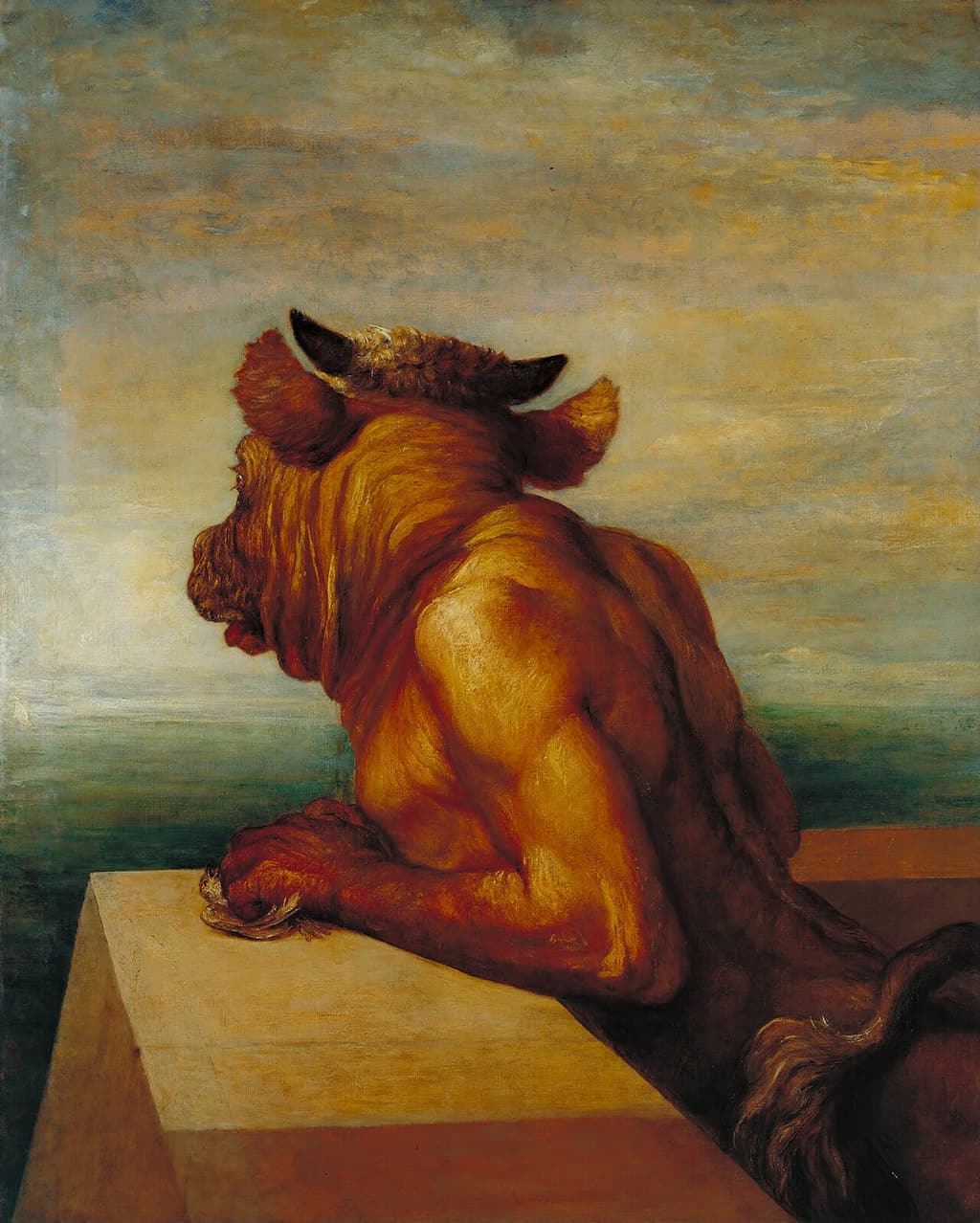
George Frederic Watts (d. 1904), The Minotaur, 1885. Oil on canvas. Tate.
George Frederic Watts died 1904, so the life-plus-70 term expired in 1975 (death year from the linked Wikidata creator item). Licence as recorded on the source page: Public domain. Source record · file on this site
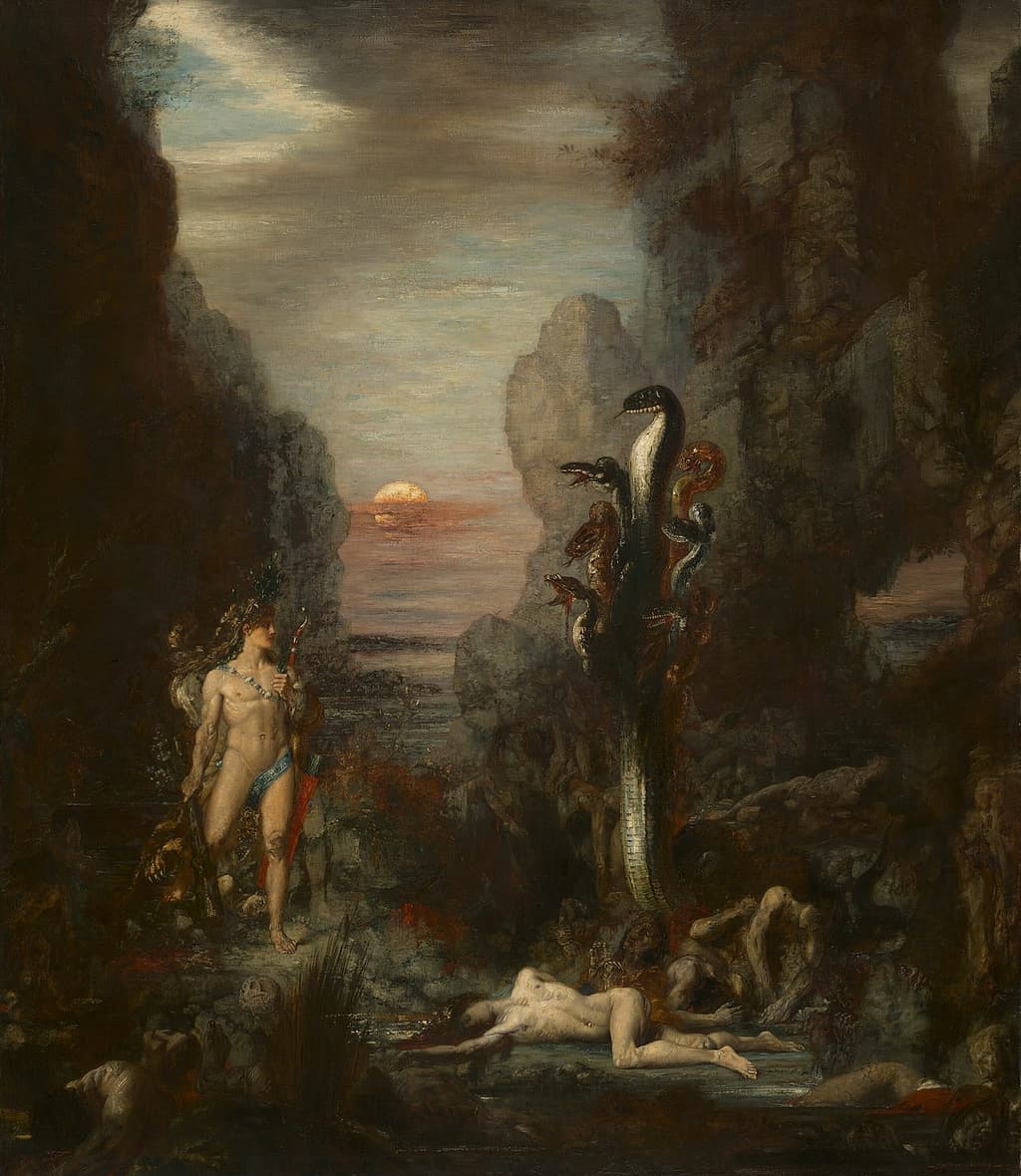
Gustave Moreau (d. 1898), Hercules and the Lernaean Hydra, 1875–1876. Oil on canvas. Art Institute of Chicago.
Gustave Moreau died 1898, so the life-plus-70 term expired in 1969 (death year from the linked Wikidata creator item). Licence as recorded on the source page: Public domain. Source record · file on this site
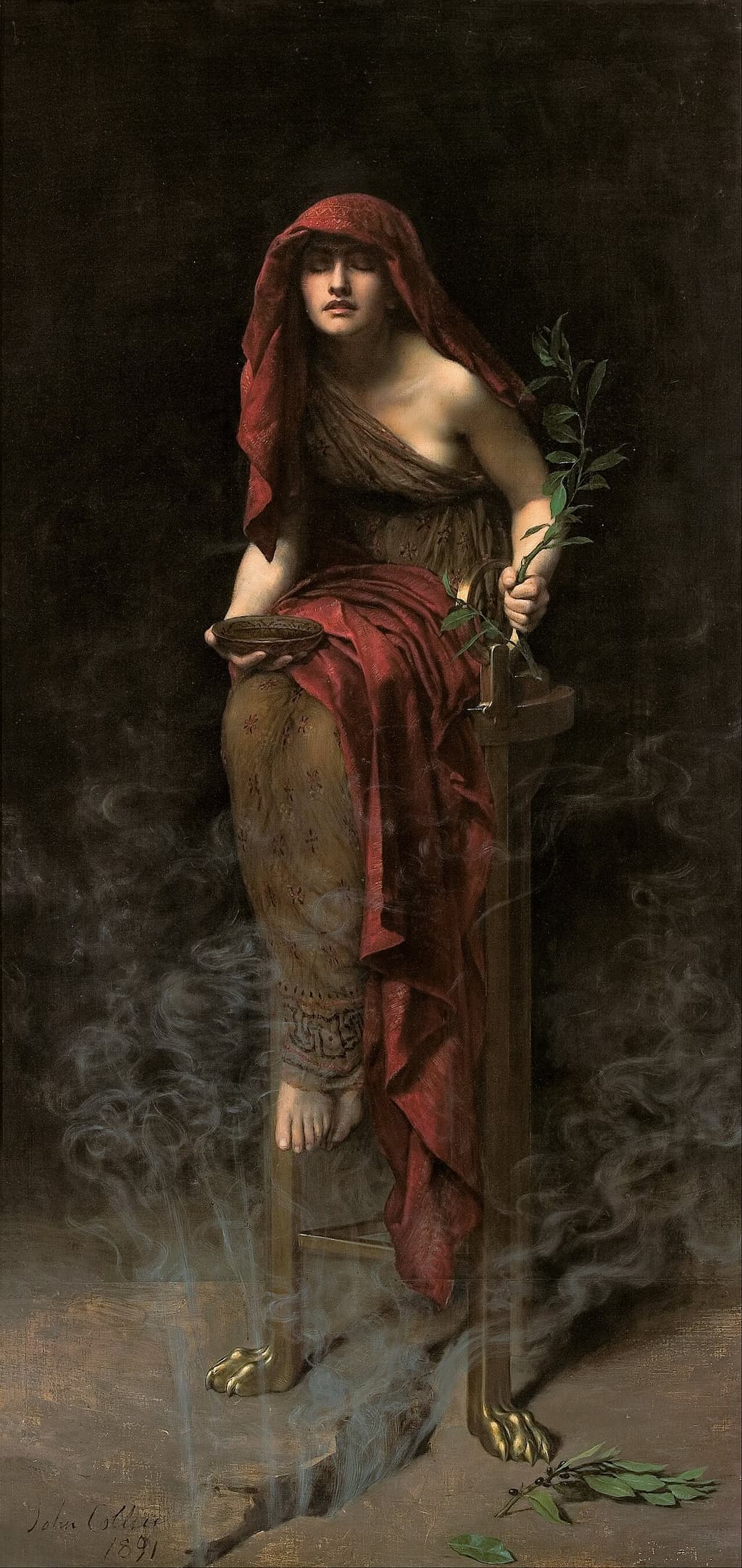
John Collier (d. 1934), Priestess of Delphi, 1891. Oil on canvas. Art Gallery of South Australia.
John Collier died 1934, so the life-plus-70 term expired in 2005 (death year from the linked Wikidata creator item). Licence as recorded on the source page: Public domain. Source record · file on this site
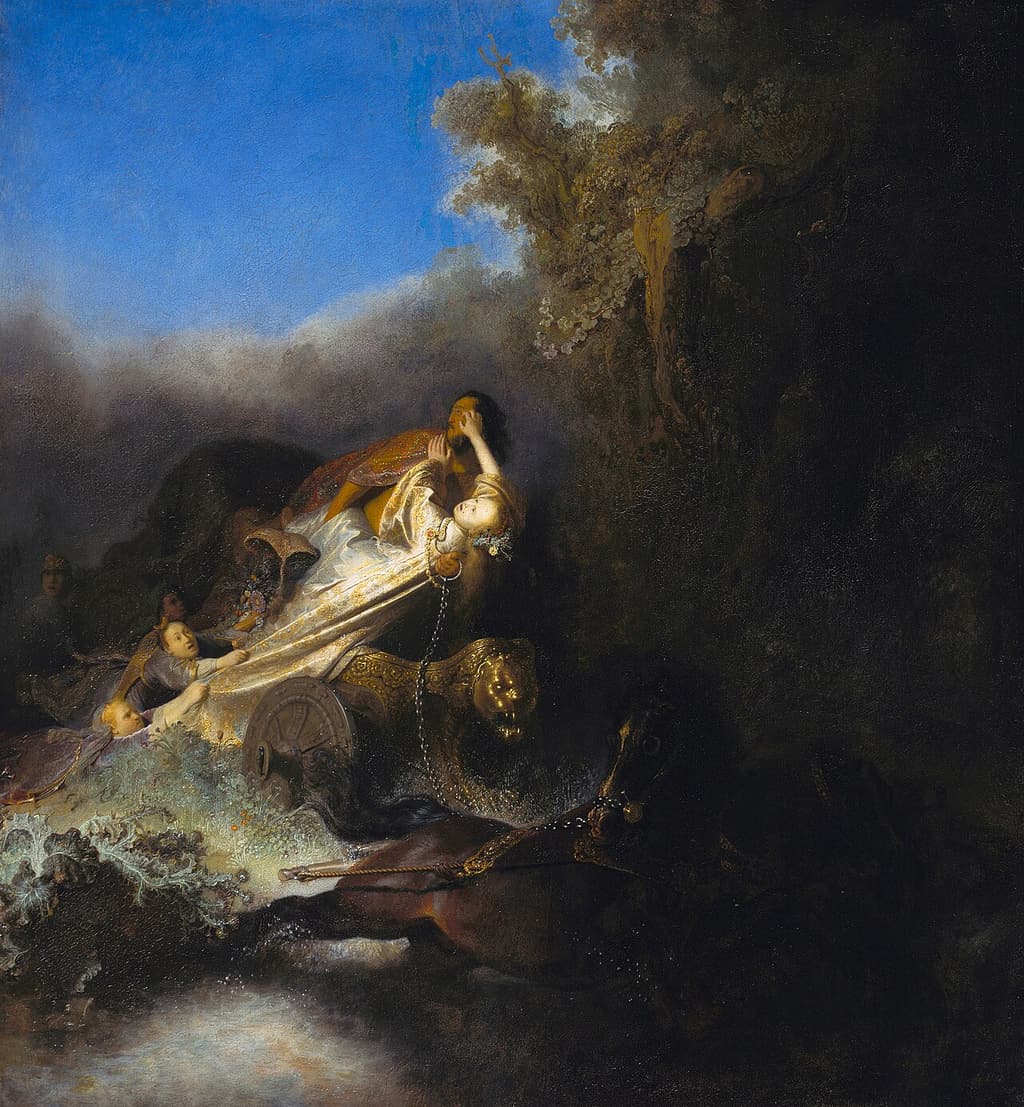
Rembrandt (d. 1669), The Abduction of Proserpina, c. 1631–1632. Oil on panel. Gemäldegalerie Berlin.
Rembrandt died 1669, so the life-plus-70 term expired in 1740 (death year from the linked Wikidata creator item). Licence as recorded on the source page: Public domain. Source record · file on this site
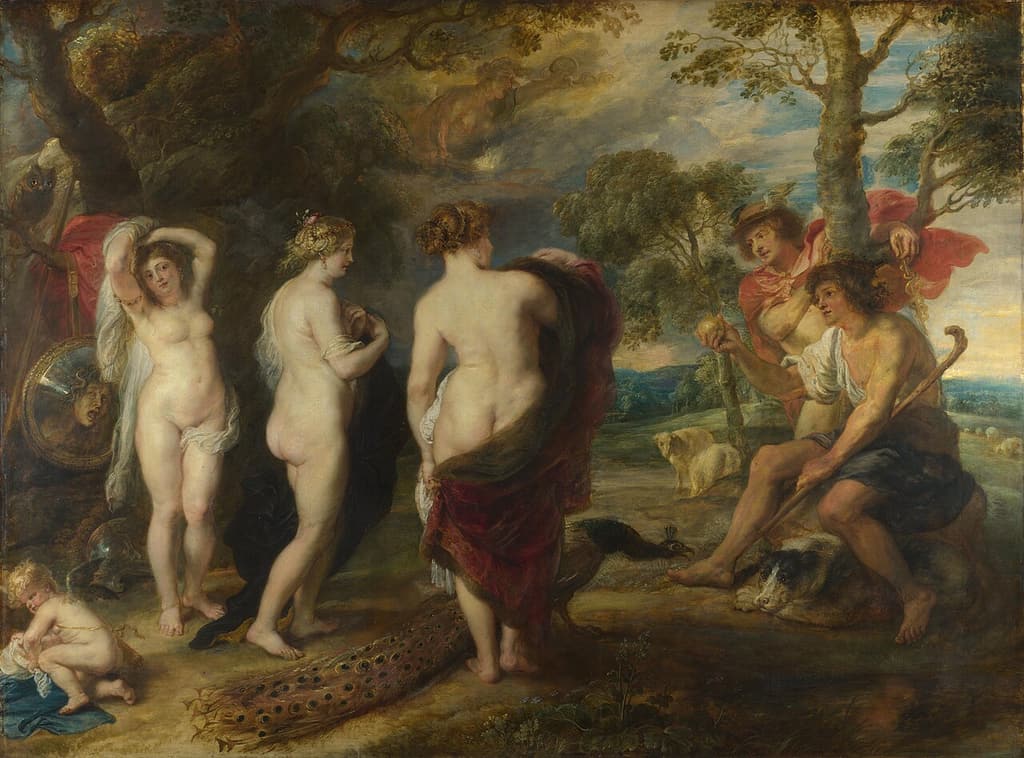
Peter Paul Rubens (d. 1640), The Judgement of Paris, c. 1633–35. Oil on oak. National Gallery.
Peter Paul Rubens died 1640, so the life-plus-70 term expired in 1711 (death year from the linked Wikidata creator item). Licence as recorded on the source page: Public domain. Source record · file on this site
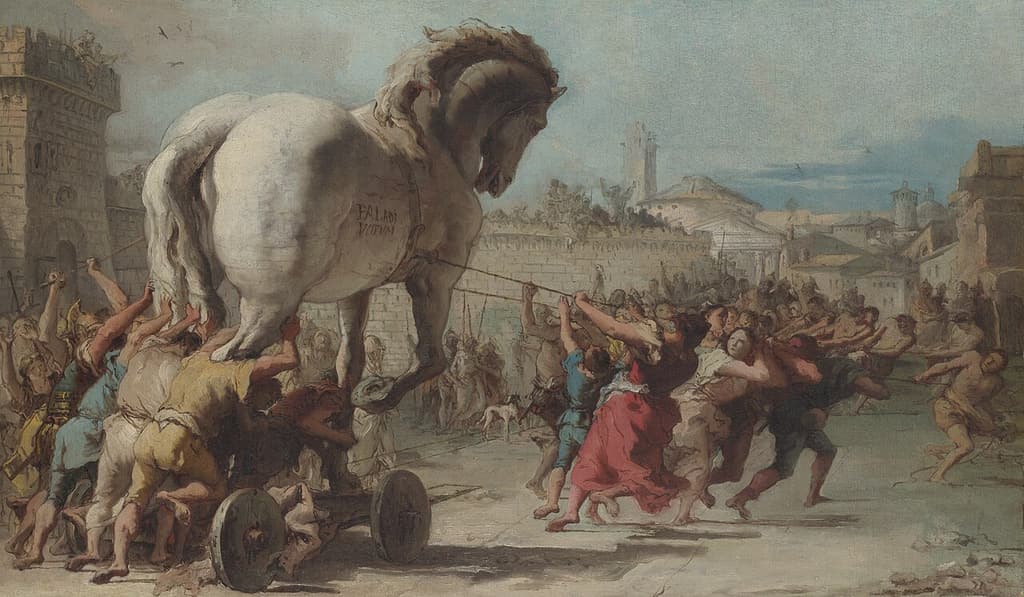
Giovanni Domenico Tiepolo (d. 1804), The Procession of the Trojan Horse into Troy, c. 1760. Oil on canvas. National Gallery.
Giovanni Domenico Tiepolo died 1804, so the life-plus-70 term expired in 1875 (death year from the linked Wikidata creator item). Licence as recorded on the source page: Public domain. Source record · file on this site
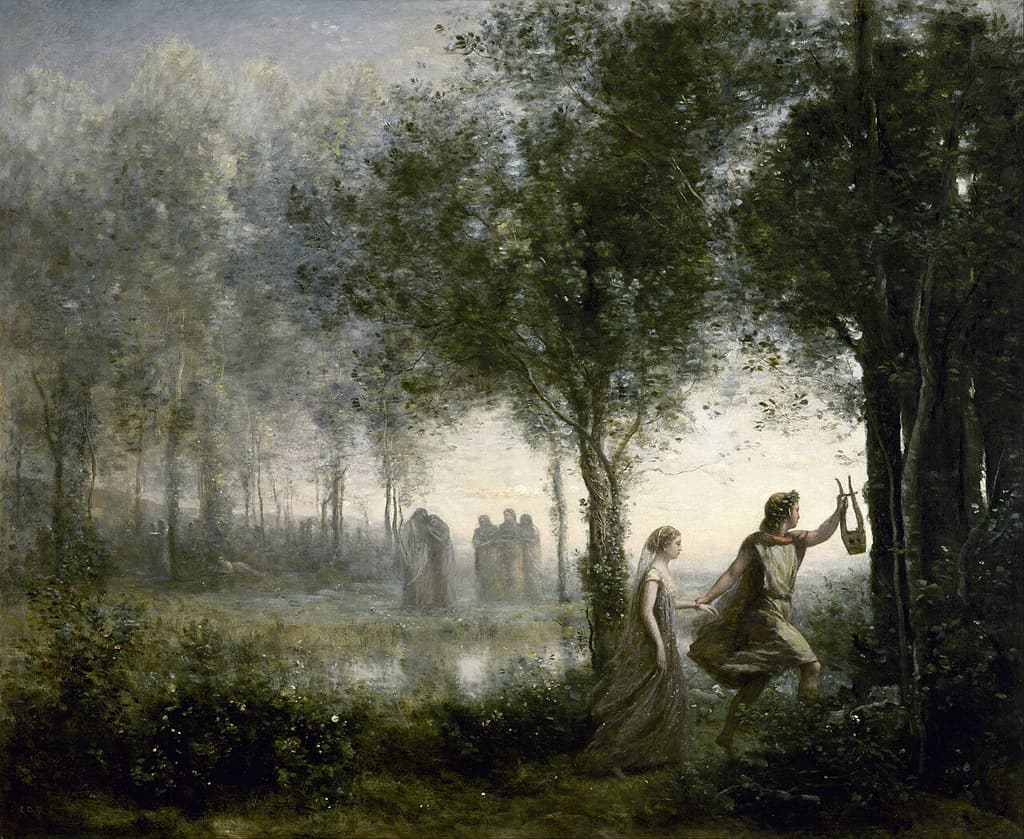
Jean-Baptiste Camille Corot (d. 1875), Orpheus Leading Eurydice from the Underworld, 1861. Oil on canvas. Museum of Fine Arts, Houston.
Jean-Baptiste Camille Corot died 1875, so the life-plus-70 term expired in 1946 (death year from the linked Wikidata creator item). Licence as recorded on the source page: Public domain. Source record · file on this site
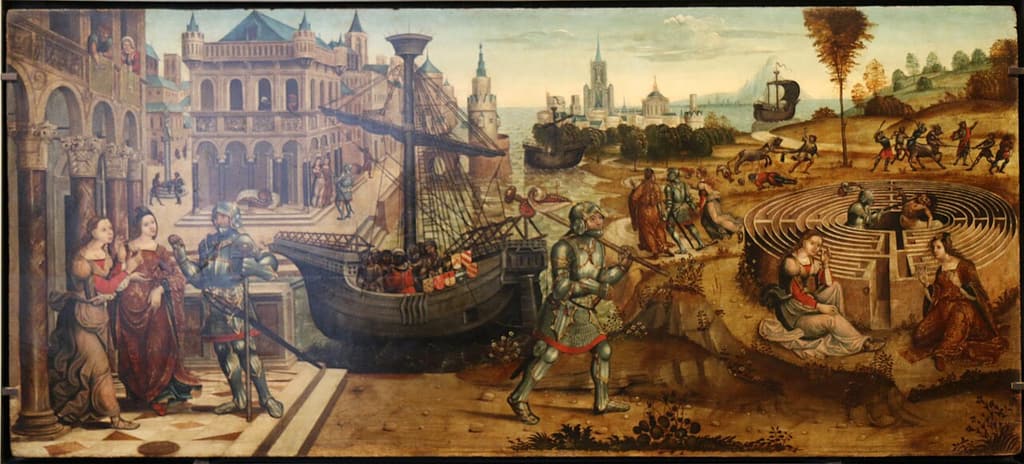
Master of Tavarnelle (d. 1600), Theseus and the Minotaur, c. 1510–15. Tempera on panel, from a marriage chest. Department of Paintings of the Louvre.
Master of Tavarnelle died 1600, so the life-plus-70 term expired in 1671 (death year from the linked Wikidata creator item). Licence as recorded on the source page: Public domain. Source record · file on this site
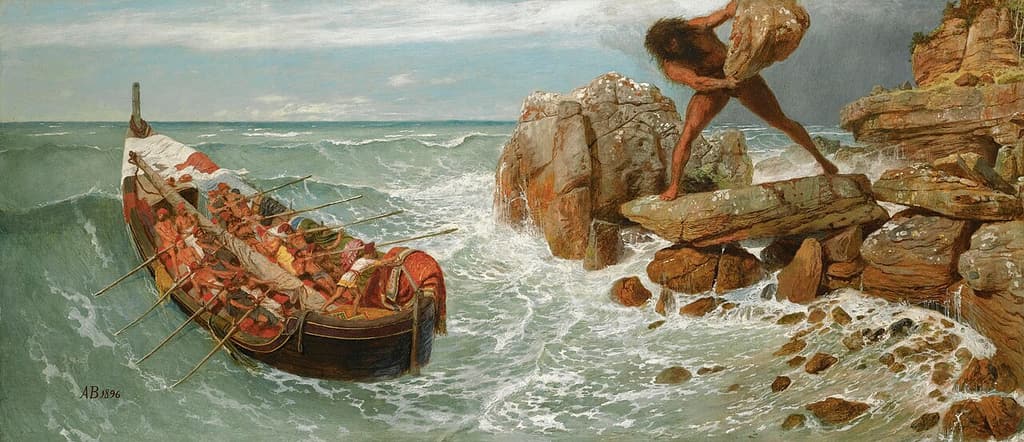
Arnold Böcklin (d. 1901), Odysseus and Polyphemus, 1896. Oil on panel. Museum of Fine Arts Boston.
Arnold Böcklin died 1901, so the life-plus-70 term expired in 1972 (death year from the linked Wikidata creator item). Licence as recorded on the source page: Public domain. Source record · file on this site
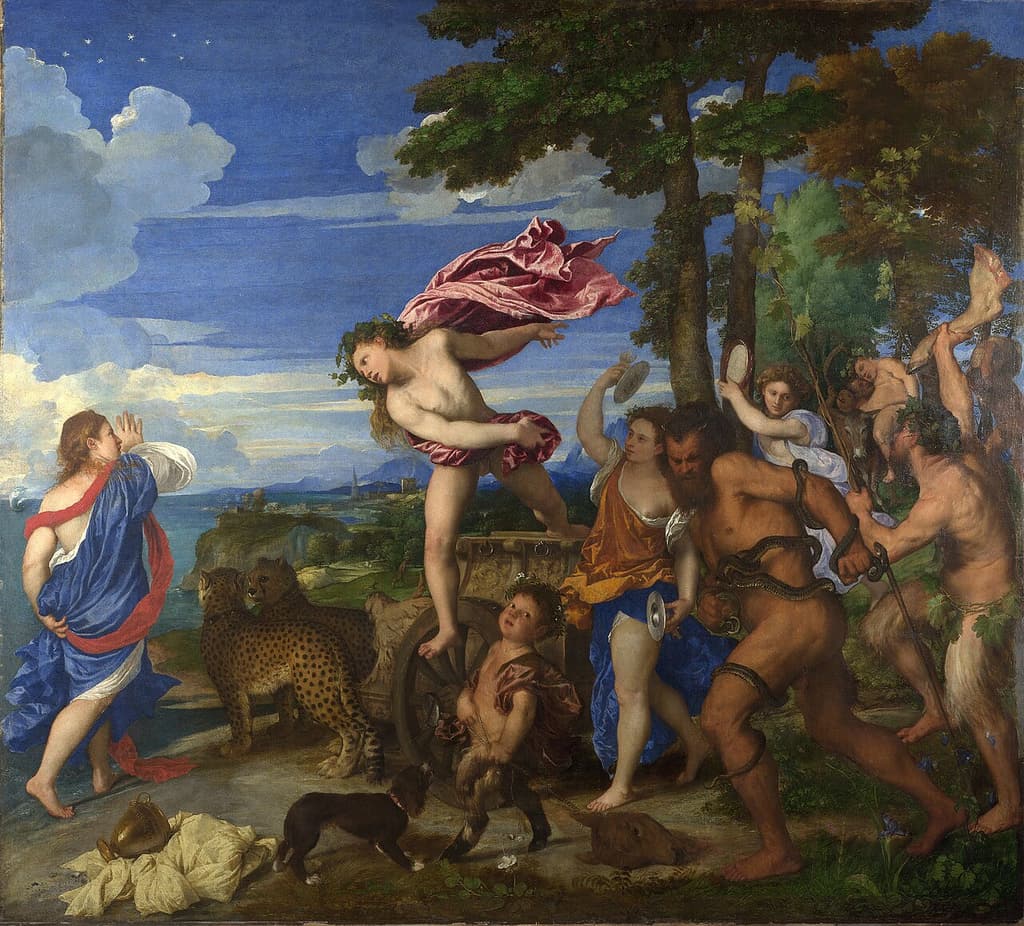
Titian (d. 1576), Bacchus and Ariadne, 1520–23. Oil on canvas. National Gallery.
Titian died 1576, so the life-plus-70 term expired in 1647 (death year from the linked Wikidata creator item). Licence as recorded on the source page: Public domain. Source record · file on this site
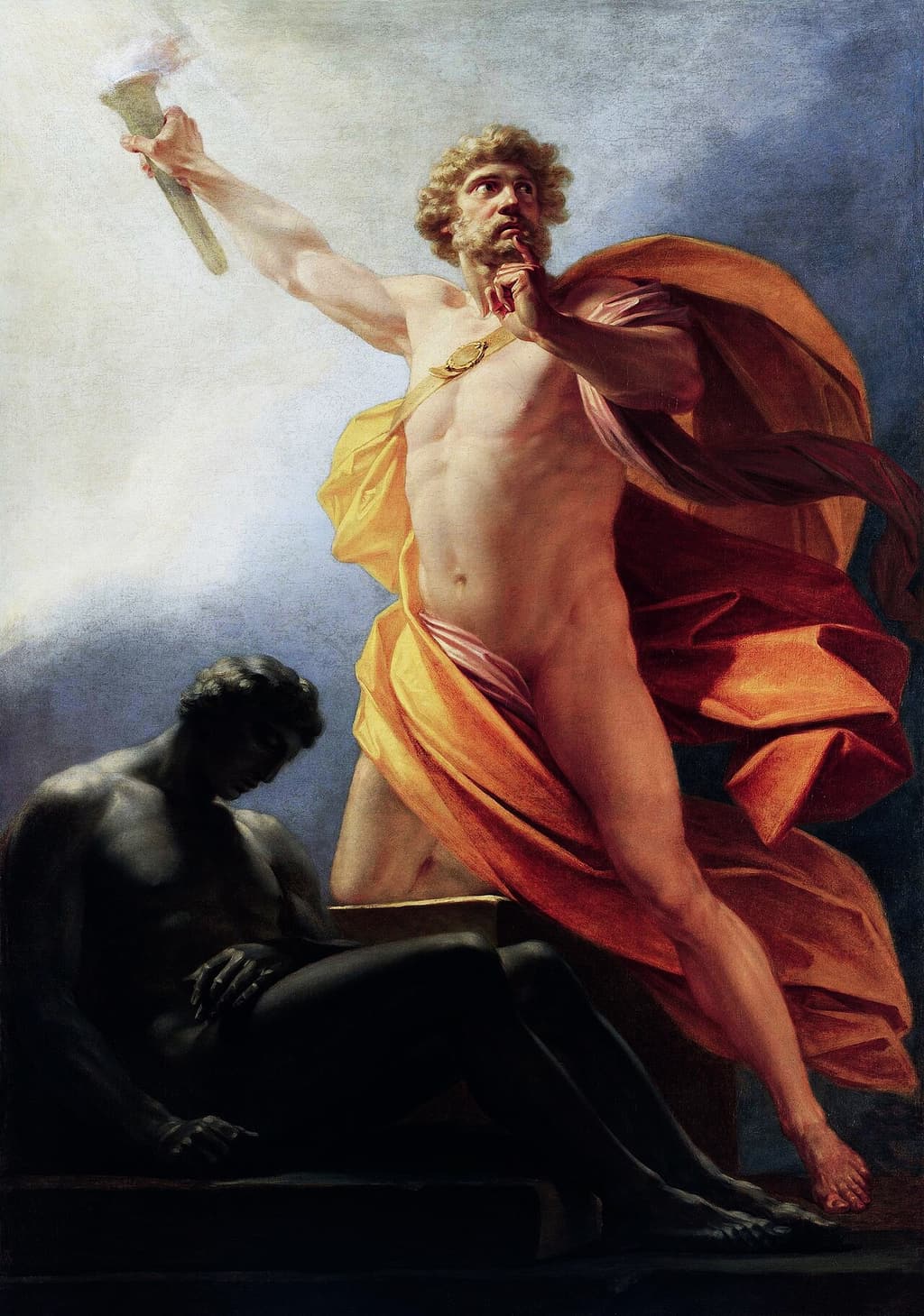
Heinrich Füger (d. 1818), Prometheus Brings Fire to Mankind, c. 1790–1817. Oil on canvas.
Heinrich Füger died 1818, so the life-plus-70 term expired in 1889 (death year from the Wikidata record for Heinrich Füger). Licence as recorded on the source page: Public domain. Source record · file on this site
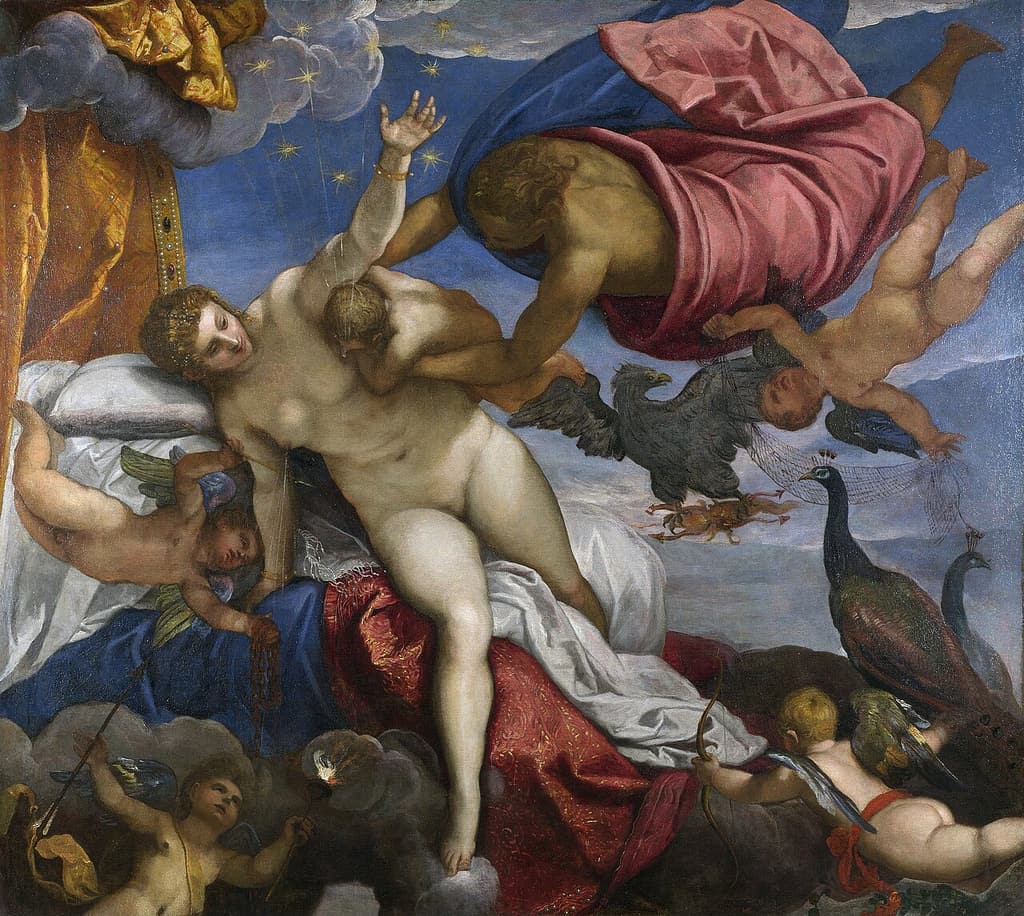
Jacopo Tintoretto (d. 1594), The Origin of the Milky Way, c. 1575. Oil on canvas. National Gallery.
Jacopo Tintoretto died 1594, so the life-plus-70 term expired in 1665 (death year from the linked Wikidata creator item). Licence as recorded on the source page: Public domain. Source record · file on this site
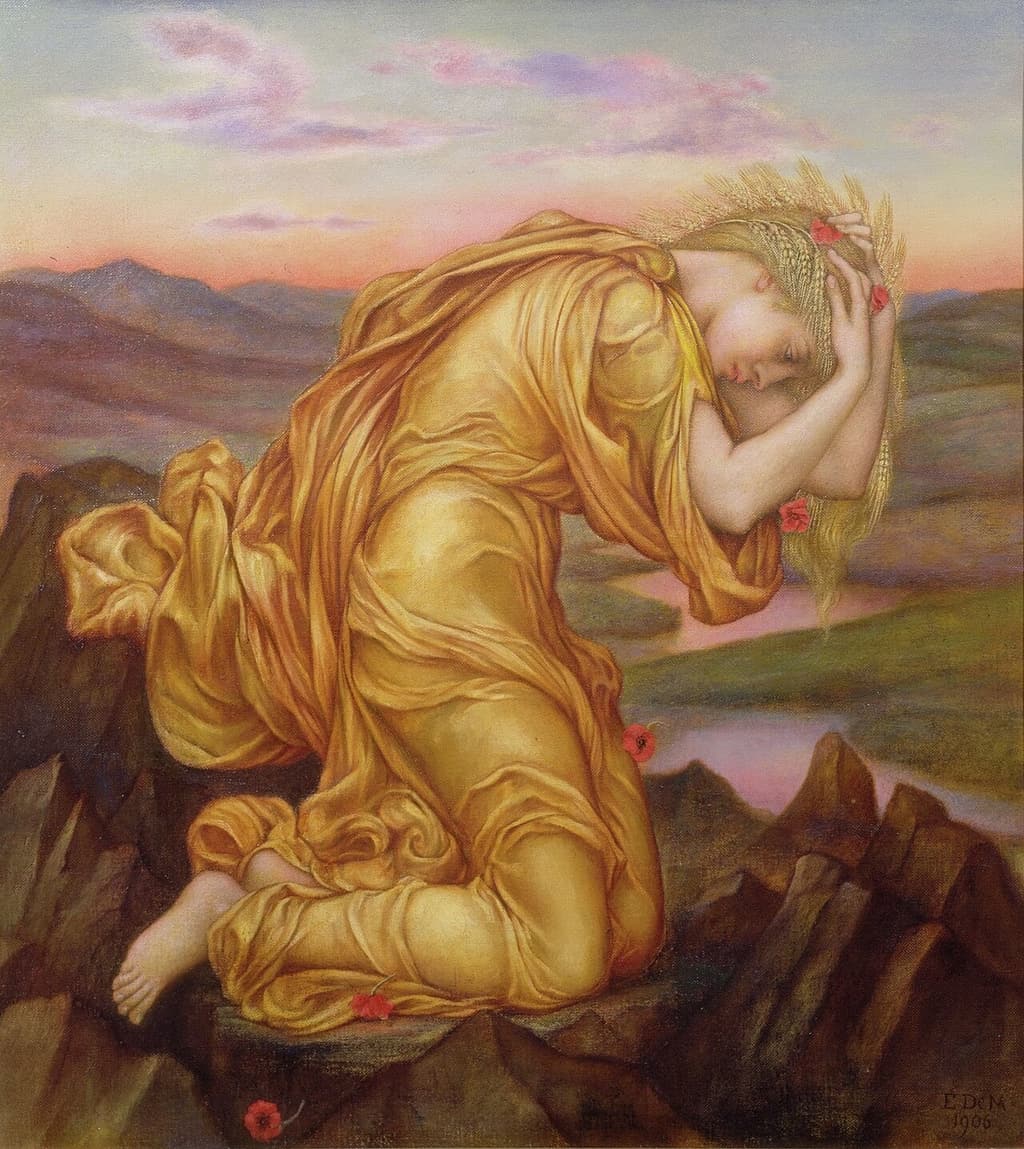
Evelyn De Morgan (d. 1919), Demeter Mourning for Persephone, 1906. Oil on canvas. De Morgan Centre.
Evelyn De Morgan died 1919, so the life-plus-70 term expired in 1990 (death year from the linked Wikidata creator item). Licence as recorded on the source page: Public domain. Source record · file on this site
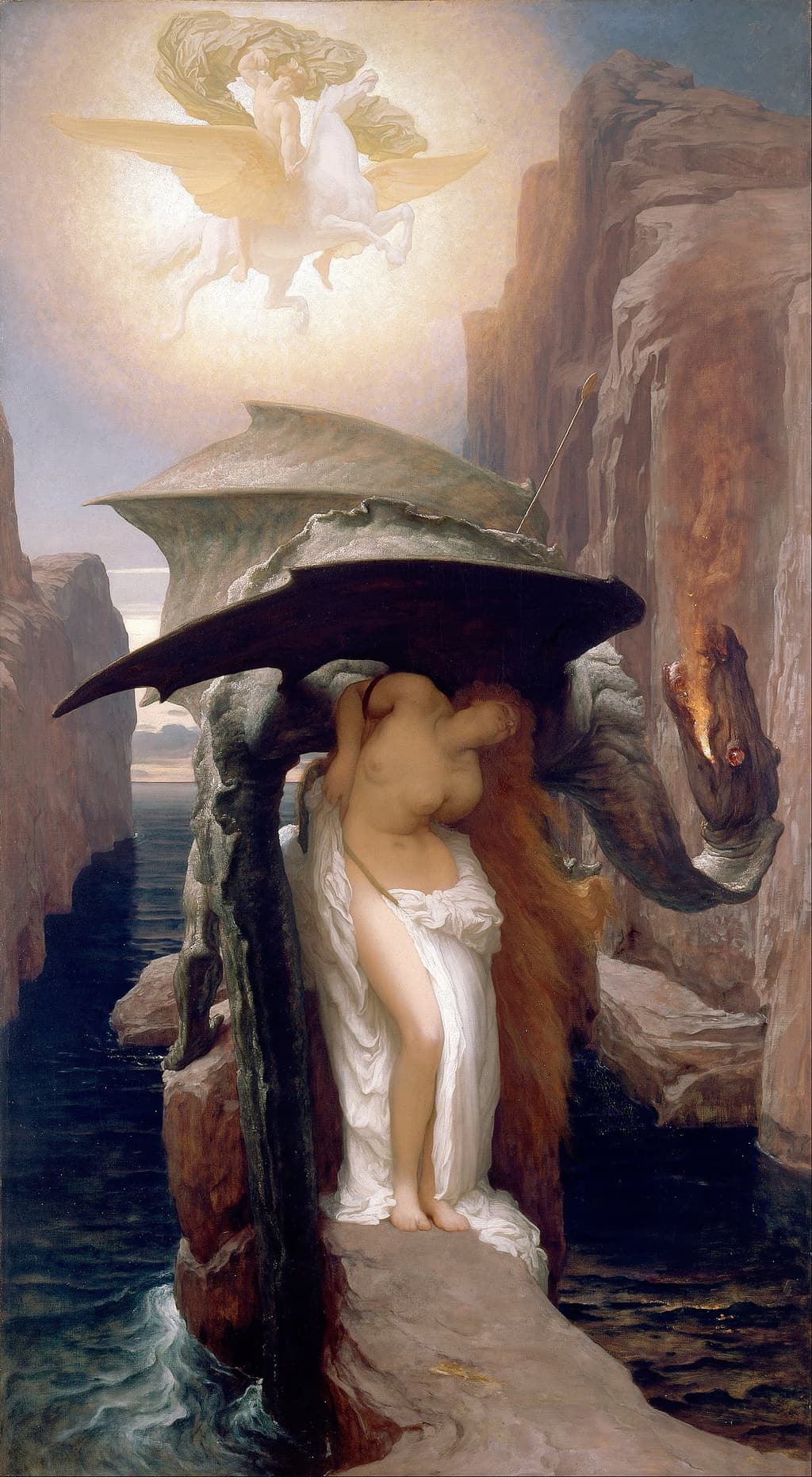
Frederic Leighton (d. 1896), Perseus and Andromeda, 1891. Oil on canvas. Walker Art Gallery.
Frederic Leighton died 1896, so the life-plus-70 term expired in 1967 (death year from the linked Wikidata creator item). Licence as recorded on the source page: Public domain. Source record · file on this site
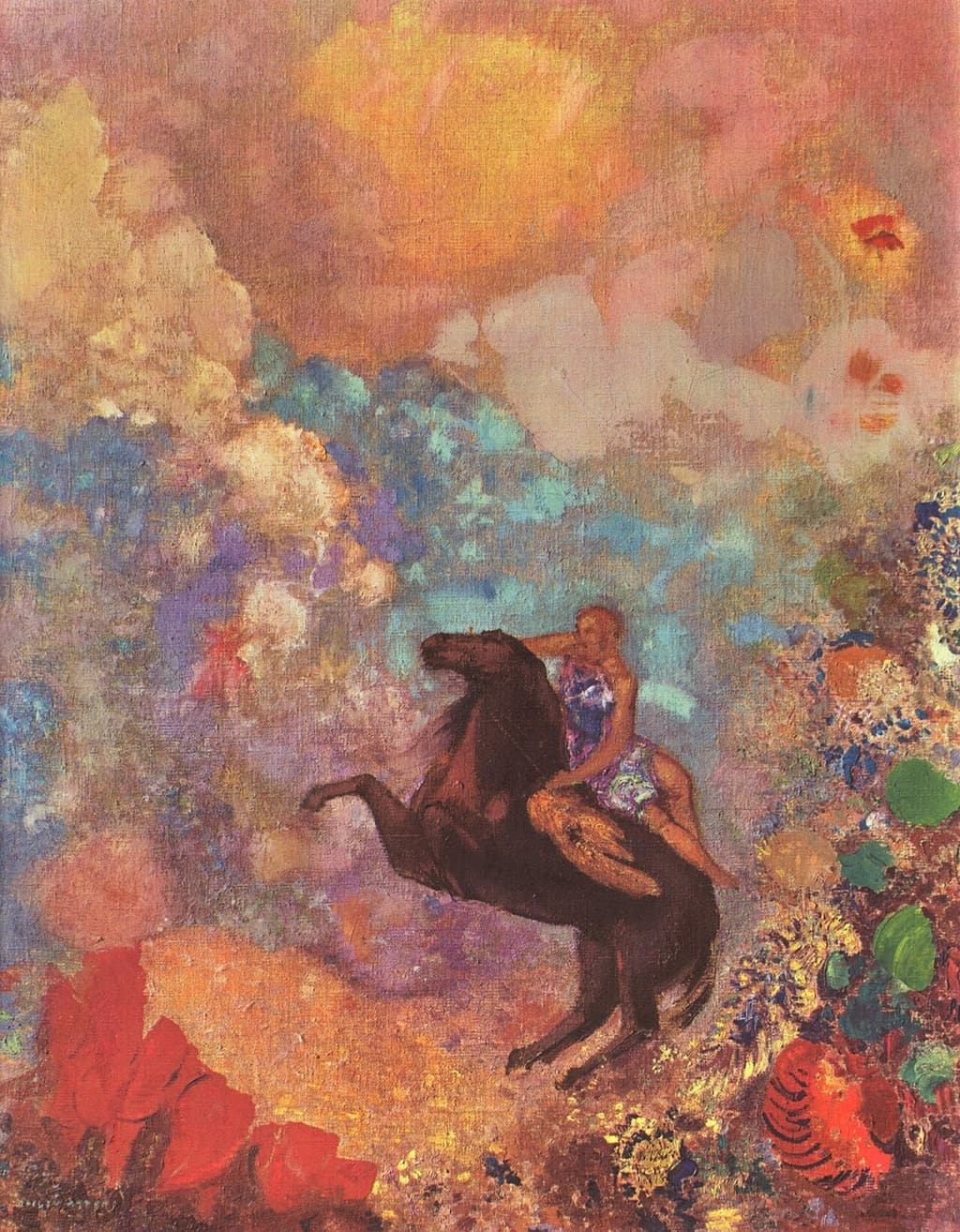
Odilon Redon (d. 1916), Muse on Pegasus, c. 1900. Oil on canvas.
Odilon Redon died 1916, so the life-plus-70 term expired in 1987 (death year from the Wikidata record for Odilon Redon, whose lifespan (1840–1916) covers the year the work was made). Licence as recorded on the source page: Public domain. Source record · file on this site
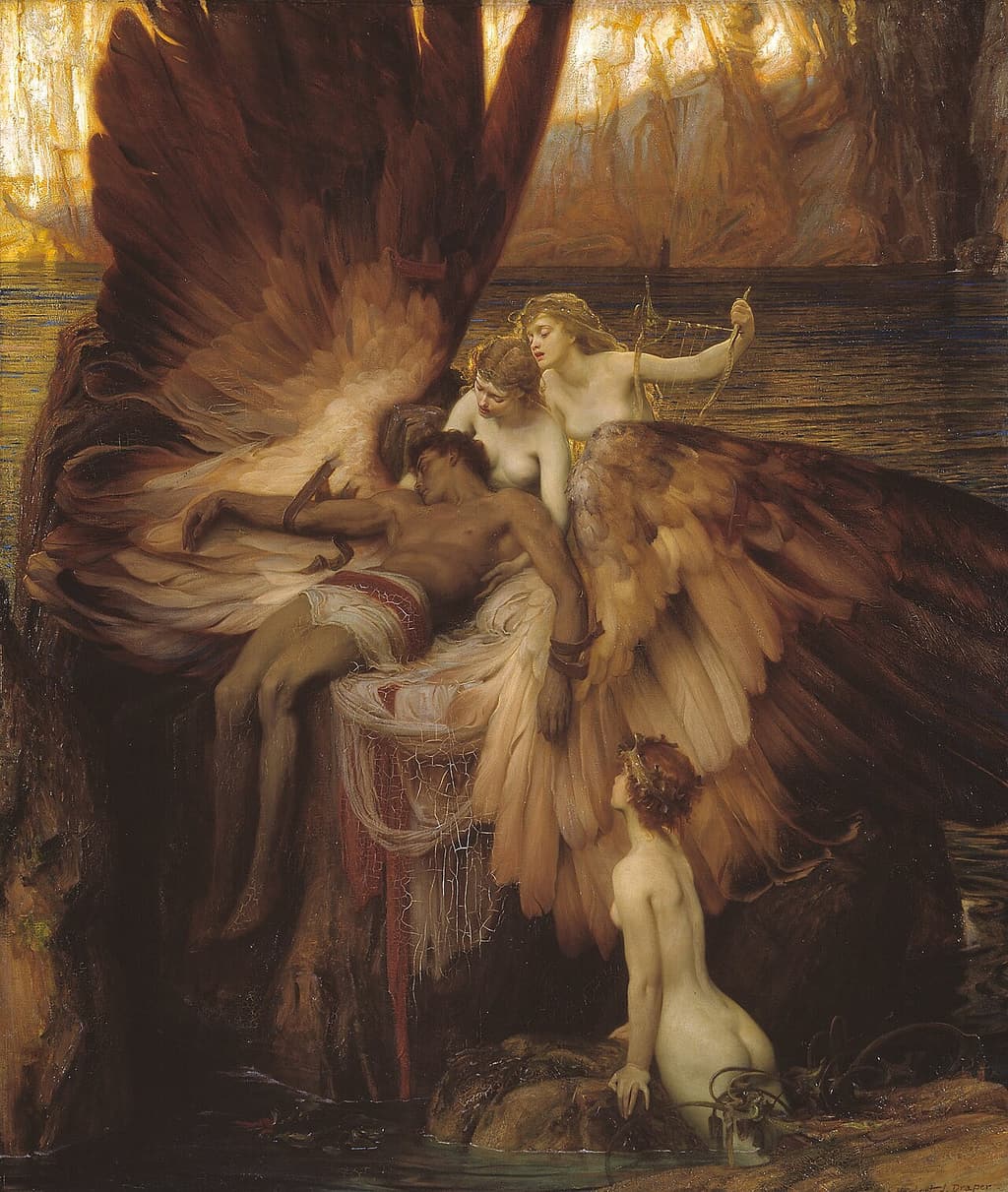
Herbert James Draper (d. 1920), The Lament for Icarus, 1898. Oil on canvas. Tate.
Herbert James Draper died 1920, so the life-plus-70 term expired in 1991 (death year from the linked Wikidata creator item). Licence as recorded on the source page: Public domain. Source record · file on this site
François Gérard (d. 1837), Psyche and Amour (detail), 1798. Oil on canvas. Department of Paintings of the Louvre.
François Gérard died 1837, so the life-plus-70 term expired in 1908 (death year from the linked Wikidata creator item). Licence as recorded on the source page: Public domain. Source record · file on this site
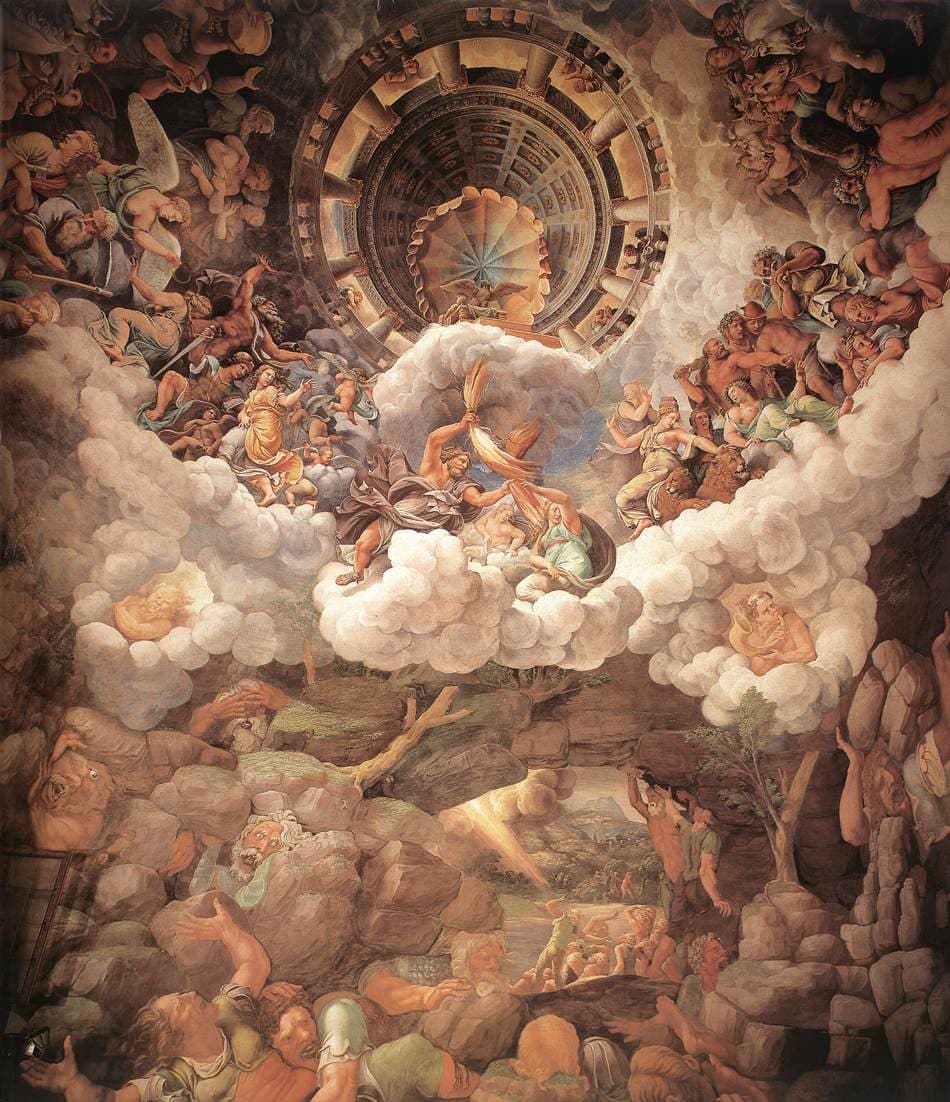
Giulio Romano (d. 1546), The Fall of the Giants, c. 1532. Fresco, Palazzo Te, Mantua.
Giulio Romano died 1546, so the life-plus-70 term expired in 1617 (death year from the Wikidata record for Giulio Romano). Licence as recorded on the source page: Public domain. Source record · file on this site
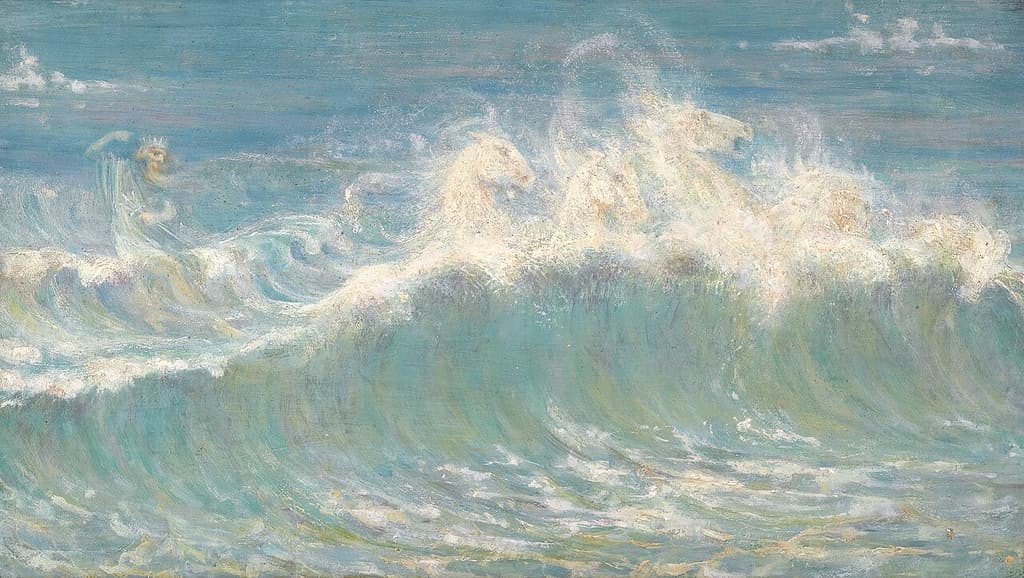
Walter Crane (d. 1915), Neptune's Horses, c. 1892. Oil on canvas.
Walter Crane died 1915, so the life-plus-70 term expired in 1986 (death year from the linked Wikidata creator item). Licence as recorded on the source page: Public domain. Source record · file on this site
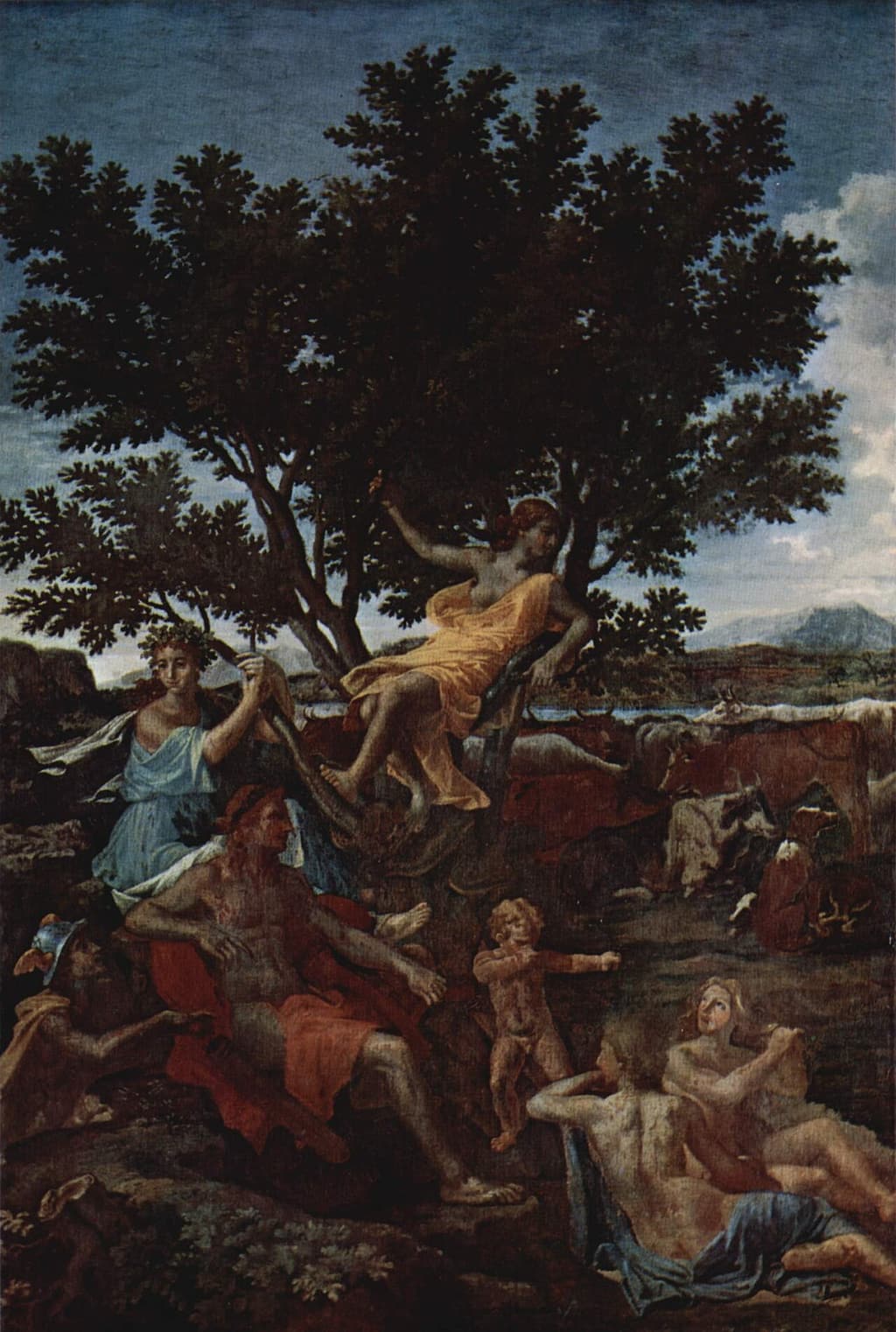
Nicolas Poussin (d. 1665), Apollo in Love with Daphne, 1664. Oil on canvas. Department of Paintings of the Louvre.
Nicolas Poussin died 1665, so the life-plus-70 term expired in 1736 (death year from the linked Wikidata creator item). Licence as recorded on the source page: Public domain. Source record · file on this site
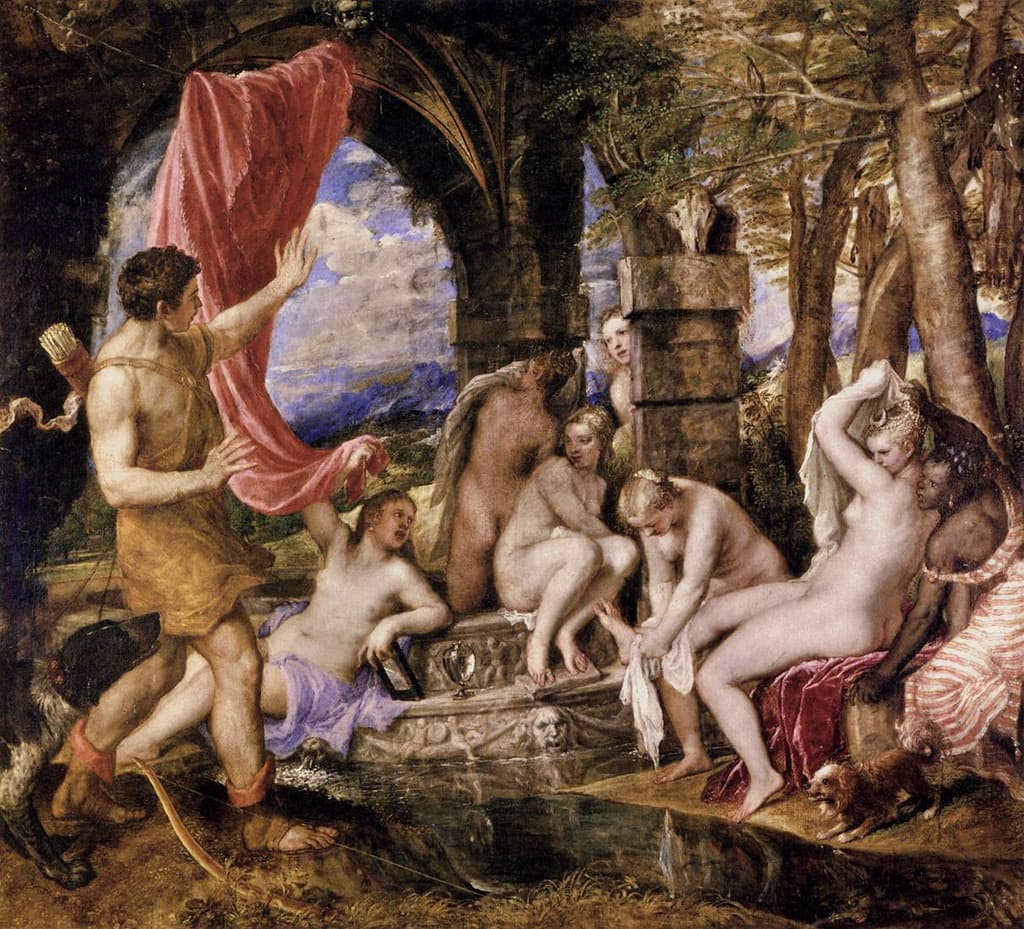
Titian (d. 1576), Diana and Actaeon, 1556–1559. Oil on canvas. National Gallery.
Titian died 1576, so the life-plus-70 term expired in 1647 (death year from the linked Wikidata creator item). Licence as recorded on the source page: Public domain. Source record · file on this site
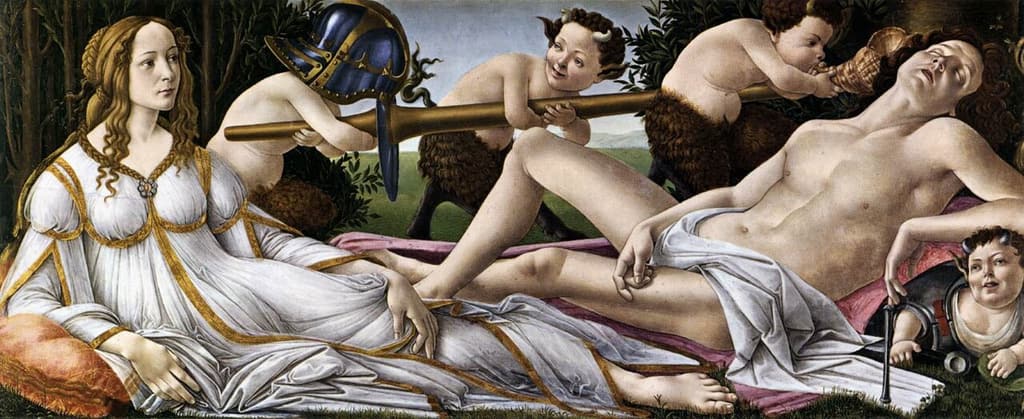
Sandro Botticelli (d. 1510), Venus and Mars, c. 1483–1485. Tempera and oil on poplar. National Gallery.
Sandro Botticelli died 1510, so the life-plus-70 term expired in 1581 (death year from the linked Wikidata creator item). Licence as recorded on the source page: Public domain. Source record · file on this site
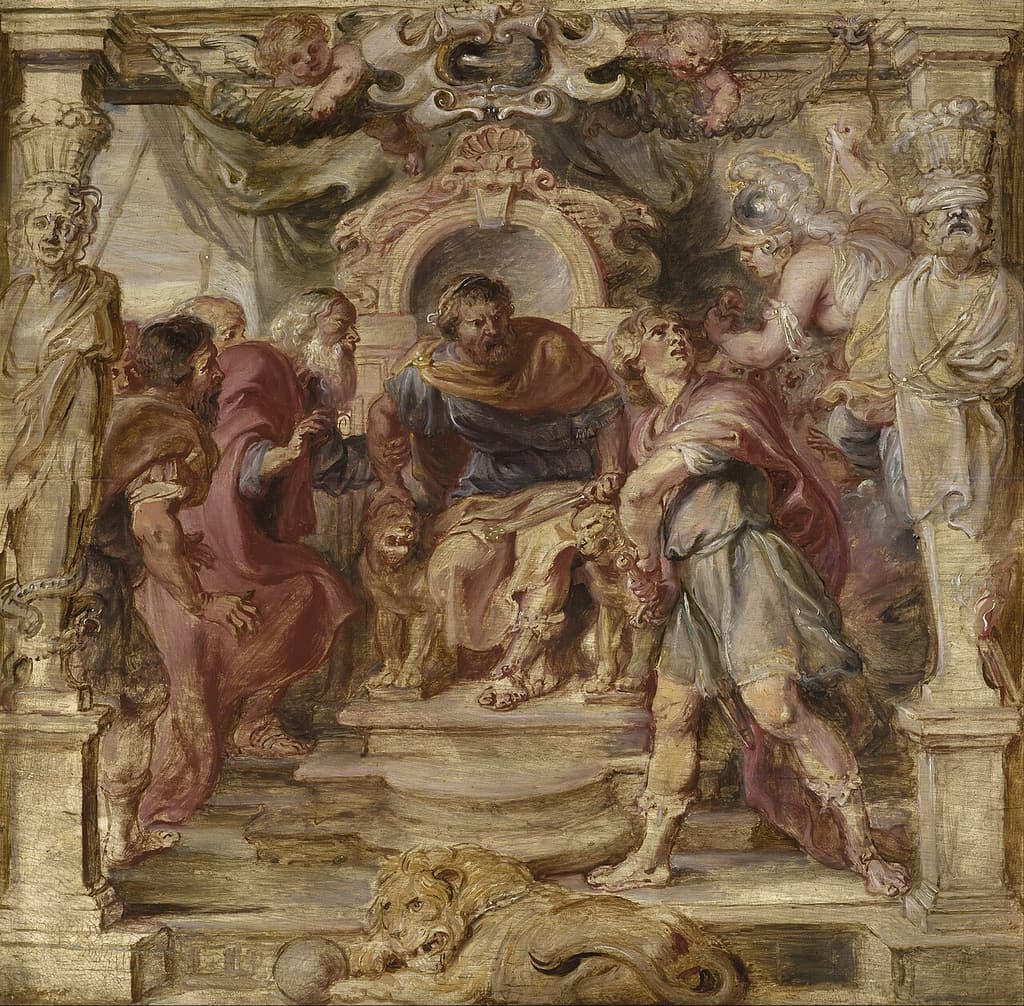
Peter Paul Rubens (d. 1640), The Wrath of Achilles, c. 1630–35. Oil on panel. Museum Boijmans Van Beuningen.
Peter Paul Rubens died 1640, so the life-plus-70 term expired in 1711 (death year from the linked Wikidata creator item). Licence as recorded on the source page: Public domain. Source record · file on this site
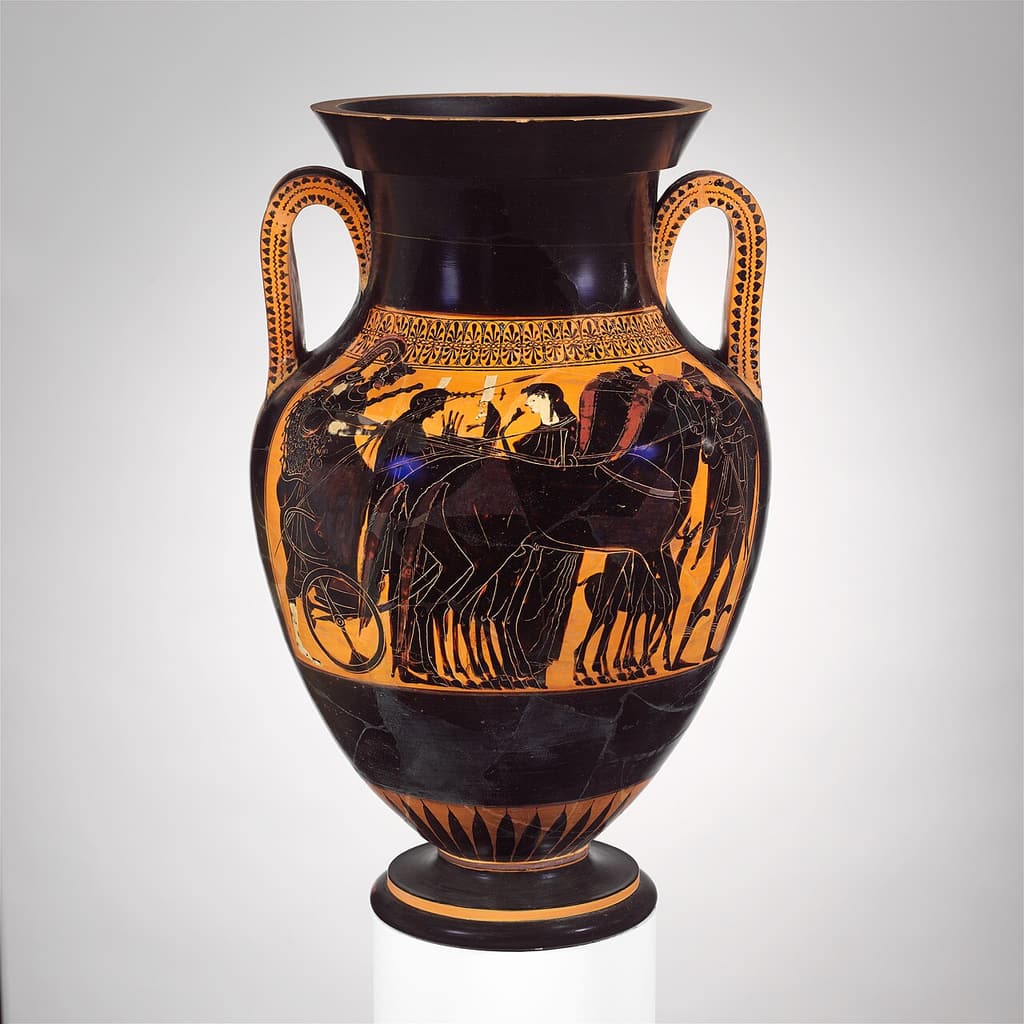
Antimenes Painter, Attic black-figure amphora: Athena and Herakles in a chariot, c. 510 BCE. Terracotta, black-figure. Metropolitan Museum of Art.
The vase was thrown and painted in Athens around 510 BCE. The photograph is a separate copyrightable work and is used only because the holding institution released it under a CC0 public-domain dedication, which is the licence recorded on the source page. Licence as recorded on the source page: CC0. Source record · file on this site




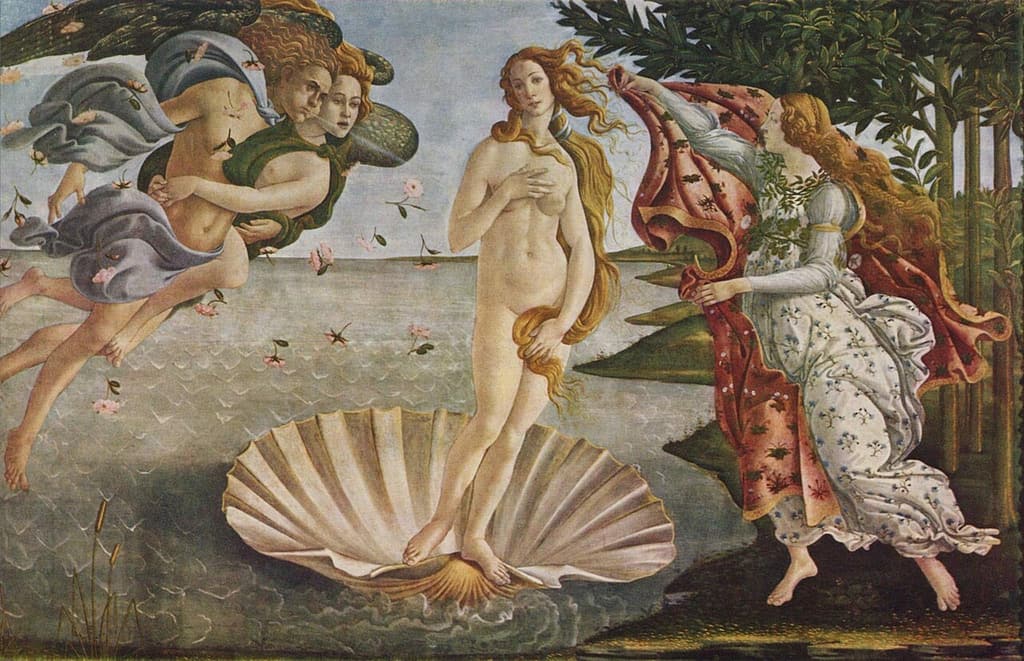

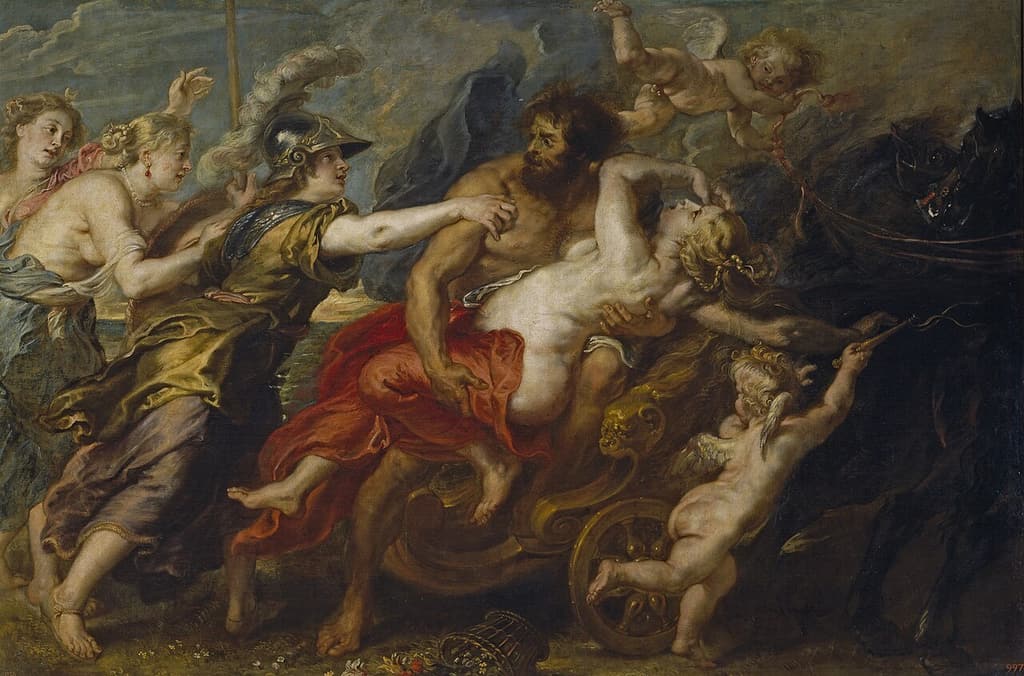

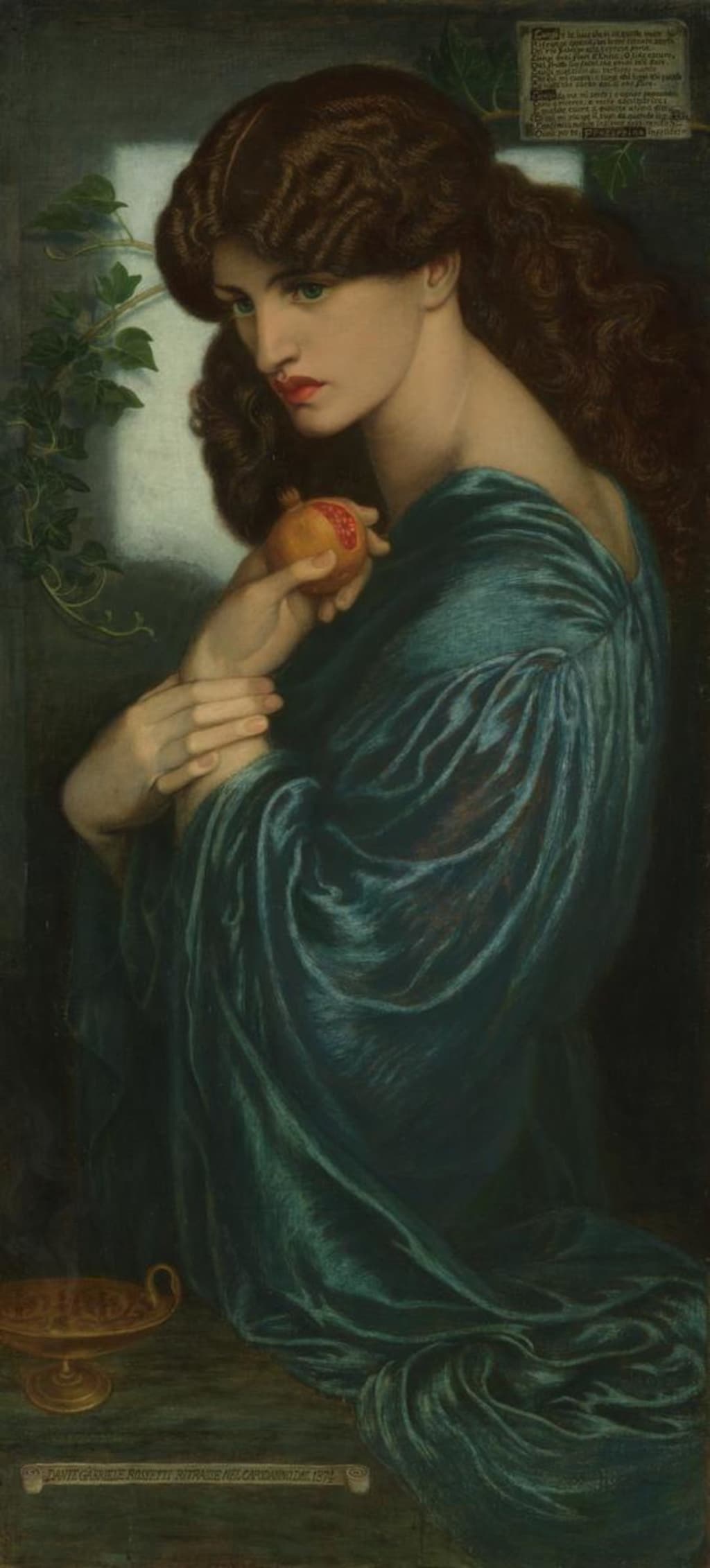

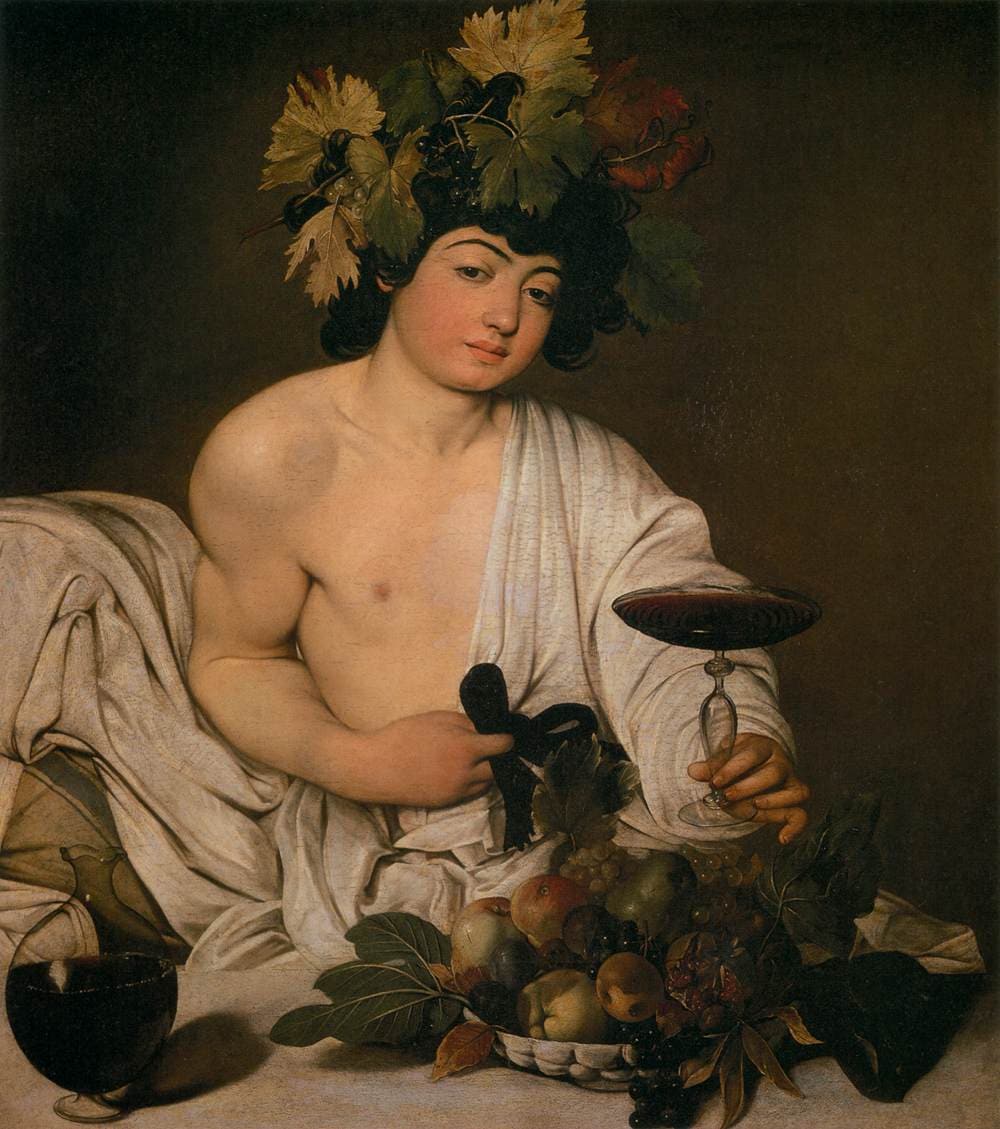




.jpg)

.jpg)




















.jpg)




_MET_DP115350.jpg)
Norse mythology
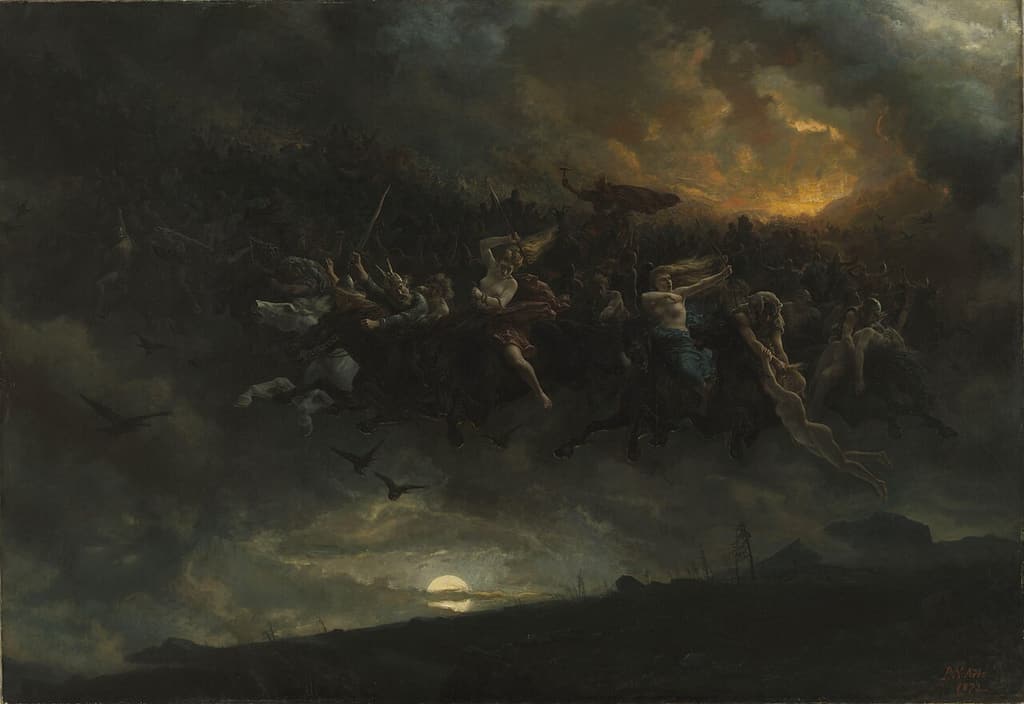
Peter Nicolai Arbo (d. 1892), Åsgårdsreien (The Wild Hunt of Odin), 1872. Oil on canvas. National Museum of Art, Architecture and Design.
Peter Nicolai Arbo died 1892, so the life-plus-70 term expired in 1963 (death year from the linked Wikidata creator item). Licence as recorded on the source page: Public domain. Source record · file on this site
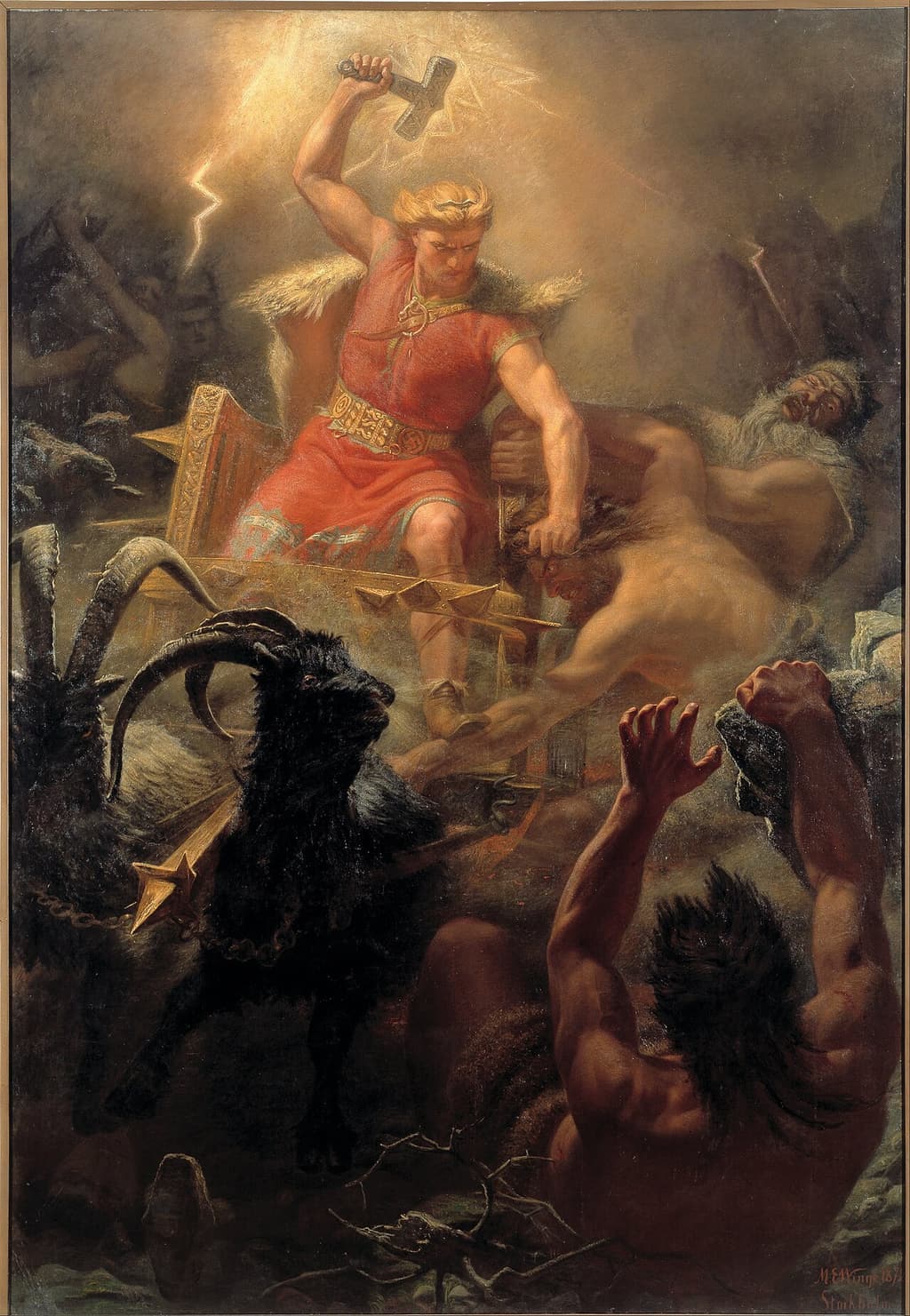
Mårten Eskil Winge (d. 1896), Thor's Fight with the Giants, 1872. Oil on canvas. Nationalmuseum.
Mårten Eskil Winge died 1896, so the life-plus-70 term expired in 1967 (death year from the linked Wikidata creator item). Licence as recorded on the source page: Public domain. Source record · file on this site
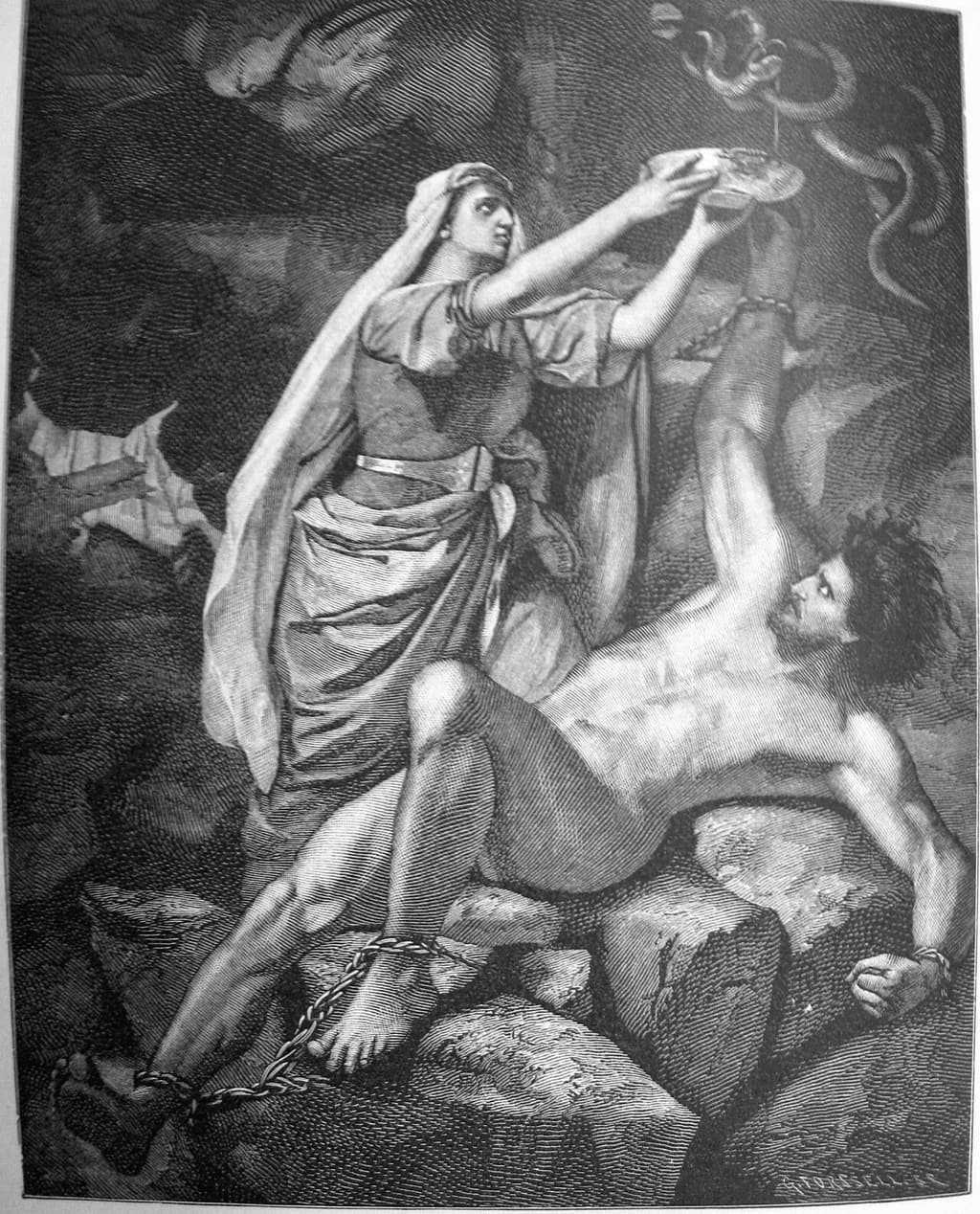
Mårten Eskil Winge and Gunnar Forssell (d. 1896), Loki and Sigyn, 1863. Painting, reproduced as a book plate.
Mårten Eskil Winge and Gunnar Forssell died 1896, so the life-plus-70 term expired in 1967 (death year from the life dates stated on the source page). Licence as recorded on the source page: Public domain. Source record · file on this site
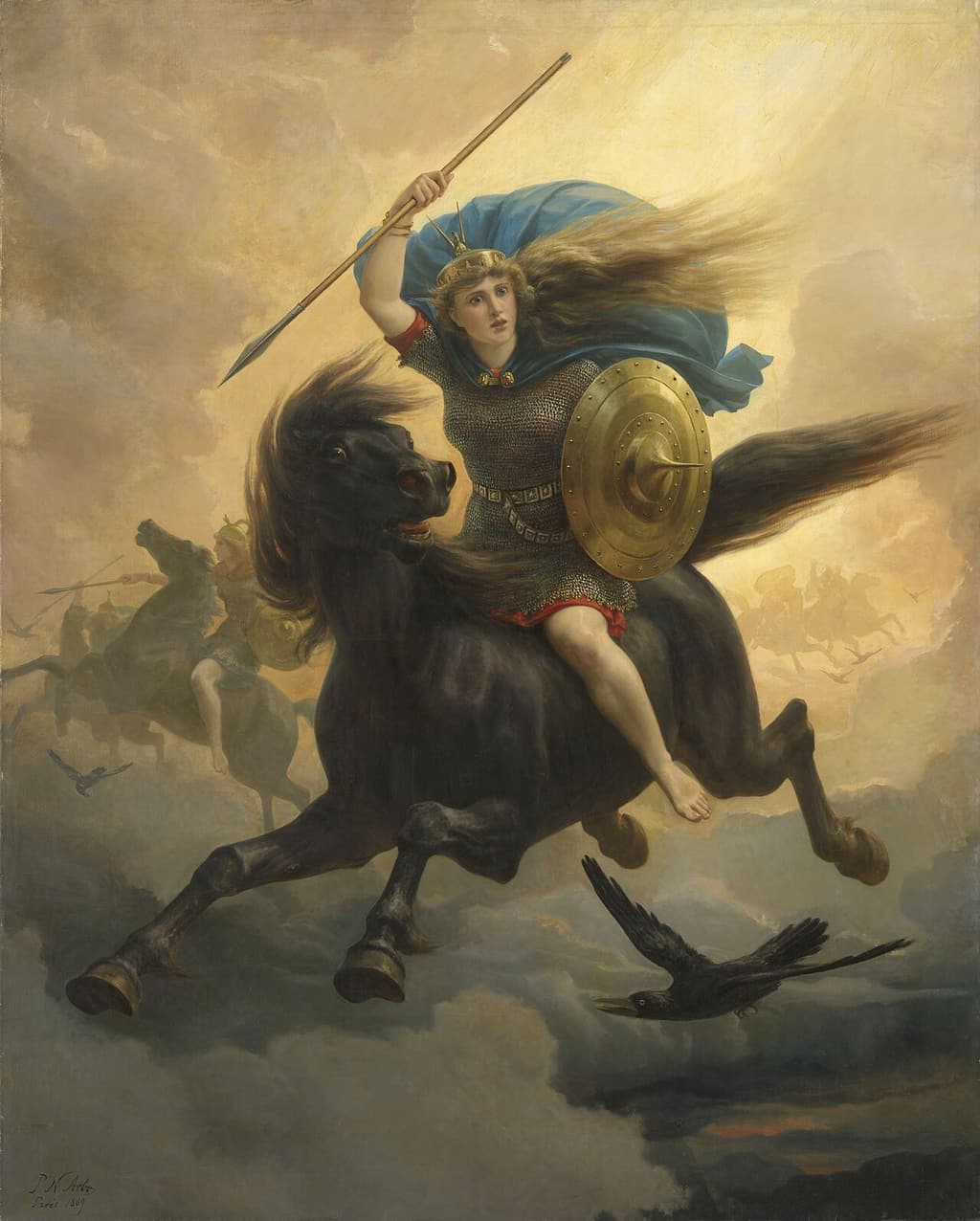
Peter Nicolai Arbo (d. 1892), Valkyrien (The Valkyrie), 1869. Oil on canvas. National Museum of Art, Architecture and Design.
Peter Nicolai Arbo died 1892, so the life-plus-70 term expired in 1963 (death year from the linked Wikidata creator item). Licence as recorded on the source page: Public domain. Source record · file on this site
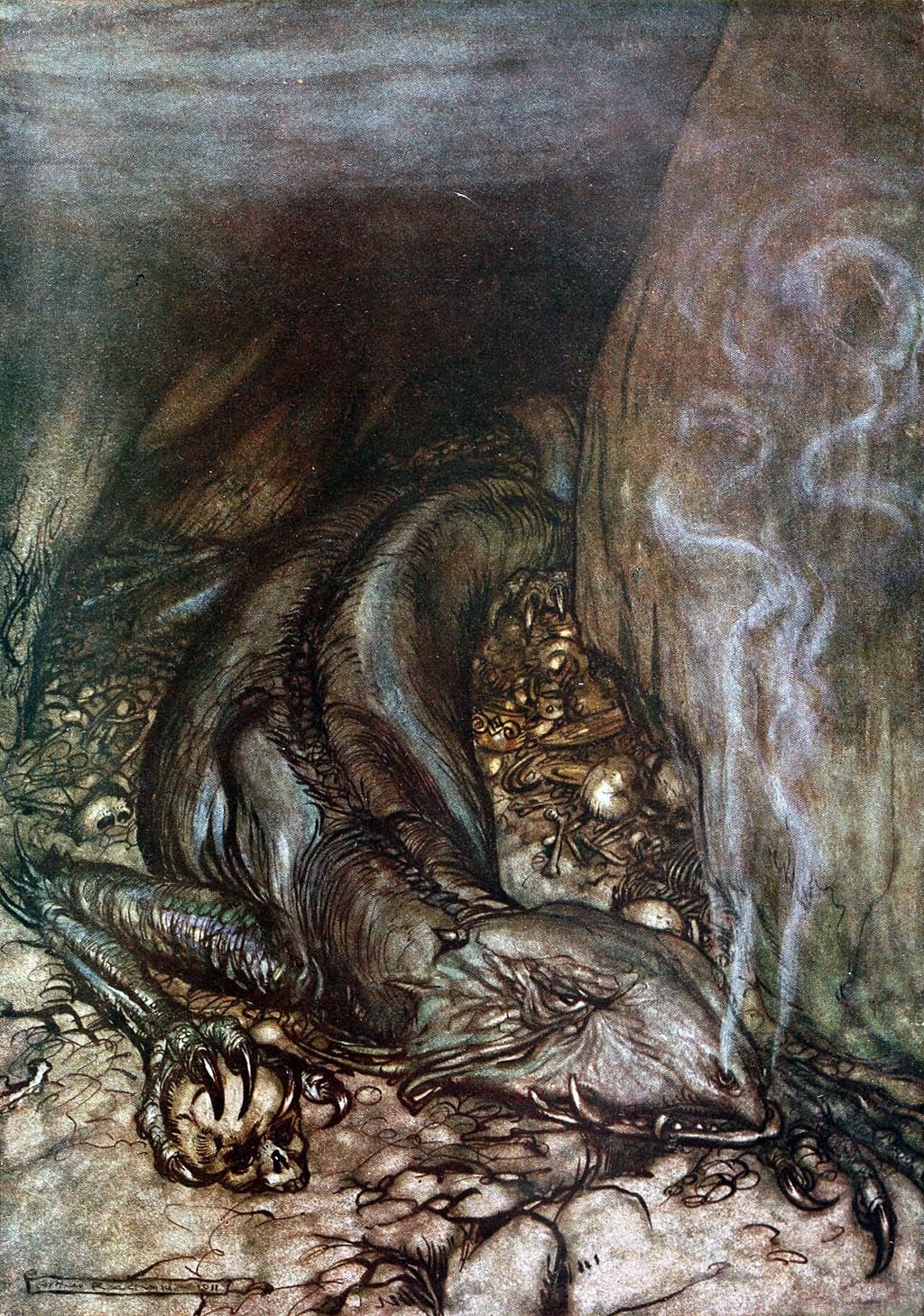
Arthur Rackham (d. 1939), Illustration to Siegfried and the Twilight of the Gods, 1911. Colour plate after a watercolour, from an illustrated edition.
Arthur Rackham died 1939, so the life-plus-70 term expired in 2010 (death year from the Wikidata record for Arthur Rackham). Licence as recorded on the source page: Public domain. Source record · file on this site
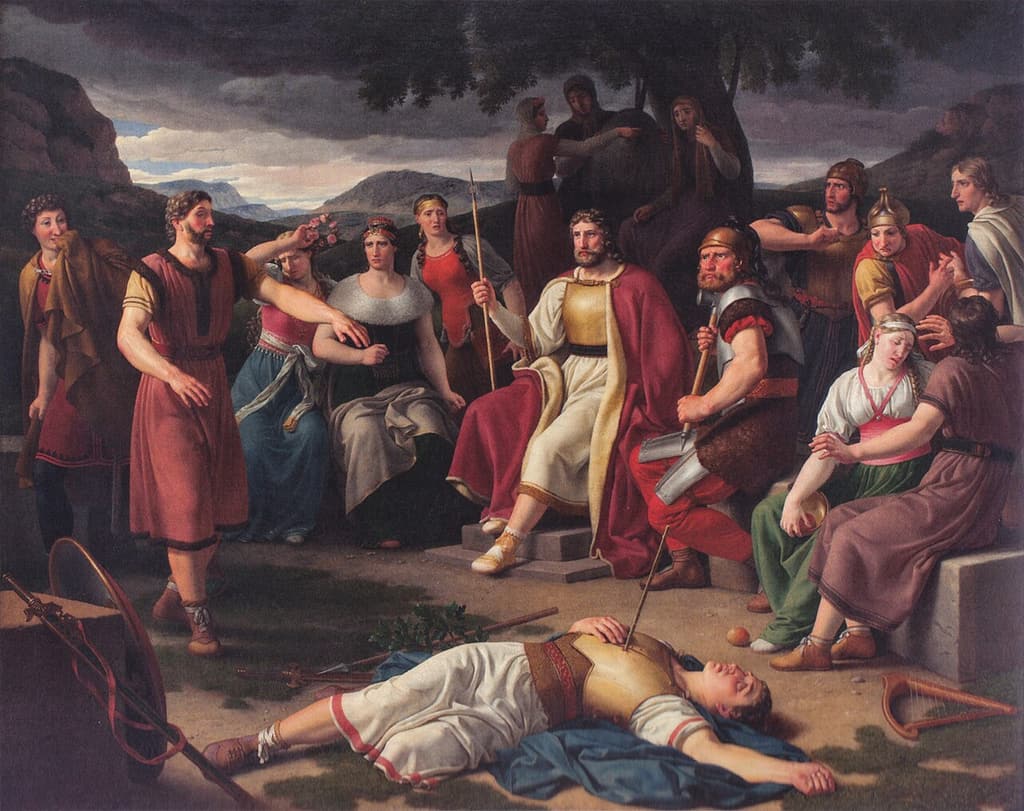
Christoffer Wilhelm Eckersberg (d. 1853), The Death of Baldr, 1817. Oil on canvas. Royal Danish Academy of Fine Arts.
Christoffer Wilhelm Eckersberg died 1853, so the life-plus-70 term expired in 1924 (death year from the linked Wikidata creator item). Licence as recorded on the source page: Public domain. Source record · file on this site
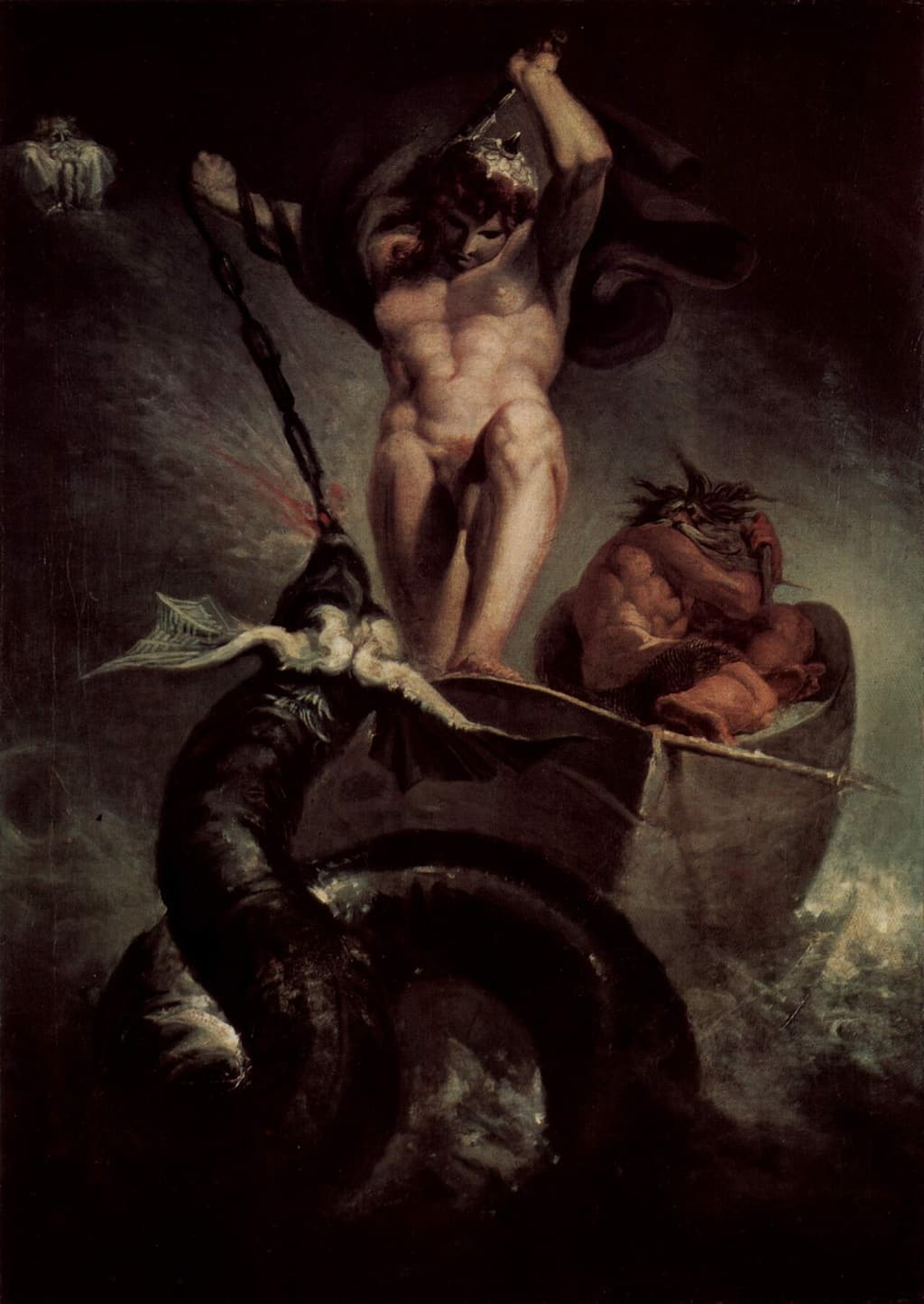
Henry Fuseli (d. 1825), Thor Battering the Midgard Serpent, 1790. Oil on canvas. Royal Academy of Arts.
Henry Fuseli died 1825, so the life-plus-70 term expired in 1896 (death year from the linked Wikidata creator item). Licence as recorded on the source page: Public domain. Source record · file on this site
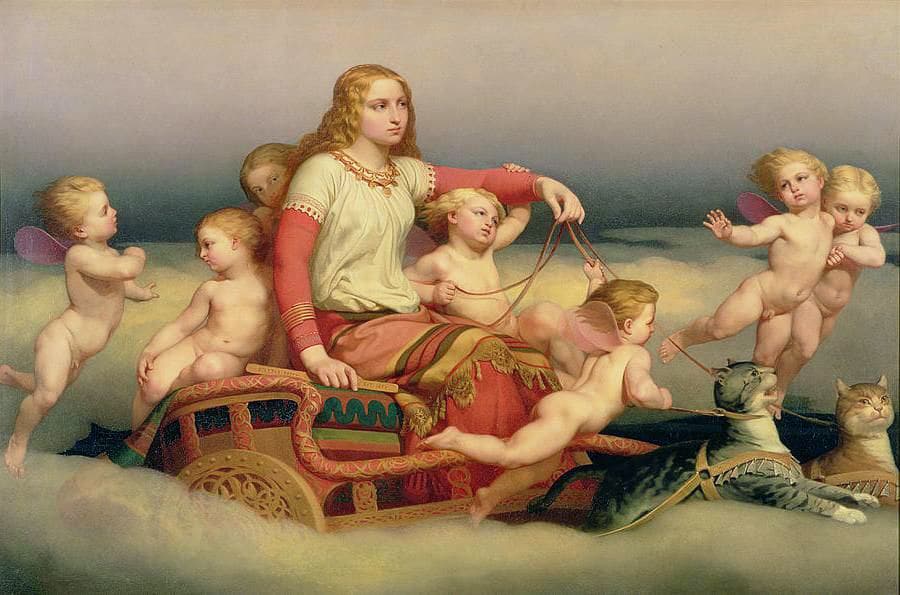
Nils Blommér (d. 1853), Freja Seeking Her Husband, 1852. Oil on canvas. Nationalmuseum.
Nils Blommér died 1853, so the life-plus-70 term expired in 1924 (death year from the linked Wikidata creator item). Licence as recorded on the source page: Public domain. Source record · file on this site
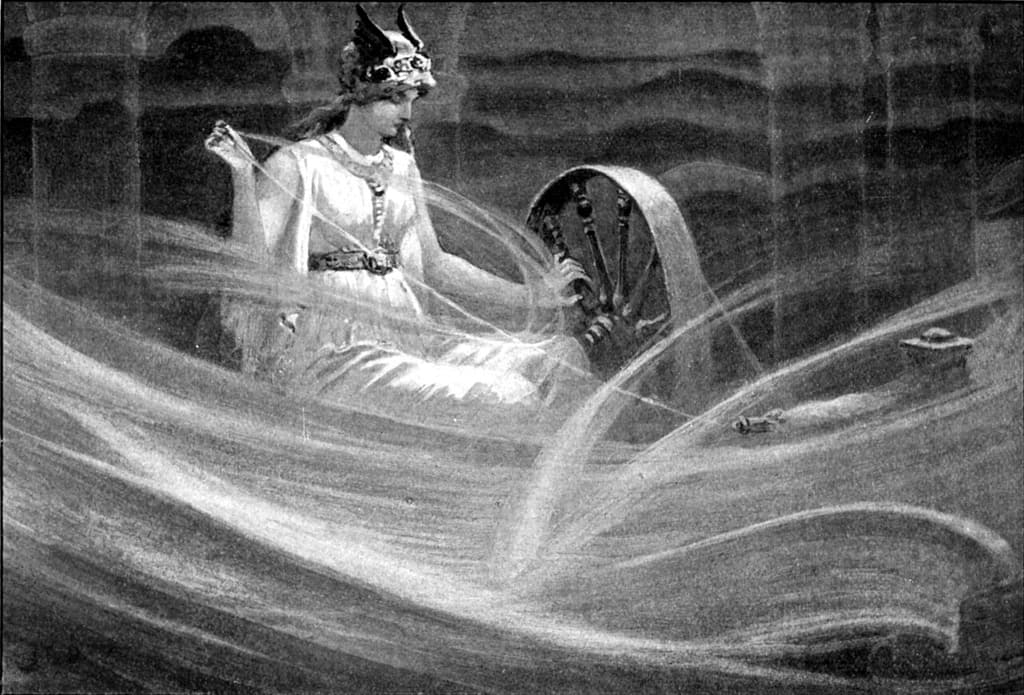
John Charles Dollman (d. 1934), Frigg Spinning the Clouds, published 1909. Book illustration.
John Charles Dollman died 1934, so the life-plus-70 term expired in 2005 (death year from the Wikidata record for John Charles Dollman). Licence as recorded on the source page: Public domain. Source record · file on this site
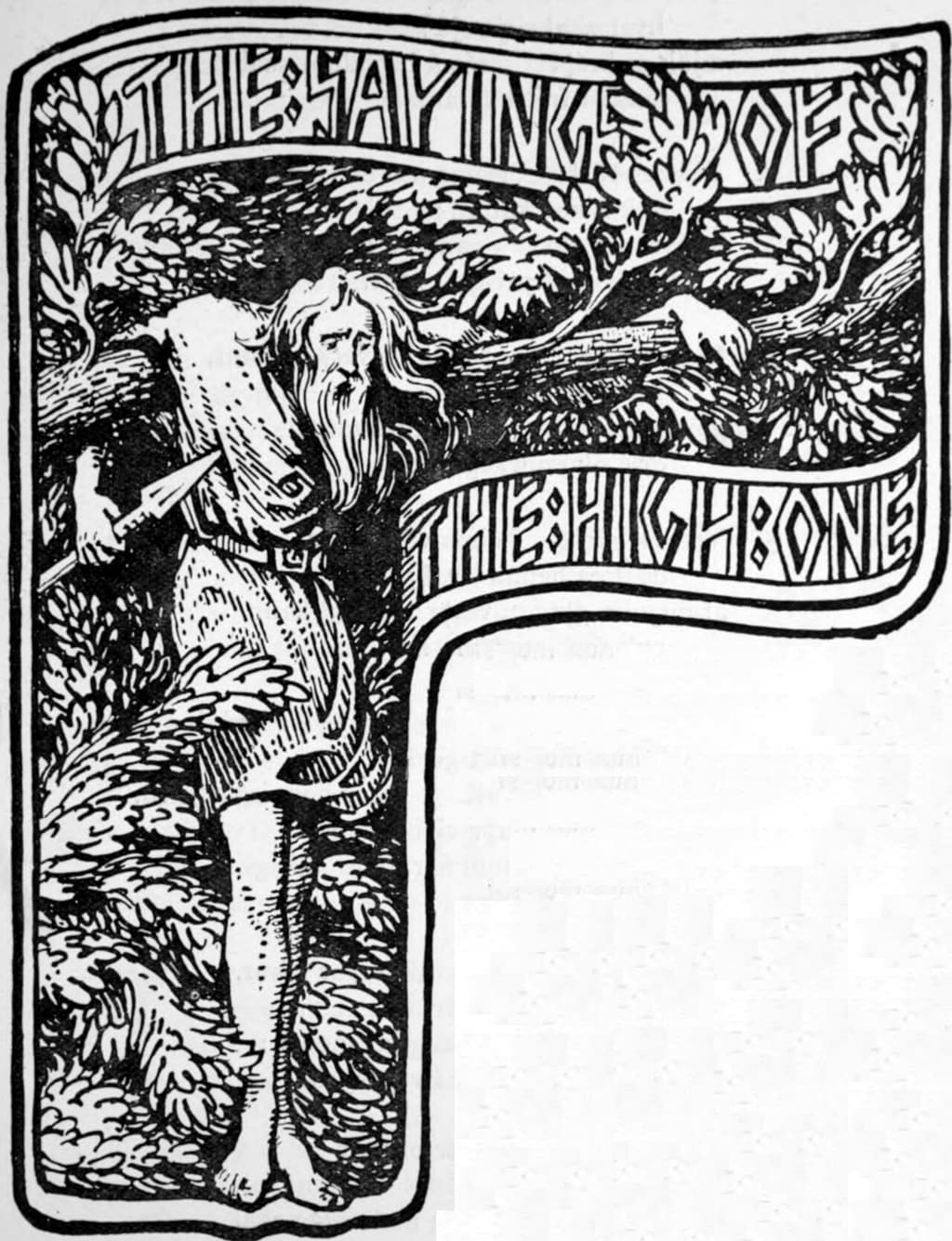
W.G. Collingwood (d. 1932), Odin's Self-sacrifice, published 1908. Book illustration, from Olive Bray's edition of the Poetic Edda.
W.G. Collingwood died 1932, so the life-plus-70 term expired in 2003 (death year from the life dates stated on the source page). Licence as recorded on the source page: Public domain. Source record · file on this site
Lorenz Frølich (d. 1908), Fenrir and Odin, published 1895. Book illustration, from Karl Gjellerup's Den ældre Edda.
Lorenz Frølich died 1908, so the life-plus-70 term expired in 1979 (death year from the Wikidata record for Lorenz Frølich). Licence as recorded on the source page: Public domain. Source record · file on this site
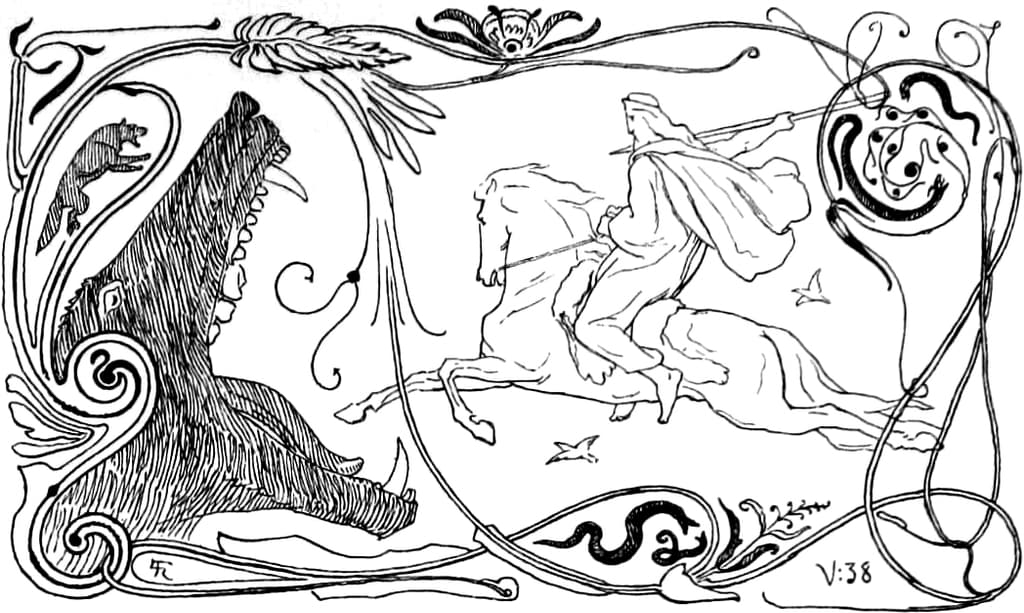
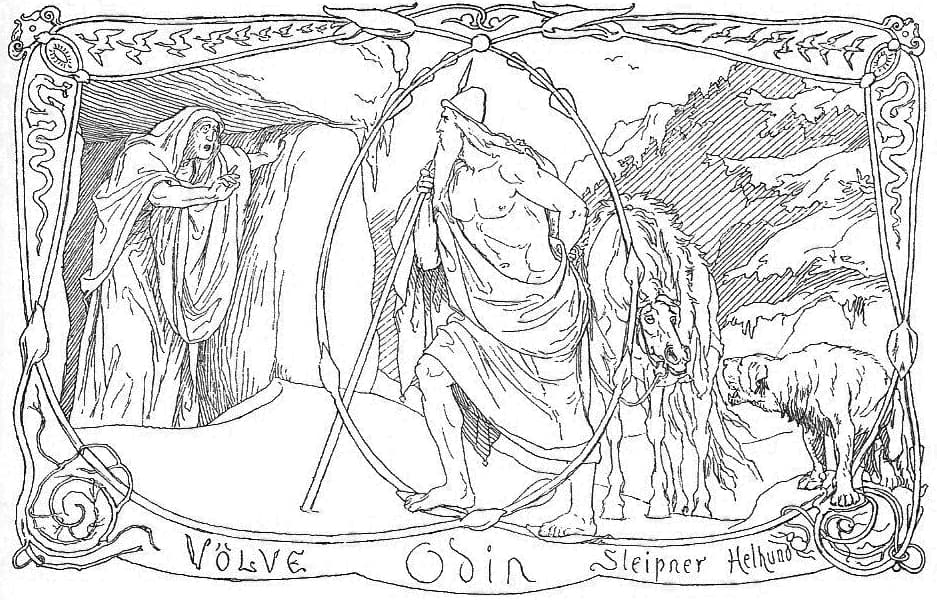
Lorenz Frølich (d. 1908), Völva, Odin, Sleipnir and the Hel-hound, published 1895. Book illustration, from Karl Gjellerup's Den ældre Edda.
Lorenz Frølich died 1908, so the life-plus-70 term expired in 1979 (death year from the Wikidata record for Lorenz Frølich). Licence as recorded on the source page: Public domain. Source record · file on this site
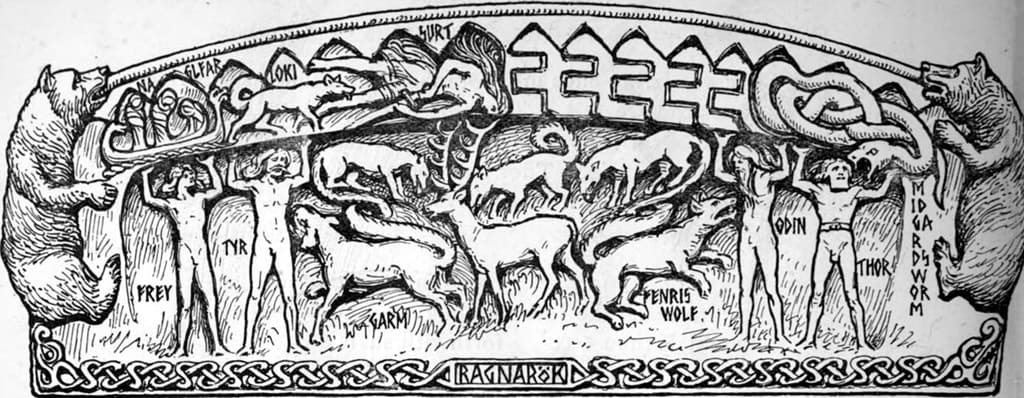
W.G. Collingwood (d. 1932), Ragnarök, after a motif from the Heysham hogback, published 1908. Book illustration after a carved stone, from Olive Bray's Poetic Edda.
W.G. Collingwood died 1932, so the life-plus-70 term expired in 2003 (death year from the life dates stated on the source page). Licence as recorded on the source page: Public domain. Source record · file on this site













Egyptian mythology
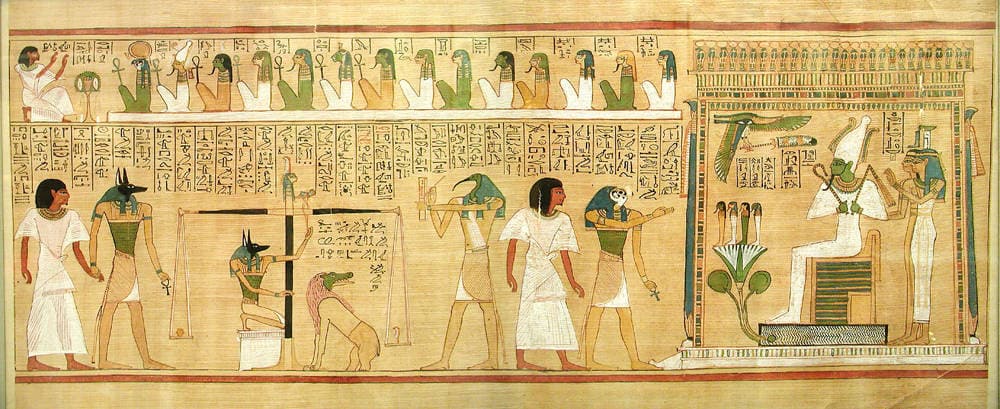
Unknown ancient Egyptian painter, The weighing of the heart, from the Book of the Dead of Hunefer, c. 1275 BCE. Painted papyrus. British Museum.
Created 1275 BCE, far outside any copyright term; the source record carries an explicit public-domain tag. The file record names Hunefer, the royal scribe for whom the papyrus was made; the painters of Egyptian funerary papyri are not recorded. Licence as recorded on the source page: Public domain. Source record · file on this site
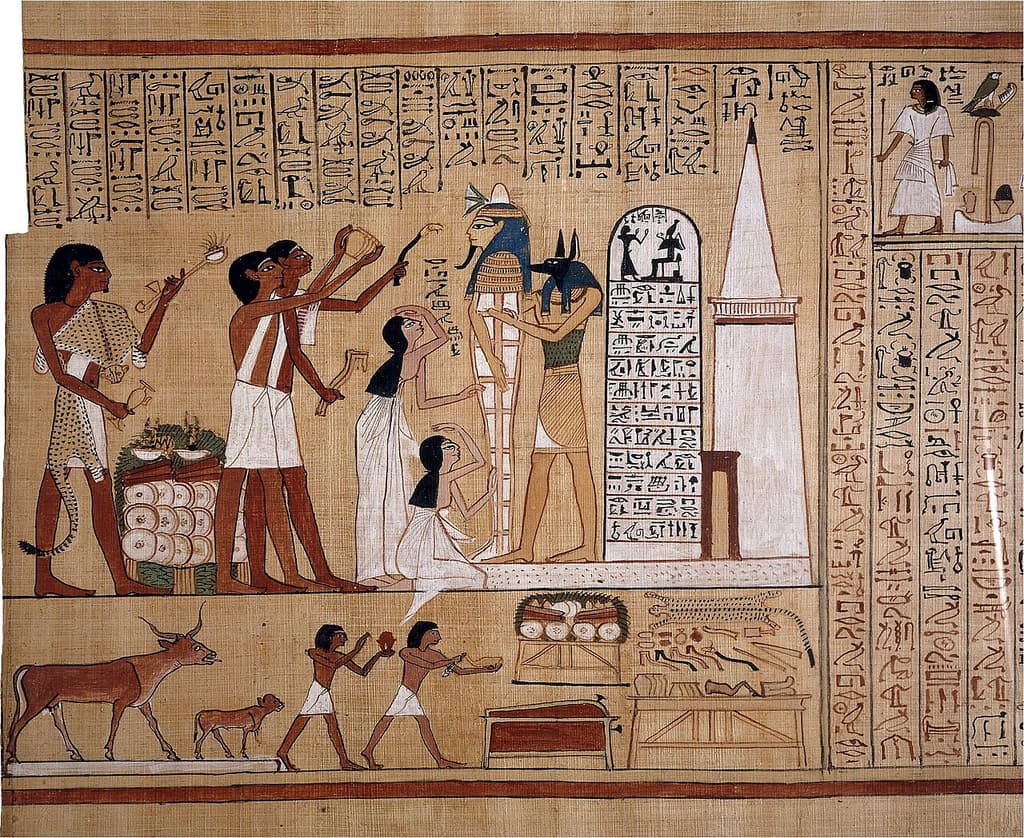
Unknown ancient Egyptian painter, The opening of the mouth ceremony, from the Book of the Dead of Hunefer, c. 1275 BCE. Painted papyrus. British Museum.
Created 1275 BCE, far outside any copyright term; the source record carries an explicit public-domain tag. The file record names Hunefer, the royal scribe for whom the papyrus was made; the painters of Egyptian funerary papyri are not recorded. Licence as recorded on the source page: Public domain. Source record · file on this site
Unknown ancient Egyptian painter, Book of the Dead of Hunefer, sheet 5, c. 1275 BCE. Painted papyrus. British Museum.
Created 1275 BCE, far outside any copyright term; the source record carries an explicit public-domain tag. The file record names Hunefer, the royal scribe for whom the papyrus was made; the painters of Egyptian funerary papyri are not recorded. Licence as recorded on the source page: Public domain. Source record · file on this site
Unknown ancient Egyptian painter, Book of the Dead of Hunefer, sheet 3, c. 1275 BCE. Painted papyrus. British Museum.
Created 1275 BCE, far outside any copyright term; the source record carries an explicit public-domain tag. The file record names Hunefer, the royal scribe for whom the papyrus was made; the painters of Egyptian funerary papyri are not recorded. Licence as recorded on the source page: Public domain. Source record · file on this site
Unknown ancient Egyptian sculptor, Relief of Nebhepetre Mentuhotep II and the Goddess Hathor, c. 2010–2000 BCE. Painted limestone relief. Metropolitan Museum of Art.
The relief itself was carved around 2000 BCE. The photograph is a separate copyrightable work and is used only because the holding institution released it under a CC0 public-domain dedication, which is the licence recorded on the source page. Licence as recorded on the source page: CC0. Source record · file on this site
Published by C. L. F. Panckoucke, after the survey draughtsmen of the Commission des Sciences et Arts, Bas-reliefs at Philae, from the Description de l'Égypte, published 1809–1829. Engraved survey plate.
Published by C. L. F. Panckoucke, after the survey draughtsmen of the Commission des Sciences et Arts died 1844, so the life-plus-70 term expired in 1915 (death year from the life dates stated on the source page). Attribution as given on the file record; the individual draughtsmen of the plates are not separately credited there. Licence as recorded on the source page: Public domain. Source record · file on this site
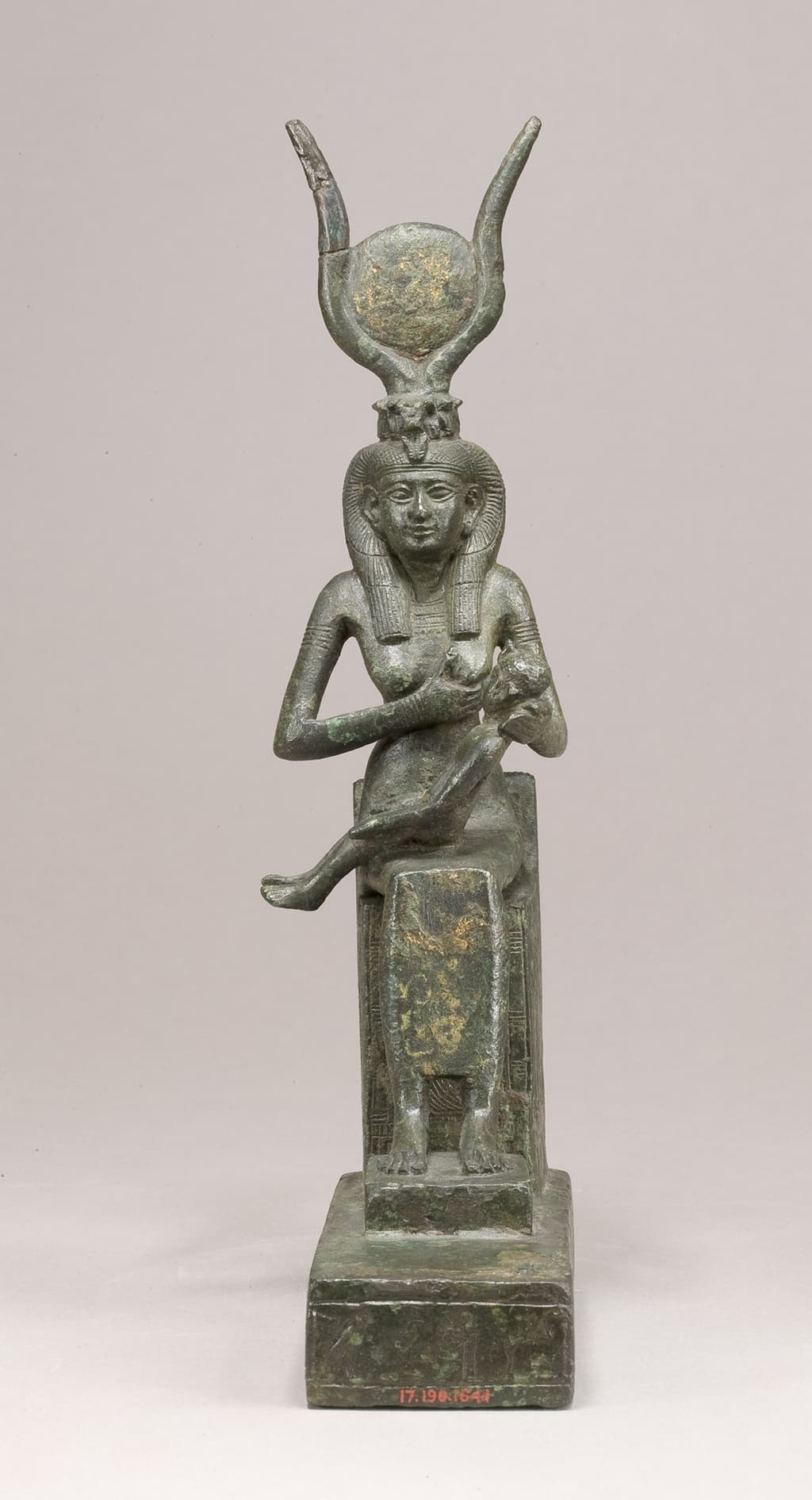
Unknown ancient Egyptian bronze-caster, Statuette of Isis nursing Horus, c. 1070–664 BCE. Cast bronze statuette. Metropolitan Museum of Art.
The statuette itself was cast in Egypt around three thousand years ago. The photograph is a separate copyrightable work and is used only because the holding institution released it under a CC0 public-domain dedication, which is the licence recorded on the source page. Licence as recorded on the source page: CC0. Source record · file on this site



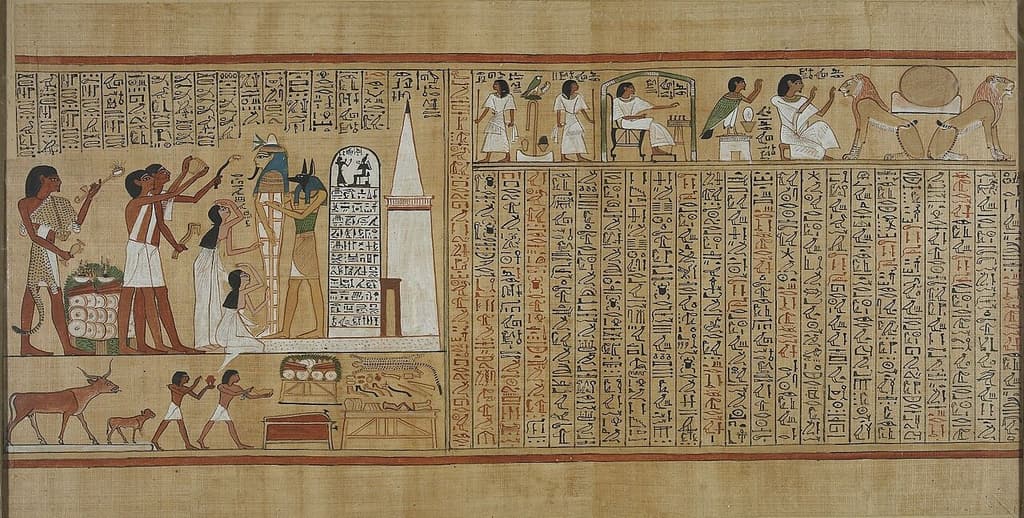

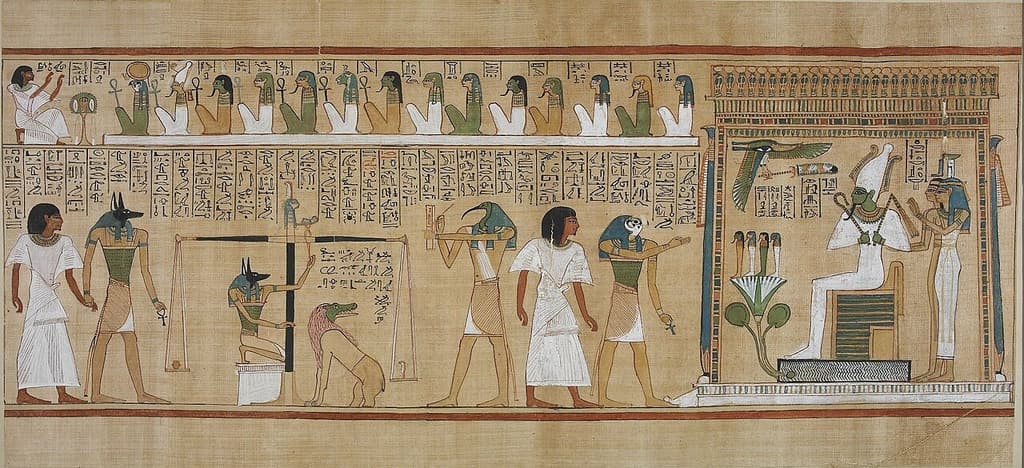

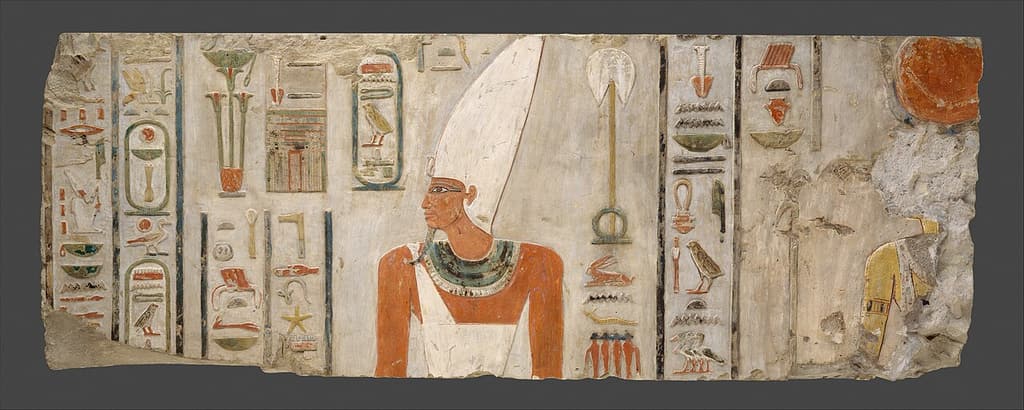
.jpg)
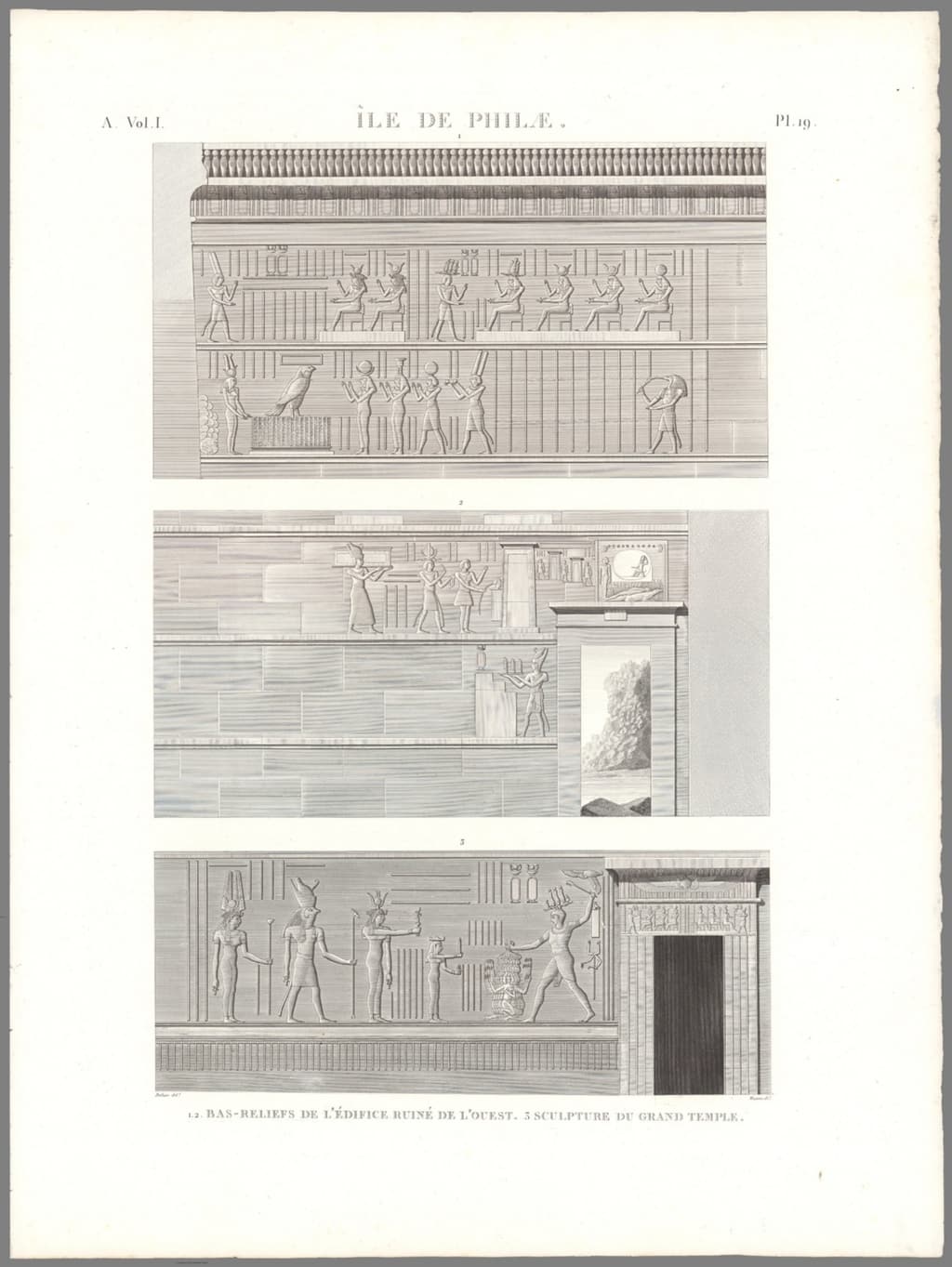

Roman mythology
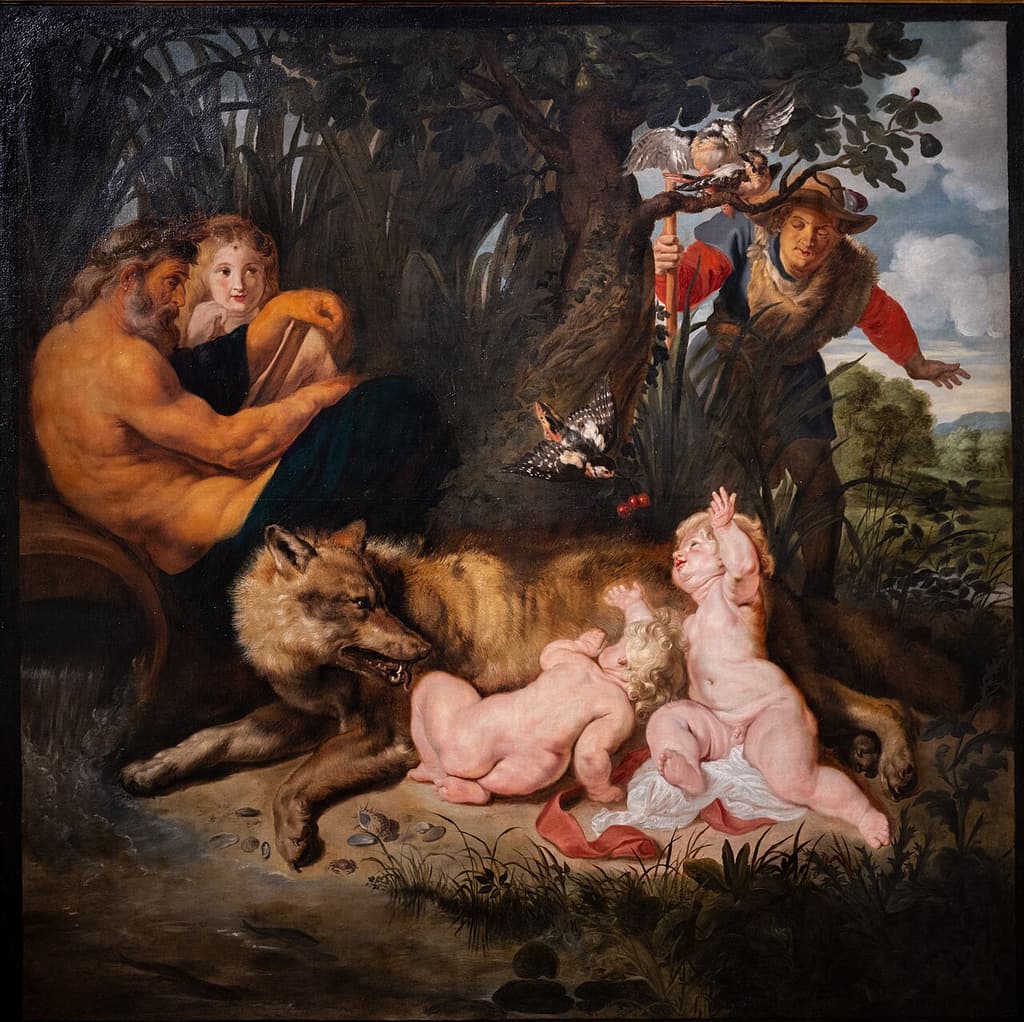
Peter Paul Rubens (d. 1640), Romulus and Remus, c. 1616. Oil on canvas. Musei Capitolini.
Peter Paul Rubens died 1640, so the life-plus-70 term expired in 1711 (death year from the Wikidata record for Peter Paul Rubens, established from another work by the same hand in this set). Licence as recorded on the source page: CC0. Source record · file on this site
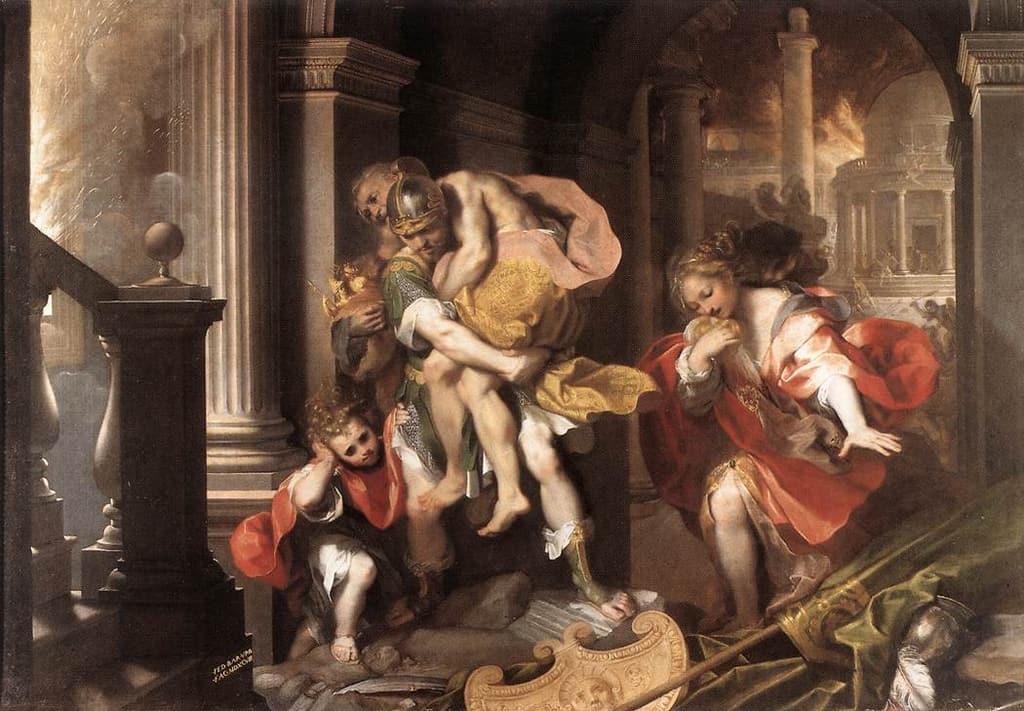
Federico Barocci (d. 1612), Aeneas' Flight from Troy, 1598. Oil on canvas. Galleria Borghese.
Federico Barocci died 1612, so the life-plus-70 term expired in 1683 (death year from the linked Wikidata creator item). Licence as recorded on the source page: Public domain. Source record · file on this site
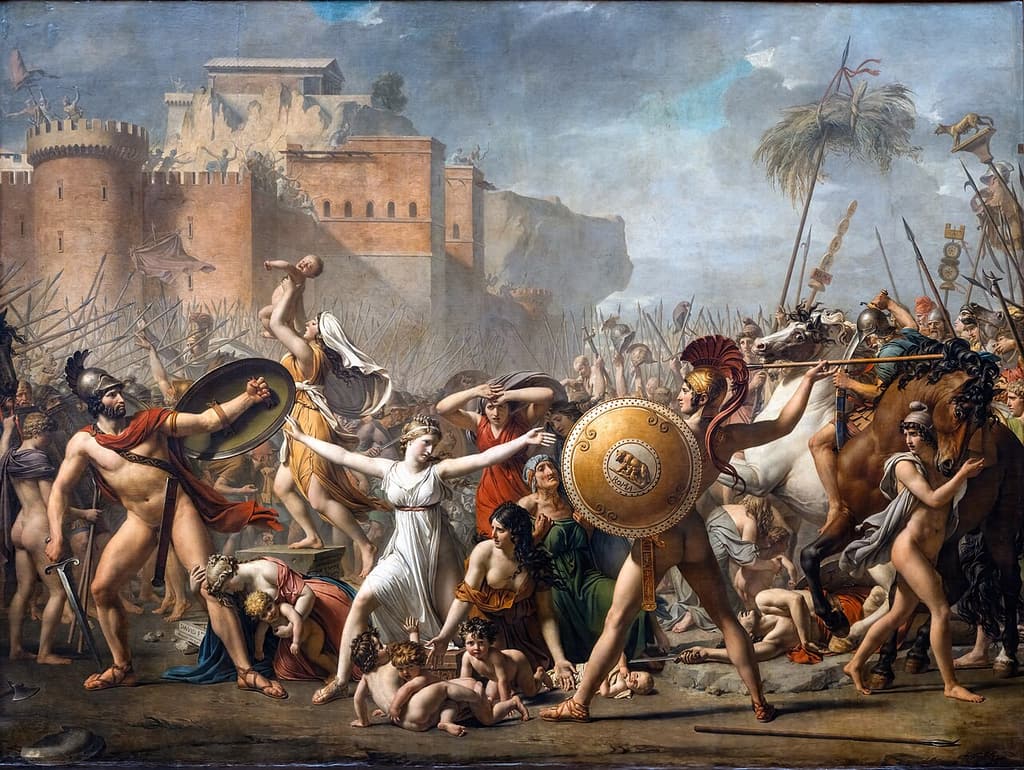
Jacques-Louis David (d. 1825), The Intervention of the Sabine Women, 1799. Oil on canvas. Louvre Museum.
Jacques-Louis David died 1825, so the life-plus-70 term expired in 1896 (death year from the Wikidata record for Jacques-Louis David, whose lifespan (1748–1825) covers the year the work was made). Licence as recorded on the source page: Public domain. Source record · file on this site
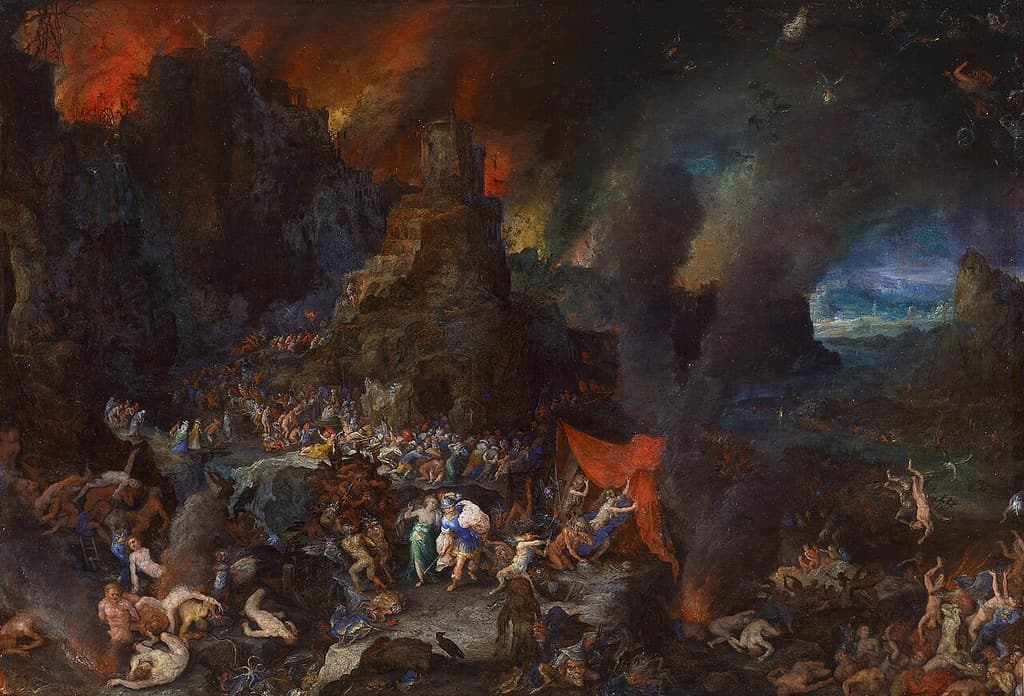
Jan Brueghel the Elder (d. 1625), Aeneas and the Sibyl in the Underworld, c. 1600. Oil on copper. Kunsthistorisches Museum.
Jan Brueghel the Elder died 1625, so the life-plus-70 term expired in 1696 (death year from the linked Wikidata creator item). Licence as recorded on the source page: Public domain. Source record · file on this site
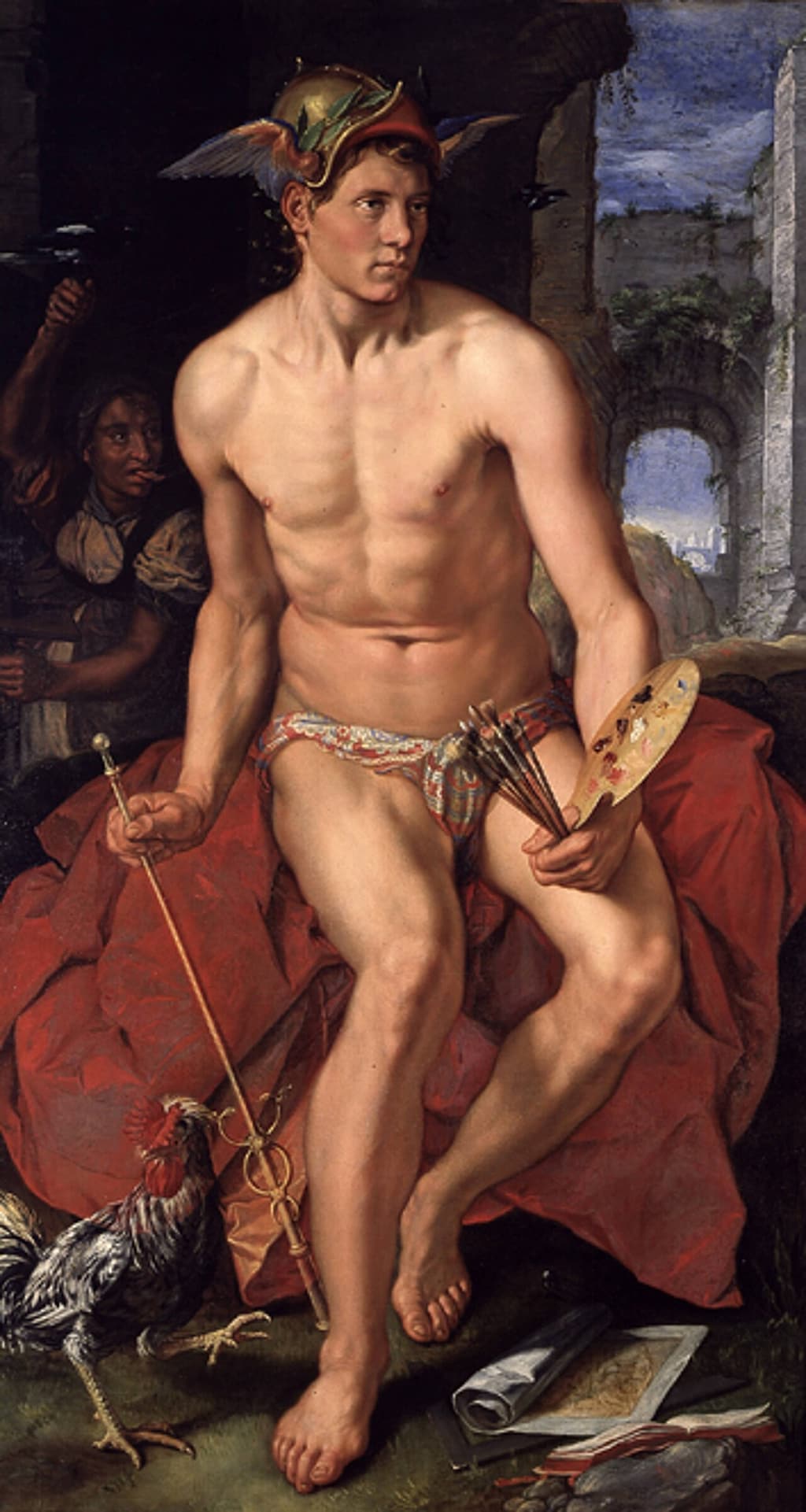
Hendrik Goltzius (d. 1617), Mercury, 1611. Oil on canvas. Frans Hals Museum.
Hendrik Goltzius died 1617, so the life-plus-70 term expired in 1688 (death year from the linked Wikidata creator item). Licence as recorded on the source page: Public domain. Source record · file on this site
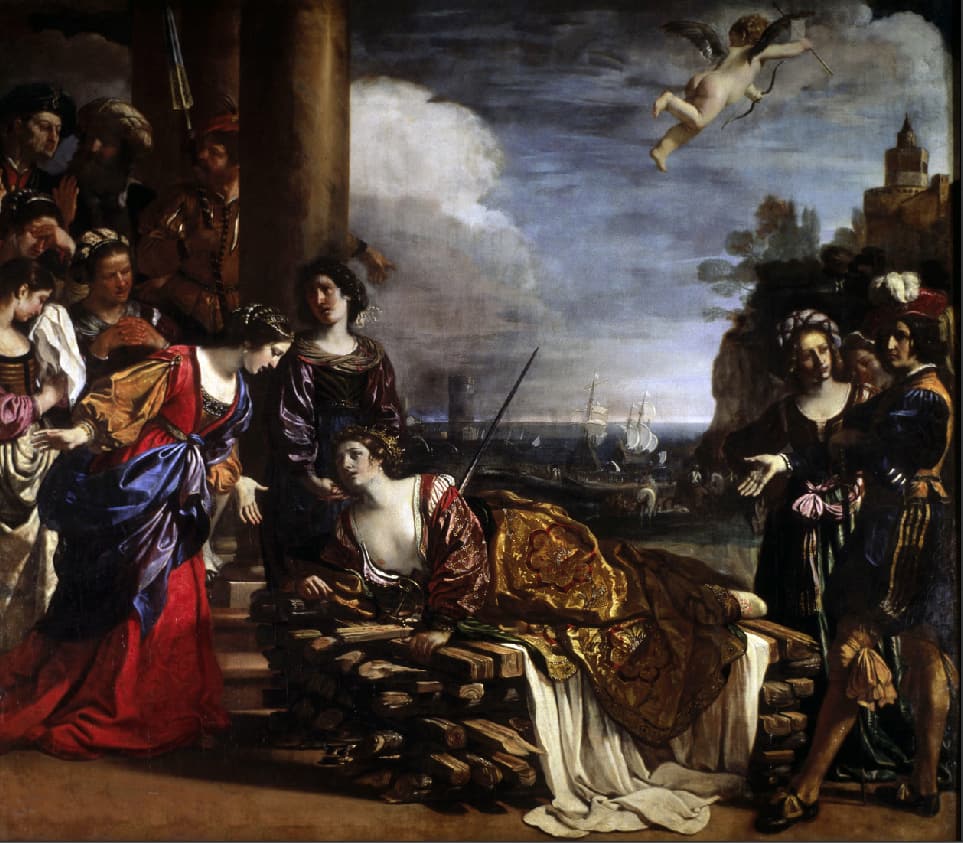
Guercino (d. 1666), The Death of Dido, 1630–31. Oil on canvas. Galleria Spada.
Guercino died 1666, so the life-plus-70 term expired in 1737 (death year from the linked Wikidata creator item). Licence as recorded on the source page: Public domain. Source record · file on this site
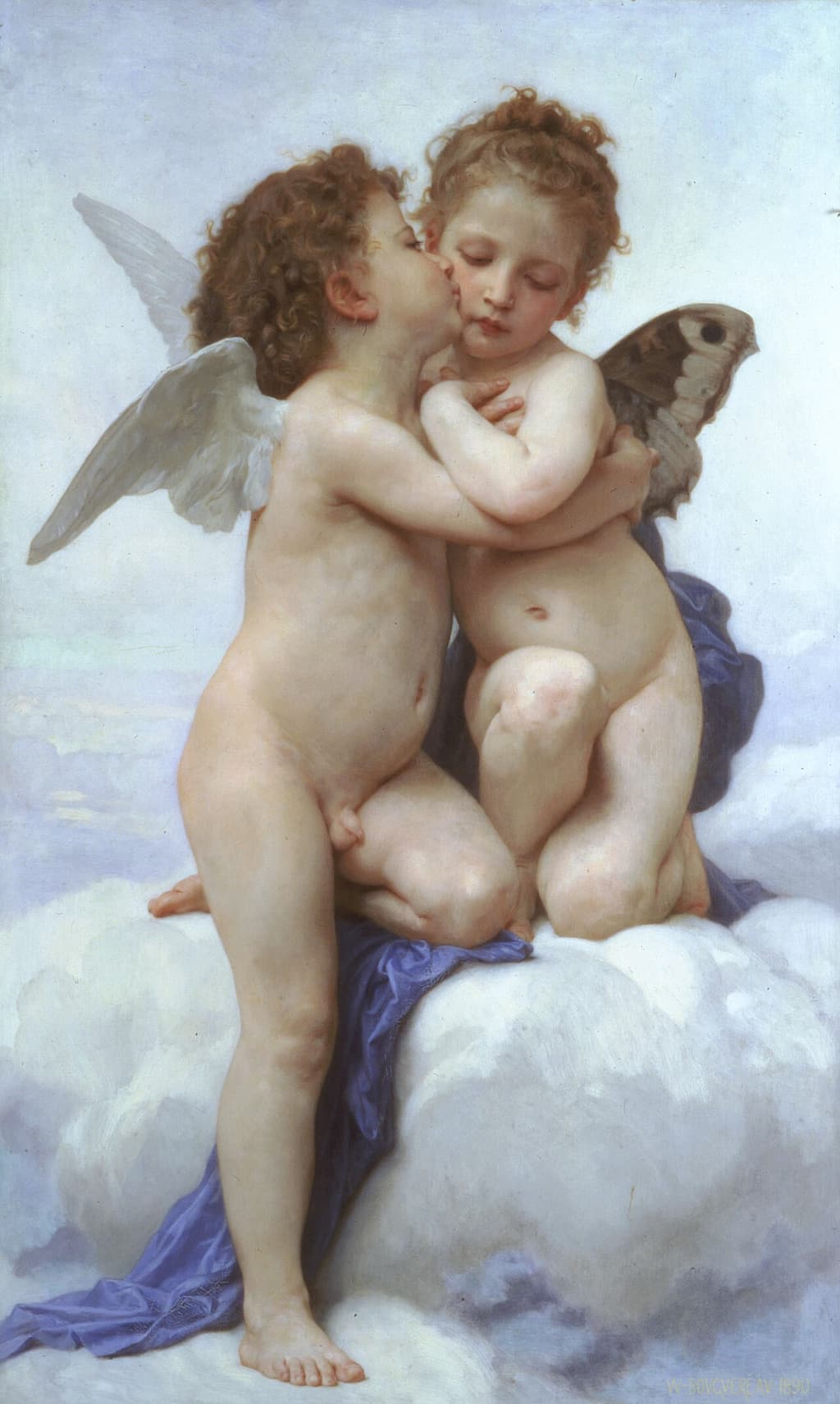
William-Adolphe Bouguereau (d. 1905), The First Kiss, 1890. Oil on canvas.
William-Adolphe Bouguereau died 1905, so the life-plus-70 term expired in 1976 (death year from the linked Wikidata creator item). Licence as recorded on the source page: Public domain. Source record · file on this site
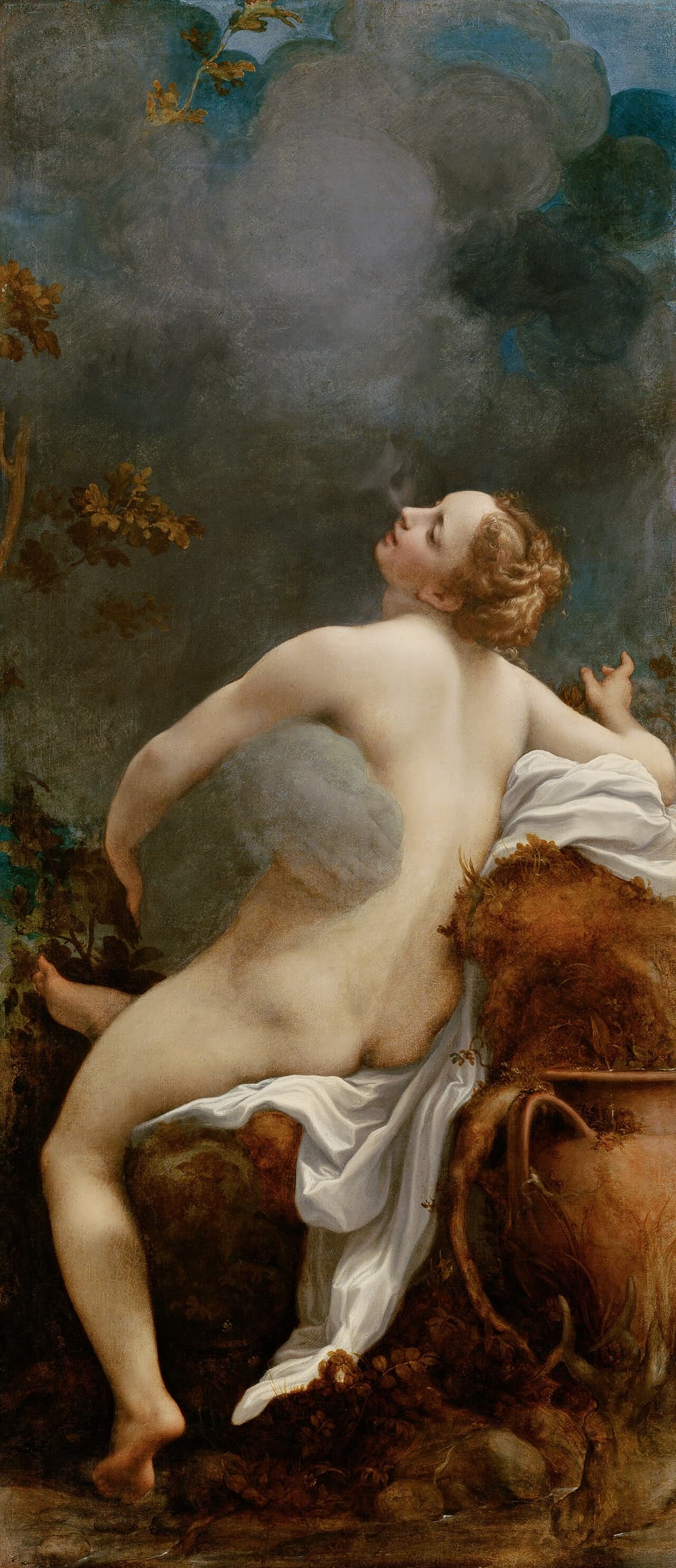
Antonio da Correggio (d. 1534), Jupiter and Io, c. 1530. Oil on canvas. Kunsthistorisches Museum.
Antonio da Correggio died 1534, so the life-plus-70 term expired in 1605 (death year from the linked Wikidata creator item). Licence as recorded on the source page: Public domain. Source record · file on this site


.jpg)





Celtic mythology
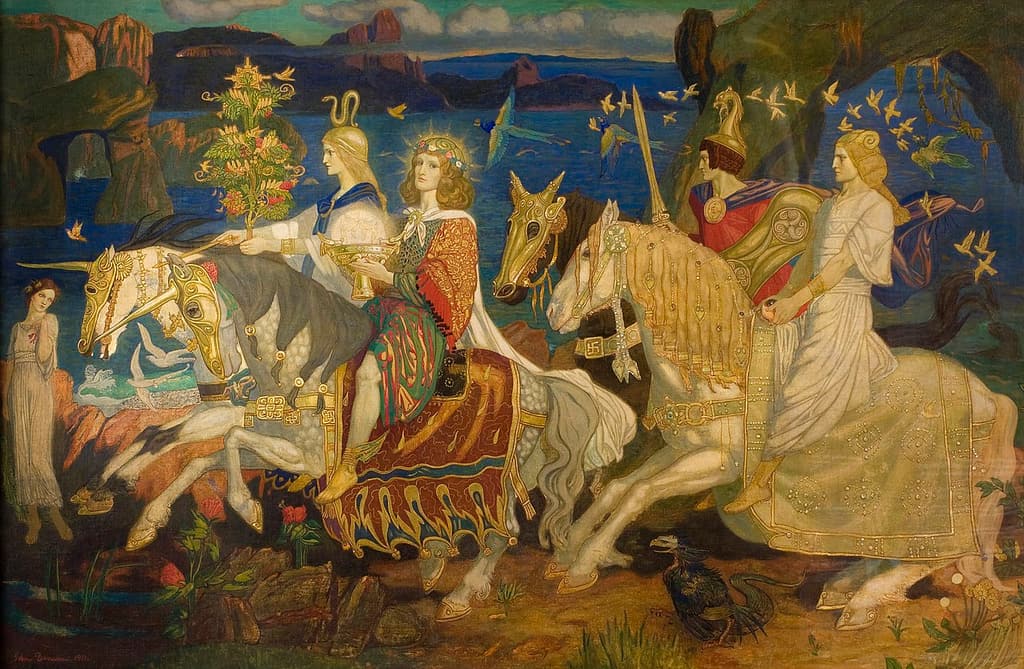
John Duncan (d. 1945), The Riders of the Sidhe, 1911. Tempera on canvas. Dundee Art Galleries and Museums.
John Duncan died 1945, so the life-plus-70 term expired in 2016 (death year from the linked Wikidata creator item). Licence as recorded on the source page: Public domain. Source record · file on this site
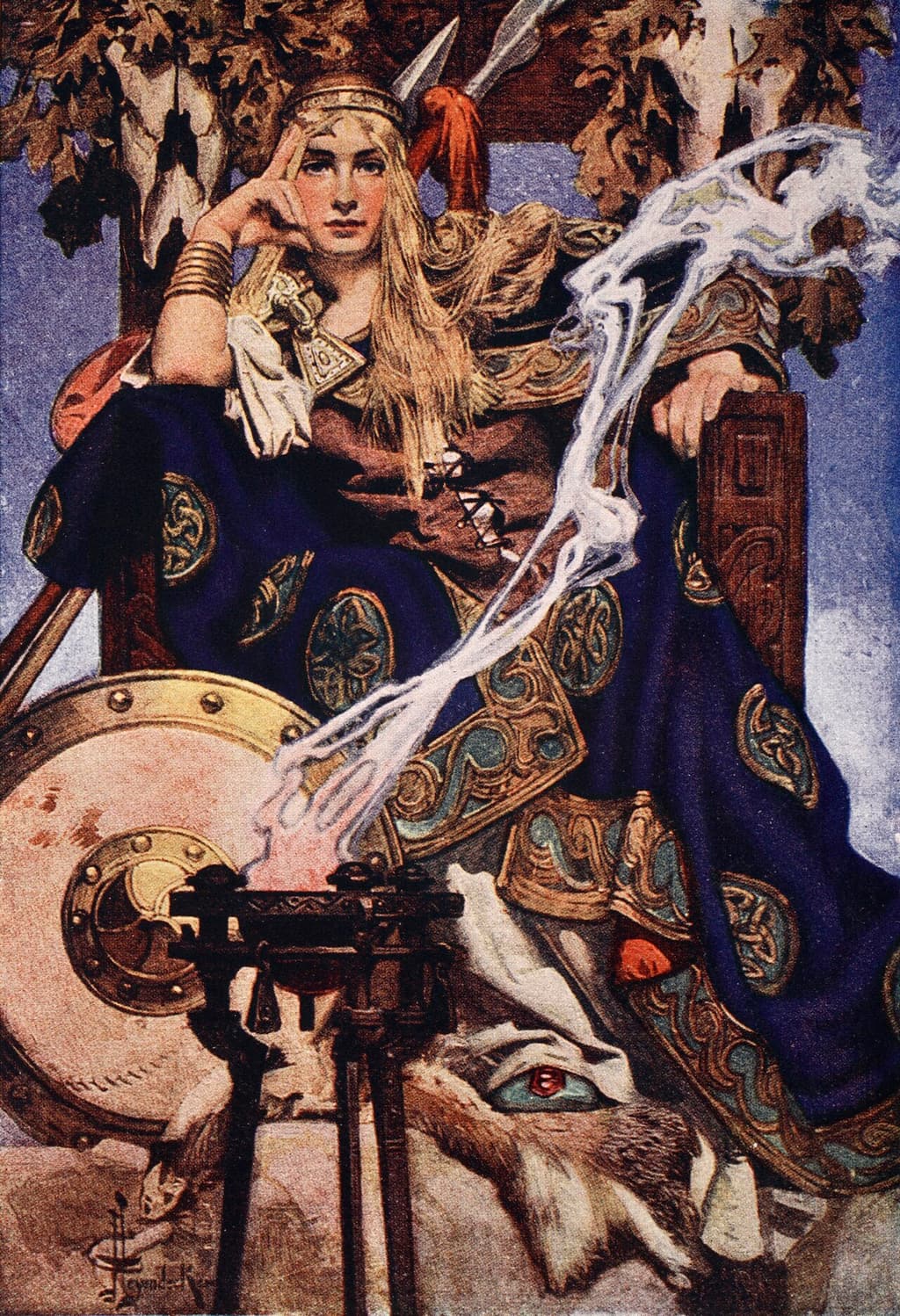
Joseph Christian Leyendecker (d. 1951), Queen Maev, 1911. Colour plate from T. W. Rolleston, Myths and Legends of the Celtic Race.
Joseph Christian Leyendecker died 1951, so the life-plus-70 term expired in 2022 (death year from the life dates stated on the source page). Licence as recorded on the source page: Public domain. Source record · file on this site
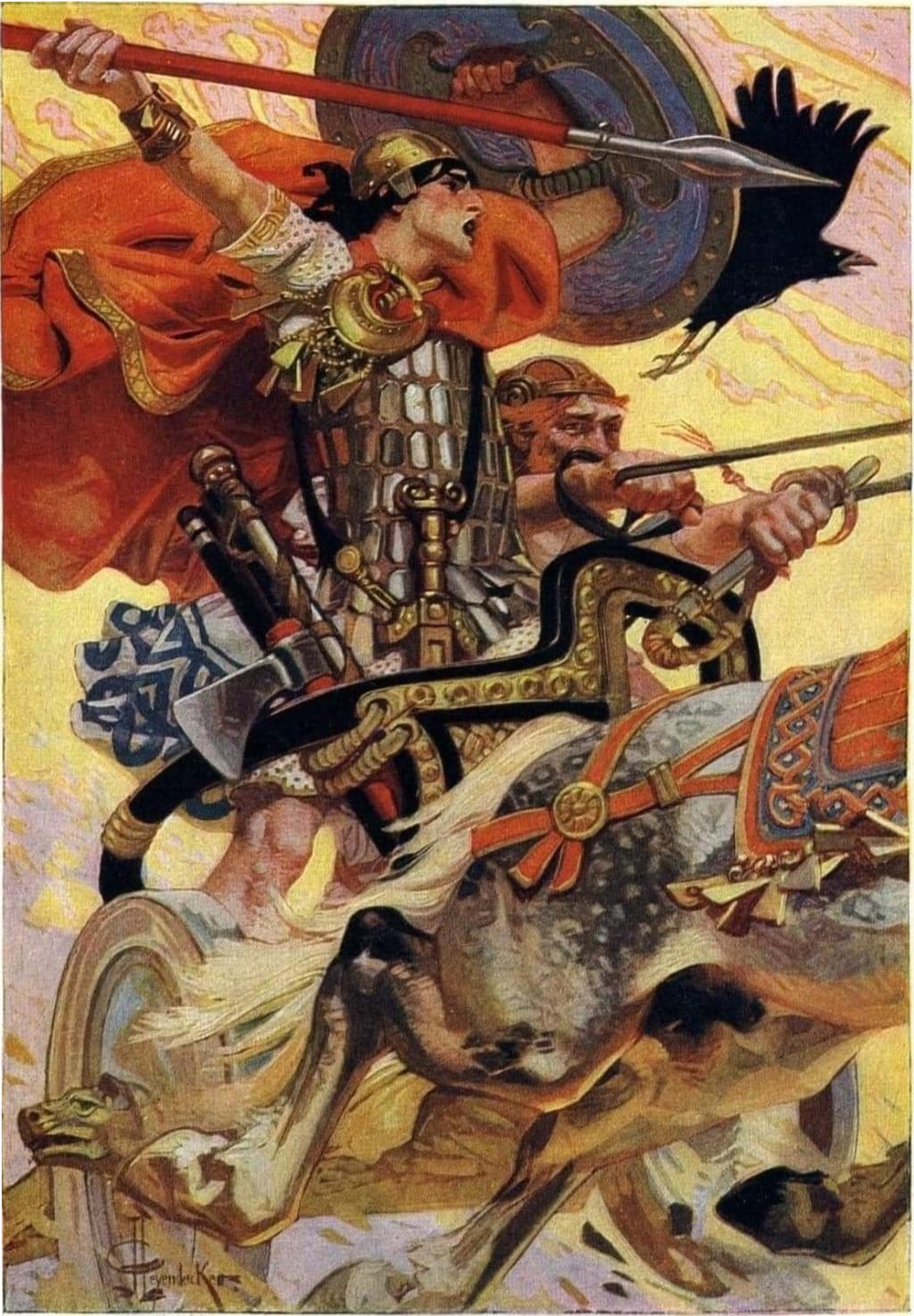
Joseph Christian Leyendecker (d. 1951), Cuchulain in Battle, 1911. Colour plate from T. W. Rolleston, Myths and Legends of the Celtic Race.
Joseph Christian Leyendecker died 1951, so the life-plus-70 term expired in 2022 (death year from the life dates stated on the source page). Licence as recorded on the source page: Public domain. Source record · file on this site
.jpg)
.jpg)

Japanese mythology
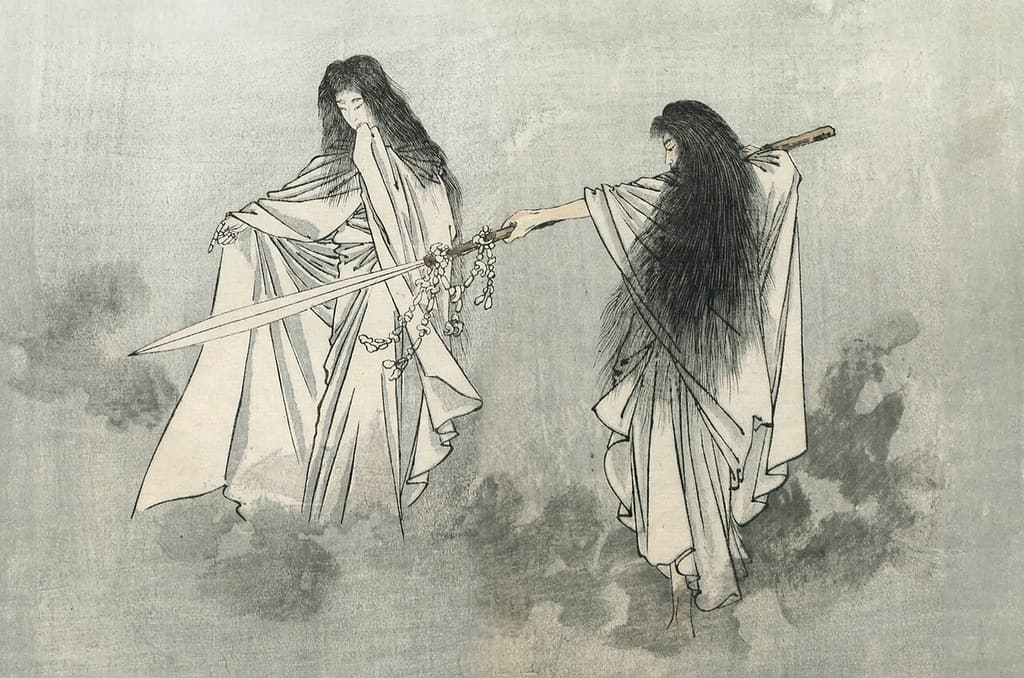
Kobayashi Eitaku (d. 1890), Izanami and Izanagi Creating the Japanese Islands, 1884. Colour woodblock print.
Kobayashi Eitaku died 1890, so the life-plus-70 term expired in 1961 (death year from the Wikidata record for Kobayashi Eitaku, whose lifespan (1843–1890) covers the year the work was made). Licence as recorded on the source page: Public domain. Source record · file on this site
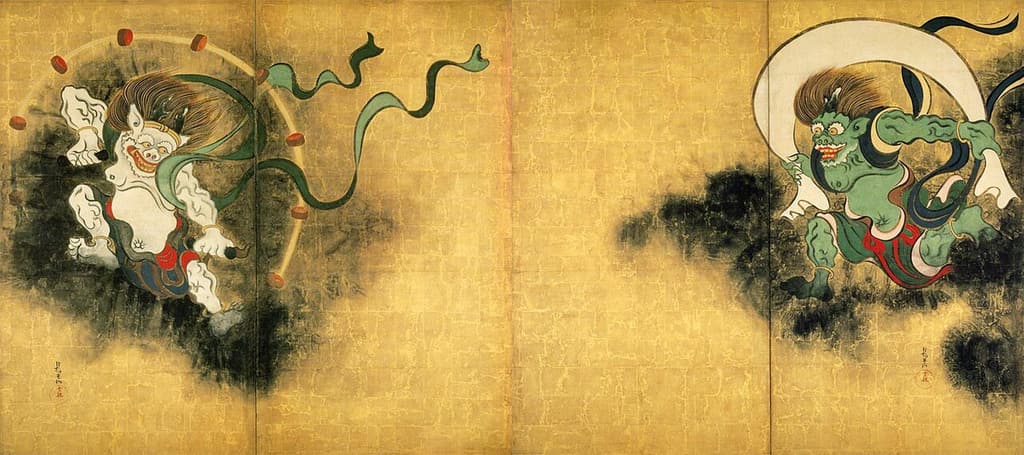
Ogata Kōrin (d. 1716), Wind God and Thunder God, early 18th century. Ink, colour and gold on a pair of folding screens. Tokyo National Museum.
Ogata Kōrin died 1716, so the life-plus-70 term expired in 1787 (death year from the linked Wikidata creator item). Licence as recorded on the source page: Public domain. Source record · file on this site
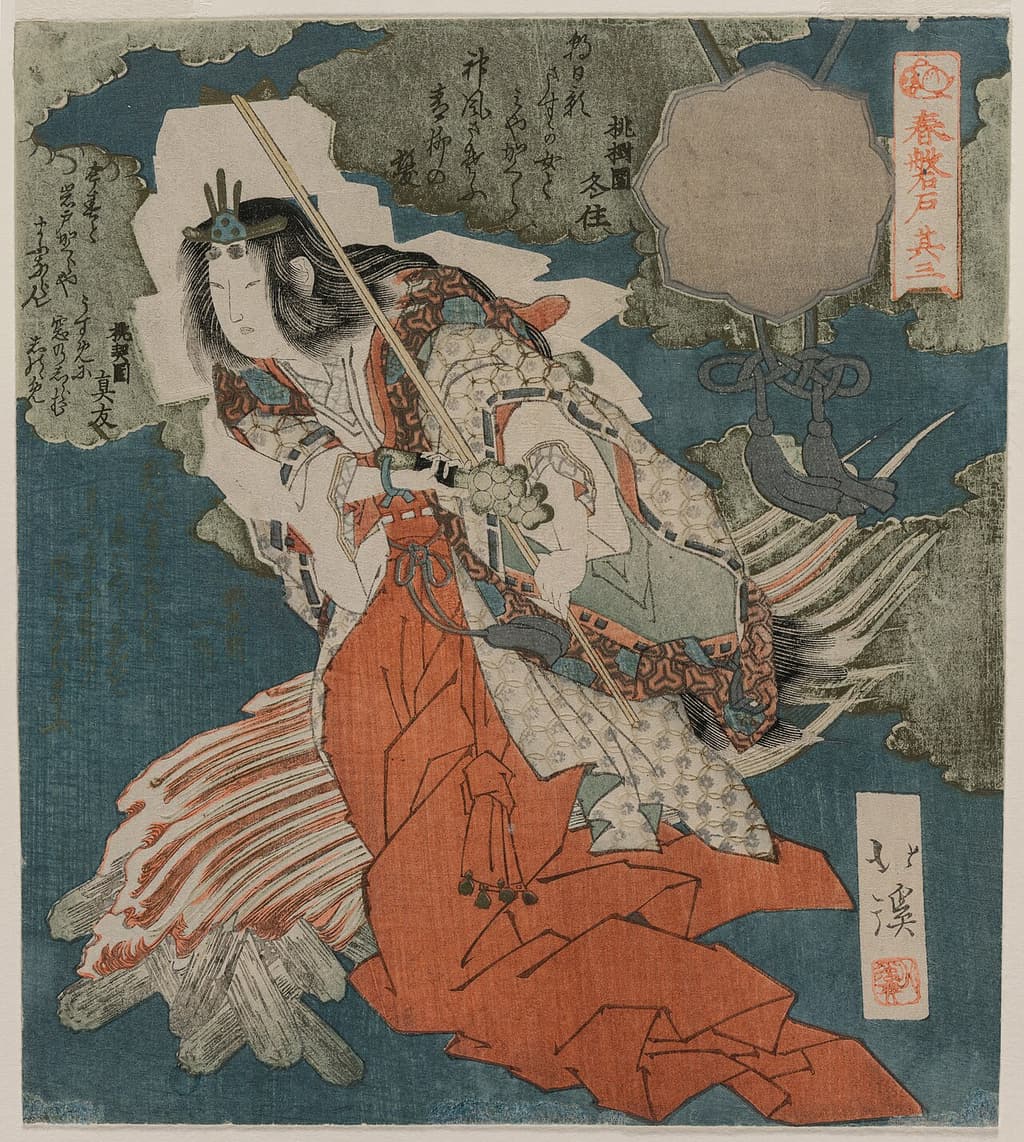
Hokkei (d. 1850), Ame no Uzume, from The Cave Door of Spring, 1825. Colour woodblock print (surimono). Cleveland Museum of Art.
Hokkei died 1850, so the life-plus-70 term expired in 1921 (death year from the Wikidata record for Hokkei). Licence as recorded on the source page: Public domain. Source record · file on this site
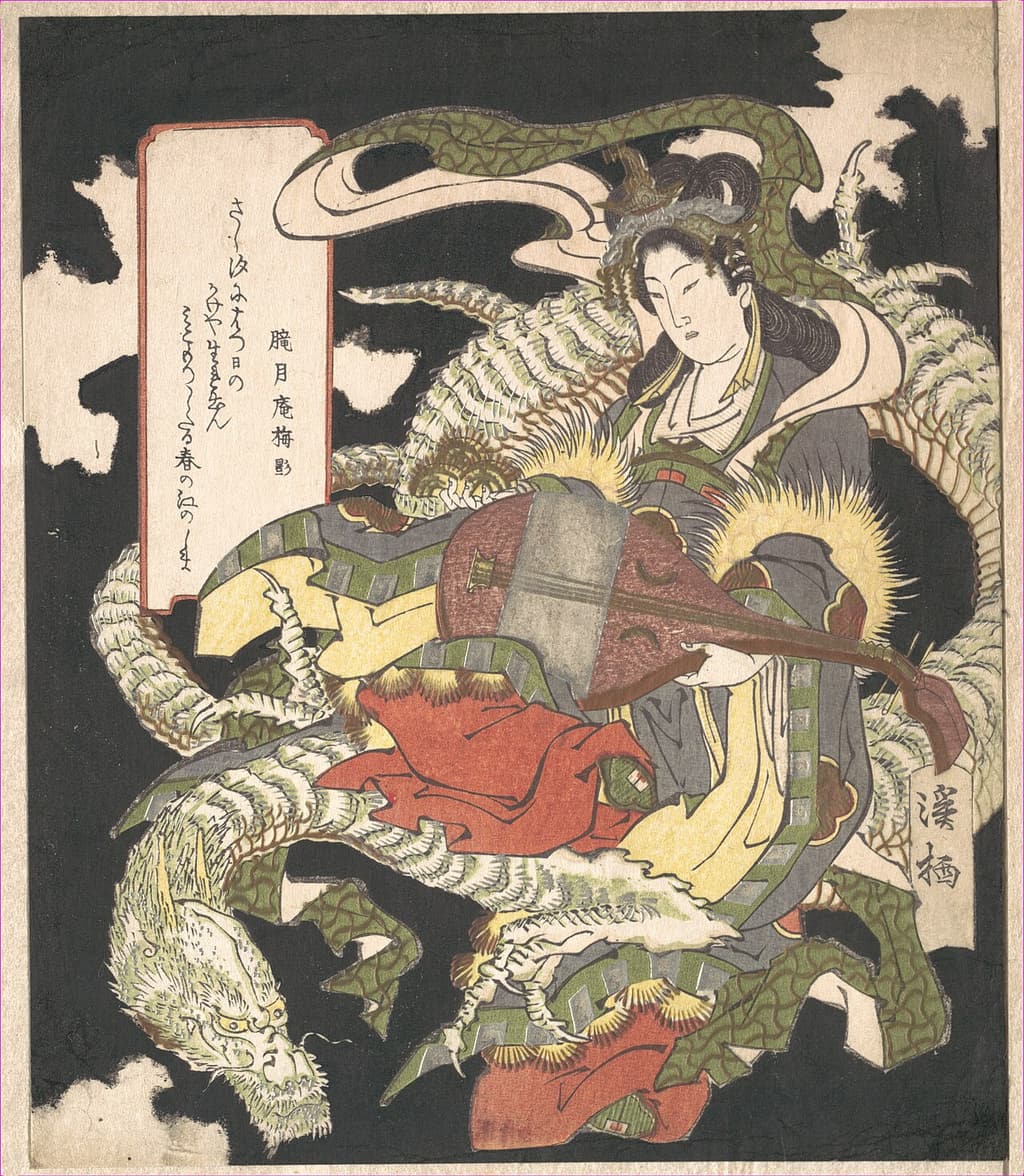
Aoigaoka Keisei, Benzaiten Seated on a White Dragon, 1832. Colour woodblock print (surimono). Metropolitan Museum of Art.
Created in 1832 and published long before 1929, so United States copyright has expired, and no life-plus-70 term can still be running for a work of that date. The source record carries an explicit public-domain tag. Licence as recorded on the source page: CC0. Source record · file on this site
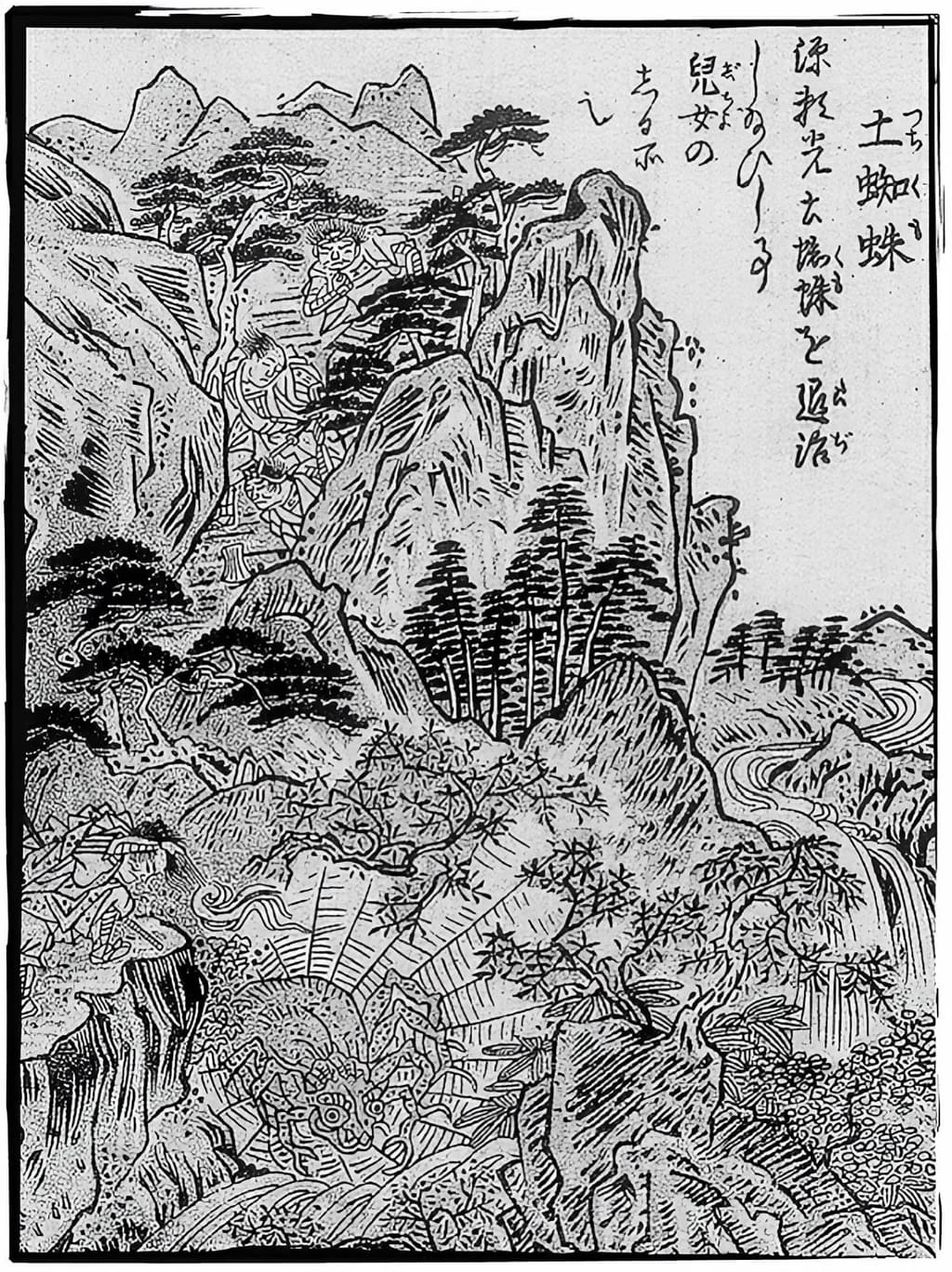
Toriyama Sekien (d. 1788), Tsuchigumo, from the Konjaku Gazu Zoku Hyakki, 1779. Woodblock-printed book illustration.
Toriyama Sekien died 1788, so the life-plus-70 term expired in 1859 (death year from the life dates stated on the source page). Licence as recorded on the source page: Public domain. Source record · file on this site
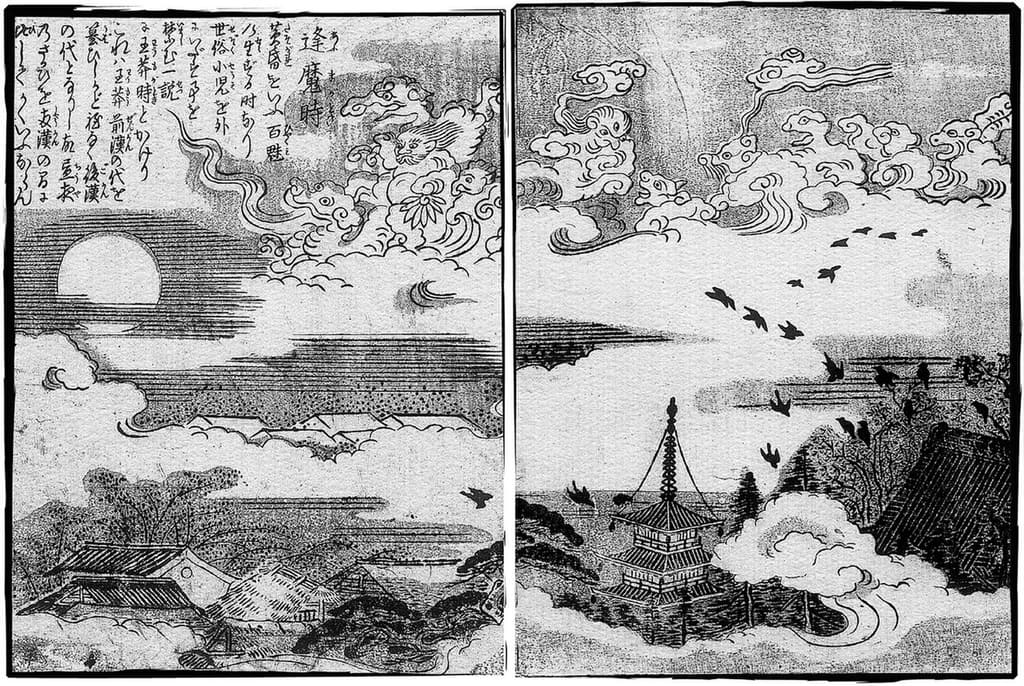
Toriyama Sekien (d. 1788), Omagatoki, from the Konjaku Gazu Zoku Hyakki, 1779. Woodblock-printed book illustration.
Toriyama Sekien died 1788, so the life-plus-70 term expired in 1859 (death year from the life dates stated on the source page). Licence as recorded on the source page: Public domain. Source record · file on this site
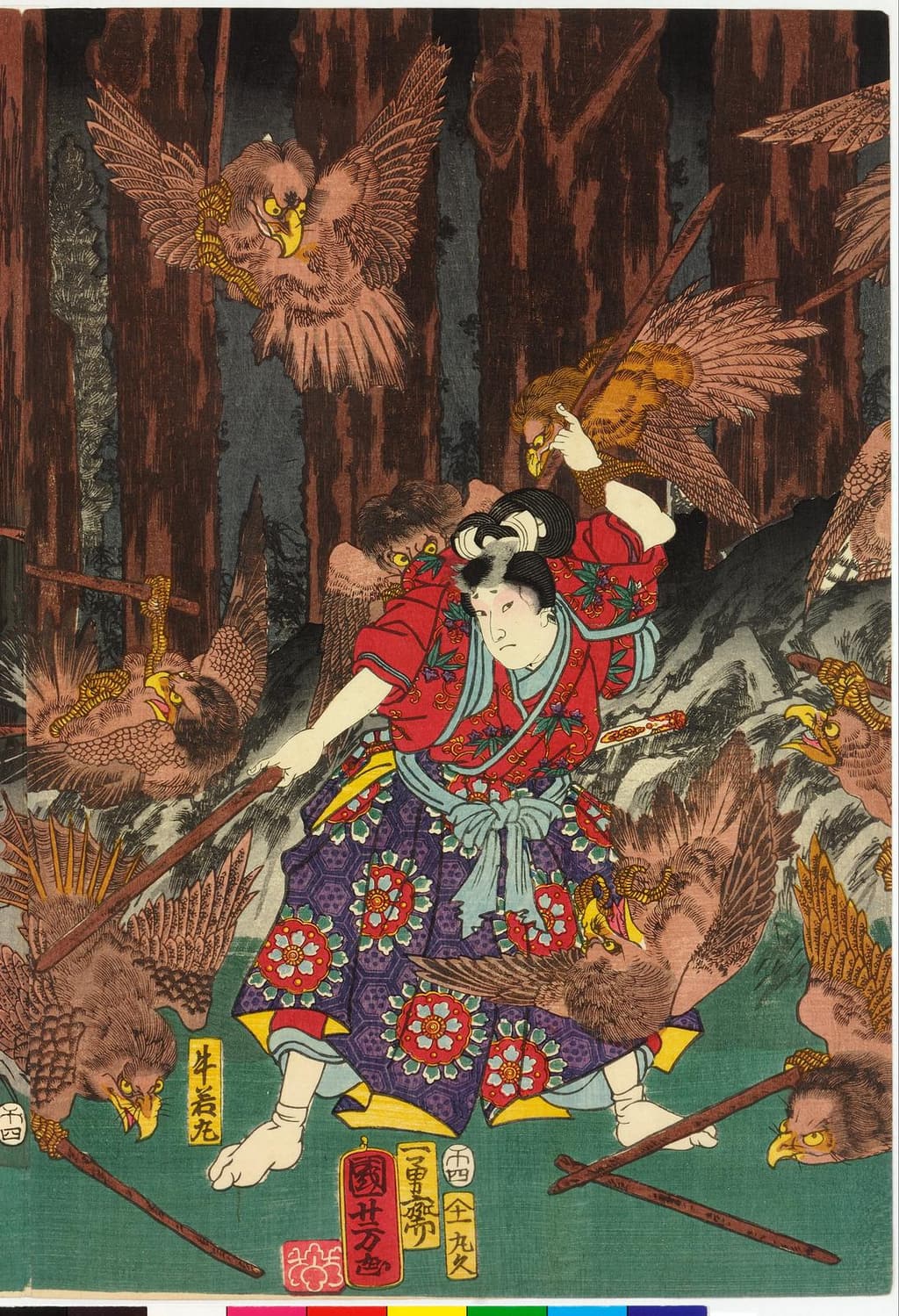
Utagawa Kuniyoshi (d. 1861), Ushiwaka Training at Kurama, 1858. Colour woodblock print. British Museum.
Utagawa Kuniyoshi died 1861, so the life-plus-70 term expired in 1932 (death year from the linked Wikidata creator item). Licence as recorded on the source page: Public domain. Source record · file on this site
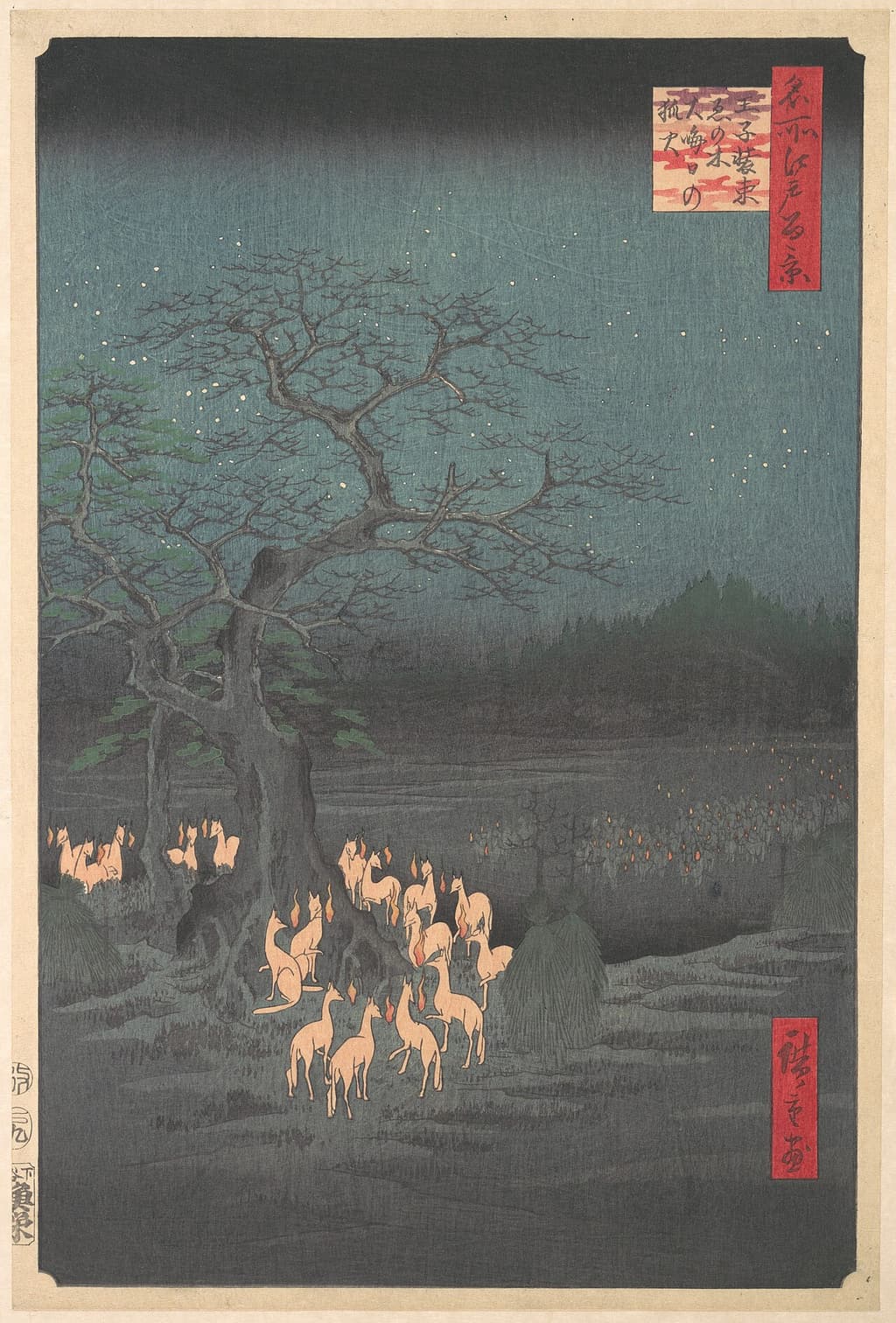
Utagawa Hiroshige (d. 1858), Fox Fires on New Year's Eve at the Changing Tree, Oji, 1857. Colour woodblock print. Metropolitan Museum of Art.
Utagawa Hiroshige died 1858, so the life-plus-70 term expired in 1929 (death year from the linked Wikidata creator item). Licence as recorded on the source page: CC0. Source record · file on this site
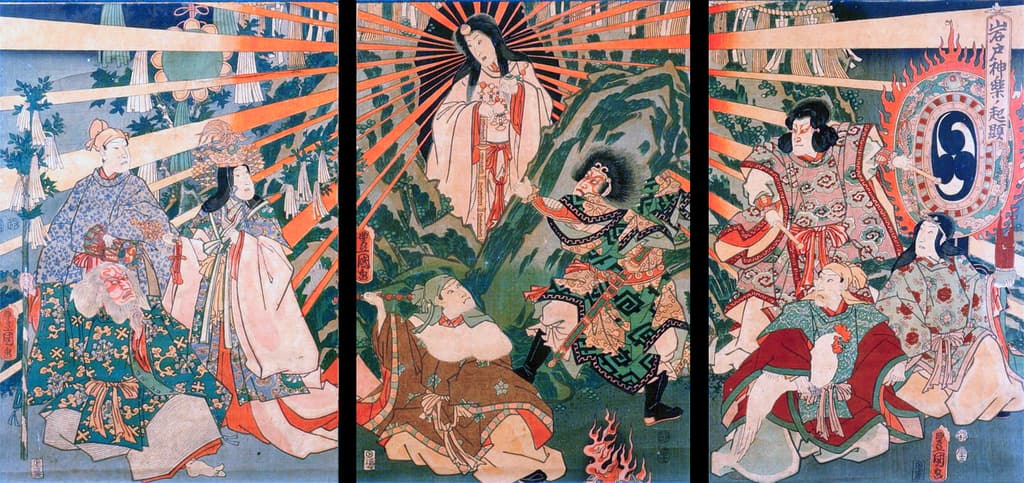
Utagawa Kunisada (d. 1865), Amaterasu Emerging from the Cave, 1856. Colour woodblock print triptych.
Utagawa Kunisada died 1865, so the life-plus-70 term expired in 1936 (death year from the linked Wikidata creator item). Licence as recorded on the source page: Public domain. Source record · file on this site



_Seated_on_a_White_Dragon_MET_DP135895.jpg)


.jpg)


Classical Hindu mythology
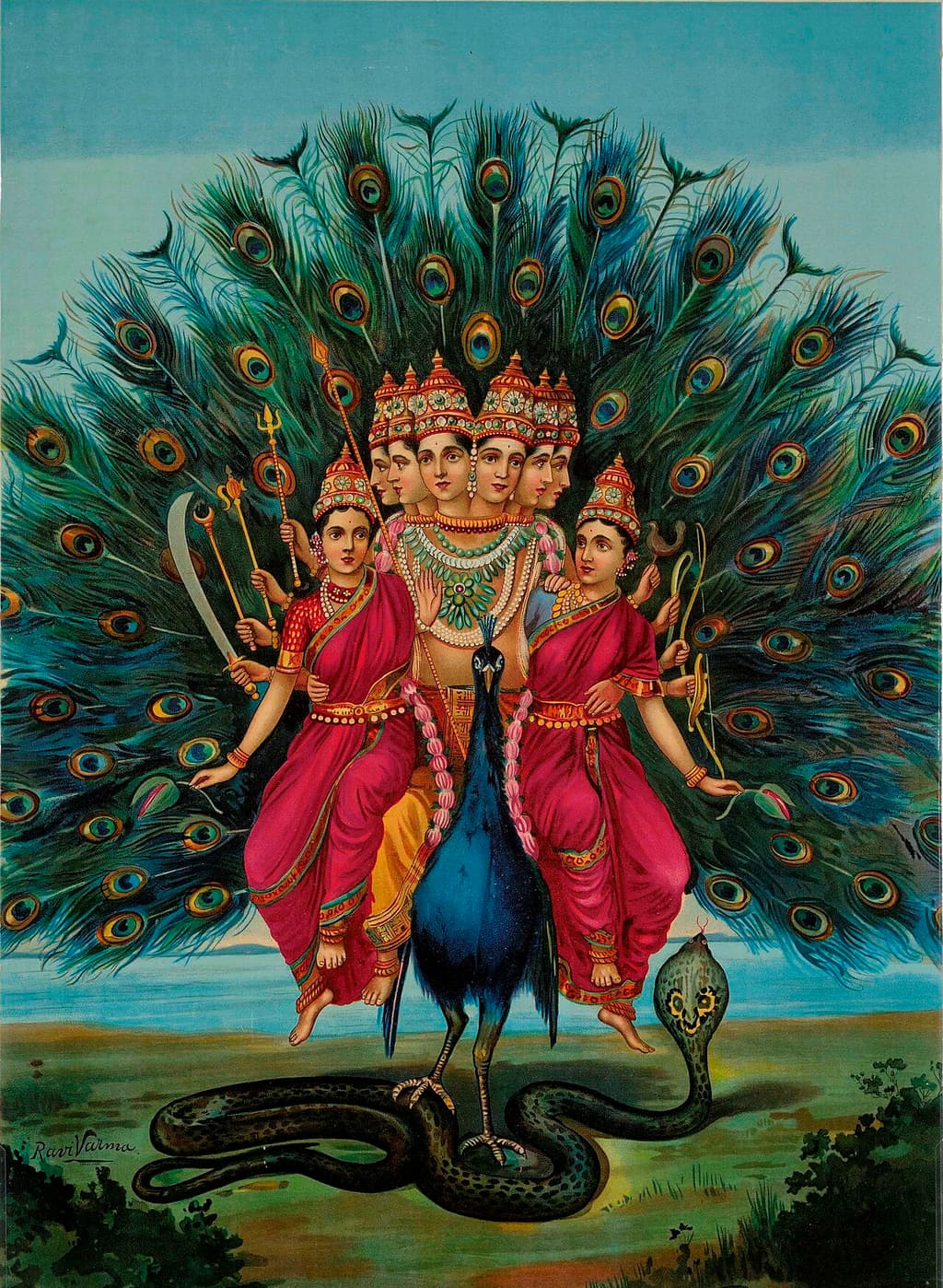
Raja Ravi Varma (d. 1906), Murugan, before 1906. Oleograph after an oil painting.
Raja Ravi Varma died 1906, so the life-plus-70 term expired in 1977 (death year from the linked Wikidata creator item). Licence as recorded on the source page: Public domain. Source record · file on this site
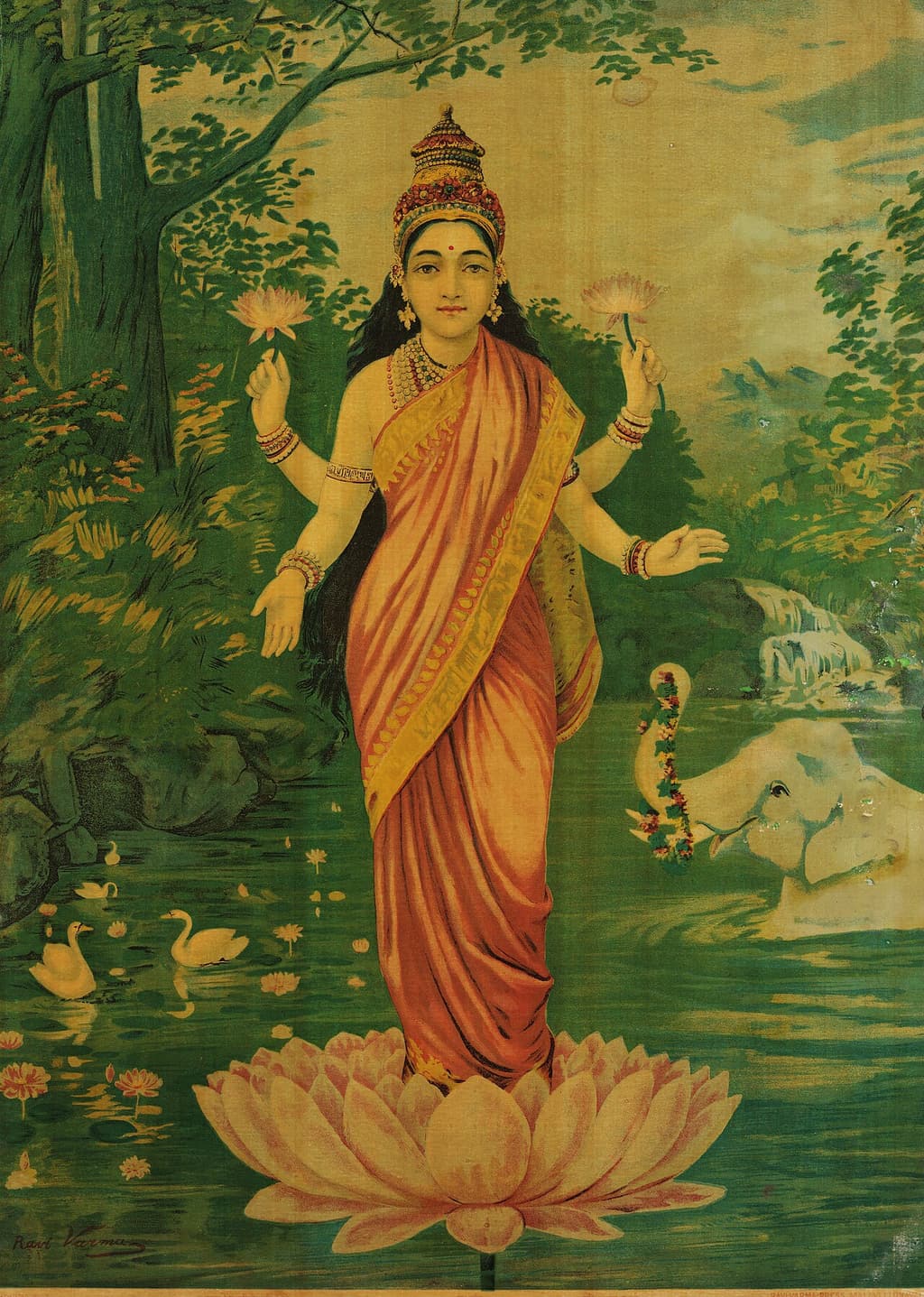
Raja Ravi Varma (d. 1906), Lakshmi, printed 1930s, after a design by Raja Ravi Varma. Chromolithograph, Ravi Varma Press.
Raja Ravi Varma died 1906, so the life-plus-70 term expired in 1977 (death year from the Wikidata record for Raja Ravi Varma, established from another work by the same hand in this set). Licence as recorded on the source page: Public domain. Source record · file on this site
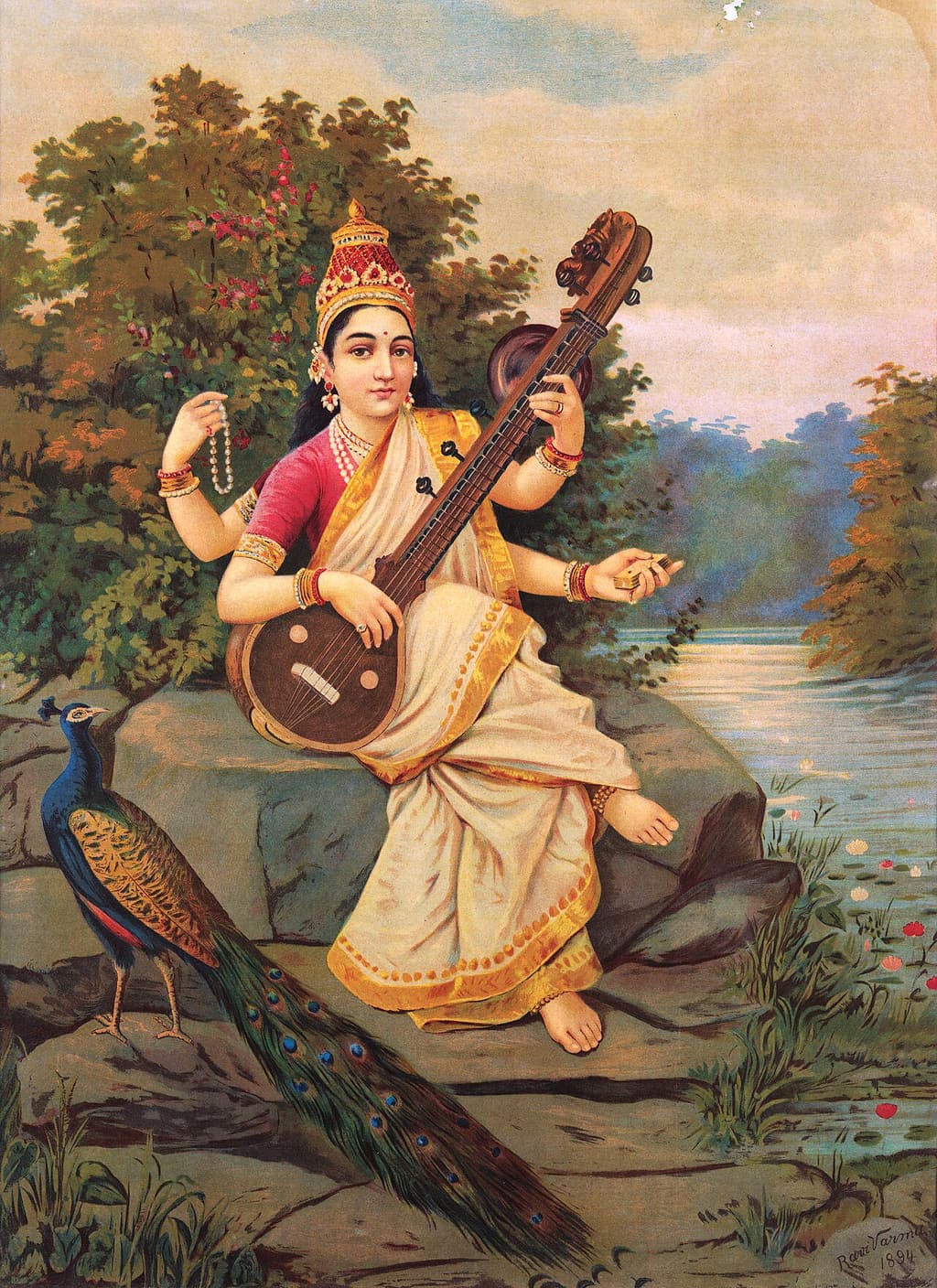
Raja Ravi Varma (d. 1906), Saraswati, c. 1930 printing, after Raja Ravi Varma. Chromolithograph after an oil painting.
Raja Ravi Varma died 1906, so the life-plus-70 term expired in 1977 (death year from the linked Wikidata creator item). Licence as recorded on the source page: Public domain. Source record · file on this site
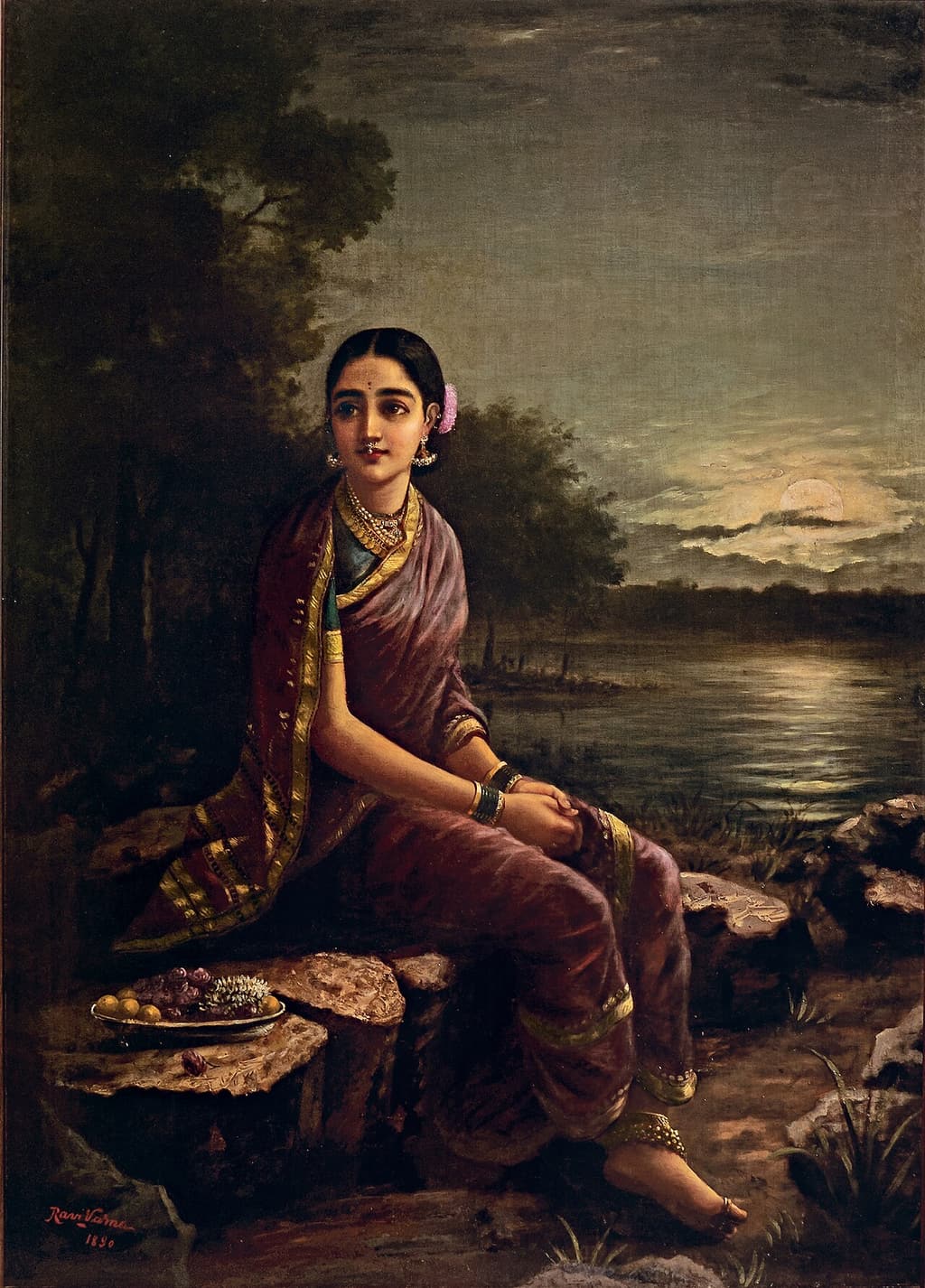
Raja Ravi Varma (d. 1906), Radha in the Moonlight, 1890. Oil on canvas.
Raja Ravi Varma died 1906, so the life-plus-70 term expired in 1977 (death year from the life dates stated on the source page). Licence as recorded on the source page: Public domain. Source record · file on this site
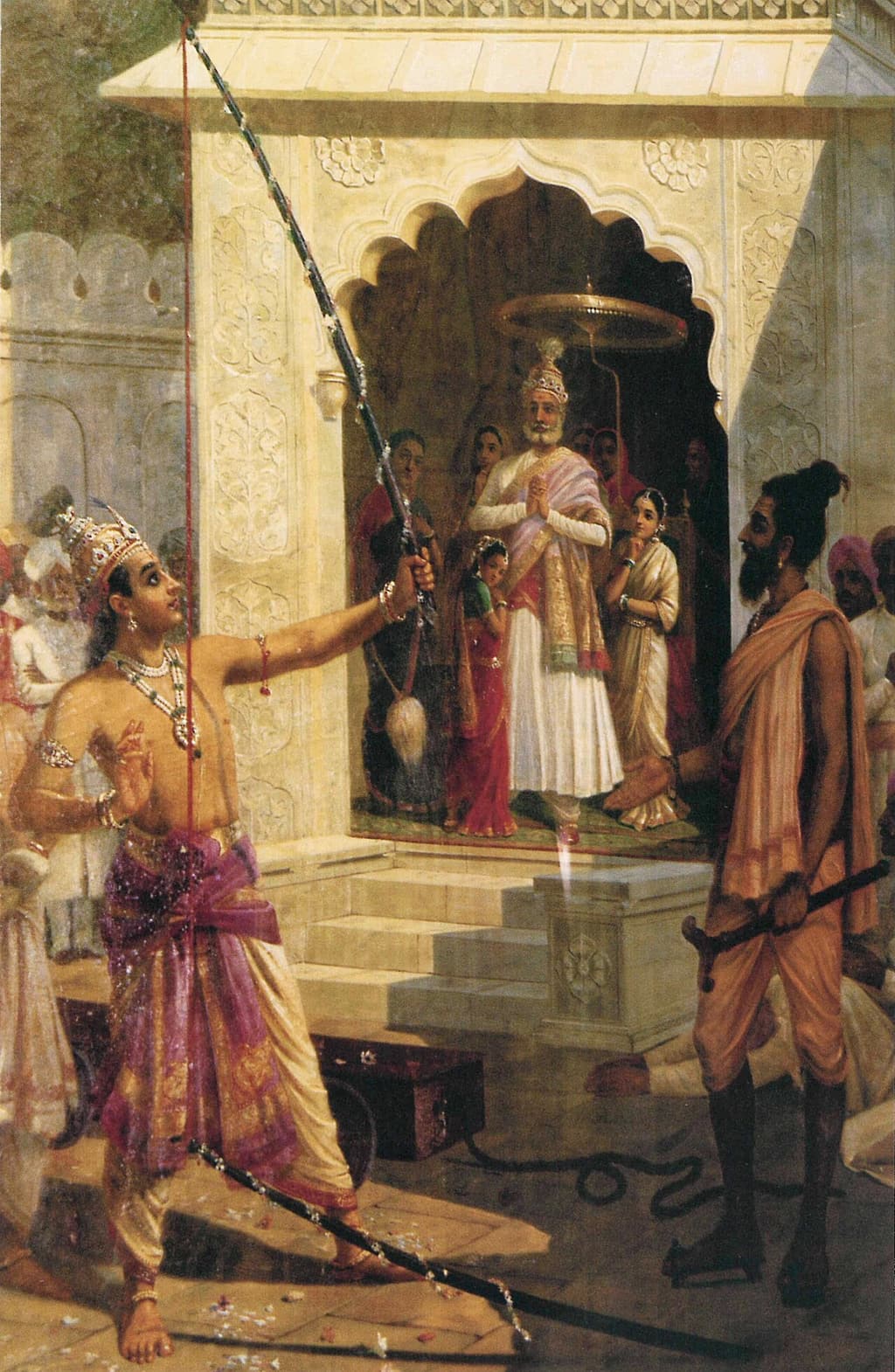
Raja Ravi Varma (d. 1906), Rama Breaking the Bow, before 1906. Oil on canvas.
Raja Ravi Varma died 1906, so the life-plus-70 term expired in 1977 (death year from the linked Wikidata creator item). Licence as recorded on the source page: Public domain. Source record · file on this site
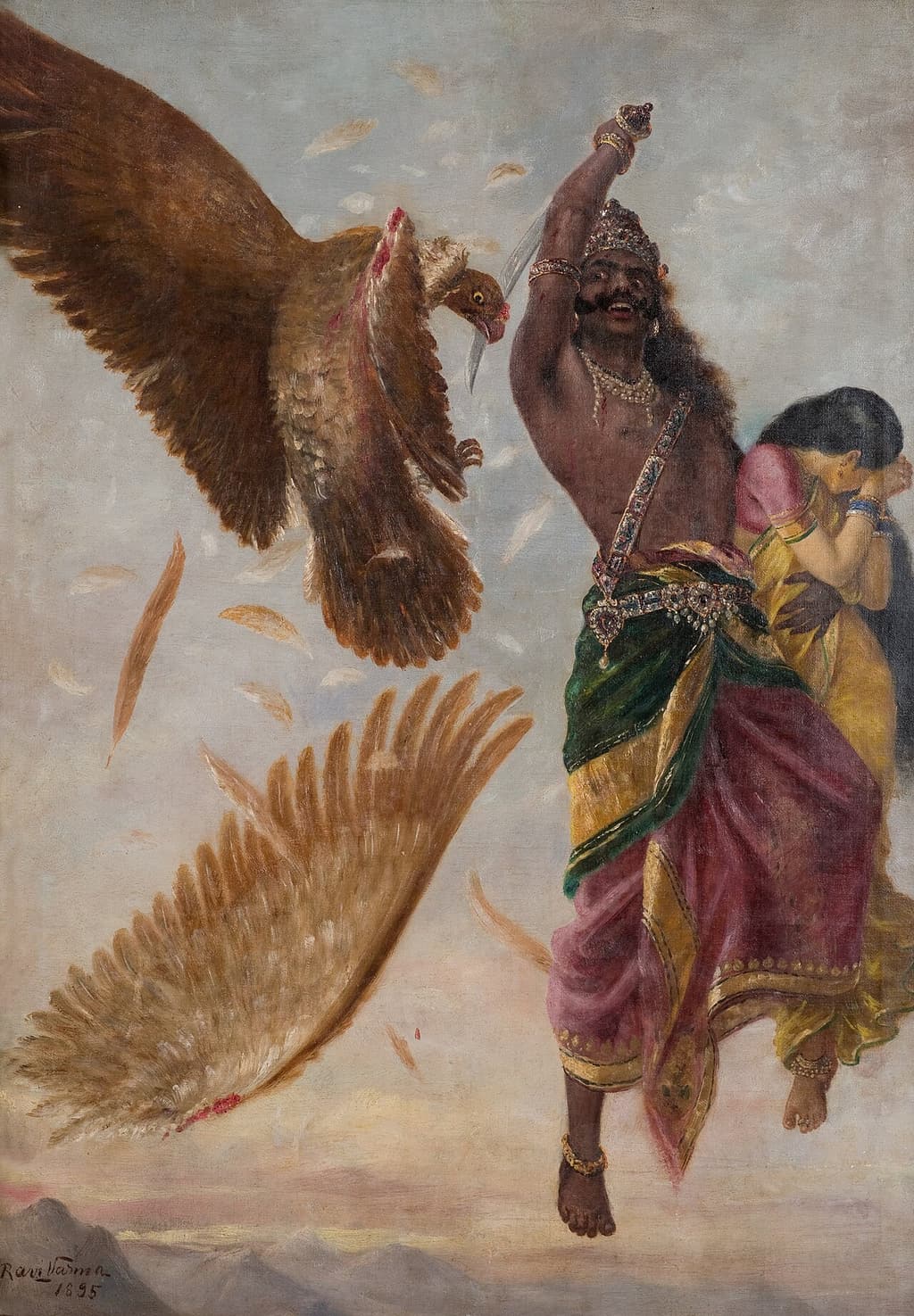
Raja Ravi Varma (d. 1906), Jatayu Vadha (Ravana Carrying Off Sita), 1895. Oil on canvas.
Raja Ravi Varma died 1906, so the life-plus-70 term expired in 1977 (death year from the linked Wikidata creator item). Licence as recorded on the source page: Public domain. Source record · file on this site
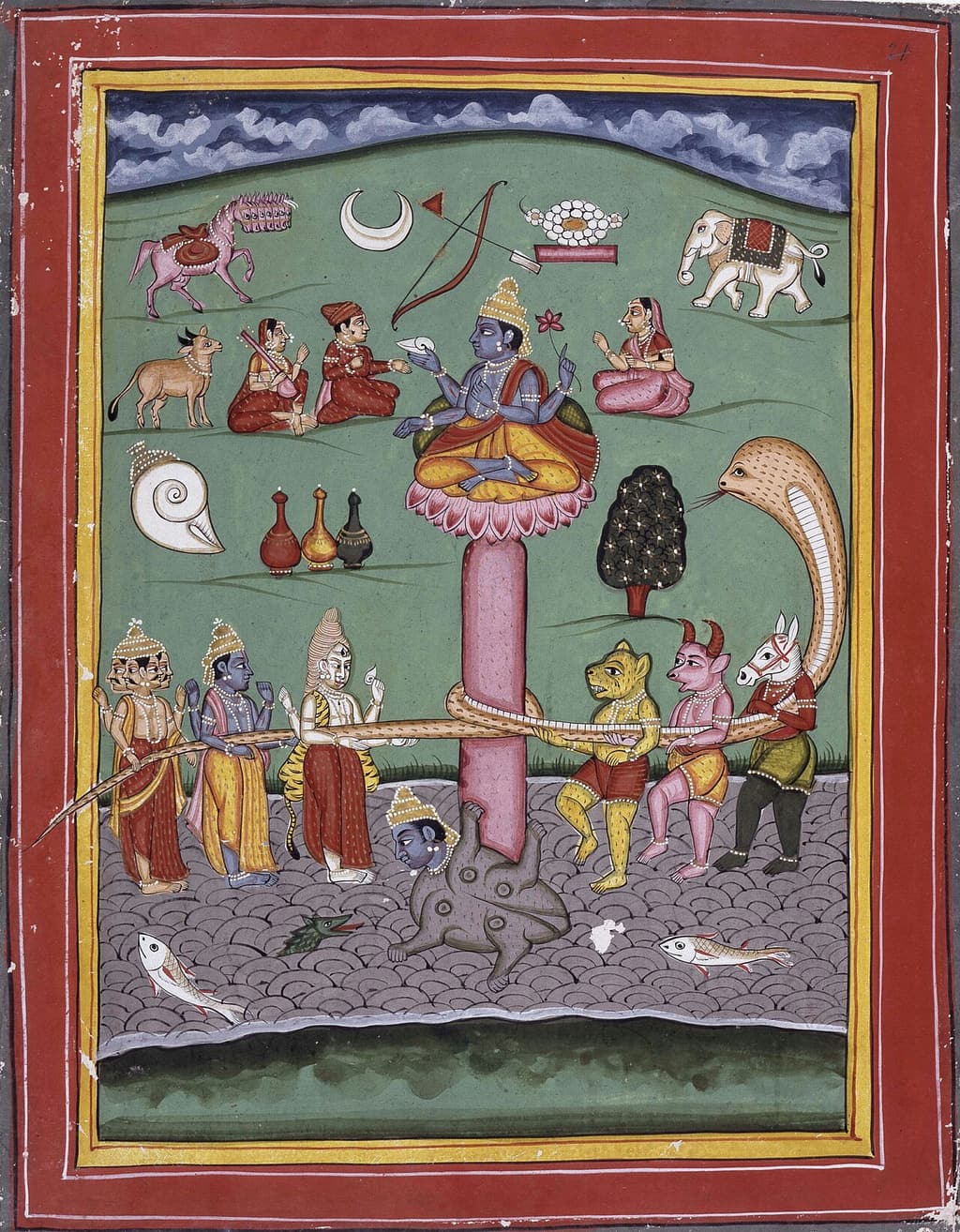
Unknown artist, The Churning of the Ocean of Milk, c. 1800. Opaque watercolour on paper, Indian miniature. British Museum.
Created in 1800 and published long before 1929, so United States copyright has expired, and no life-plus-70 term can still be running for a work of that date. The source record carries an explicit public-domain tag. Licence as recorded on the source page: Public domain. Source record · file on this site
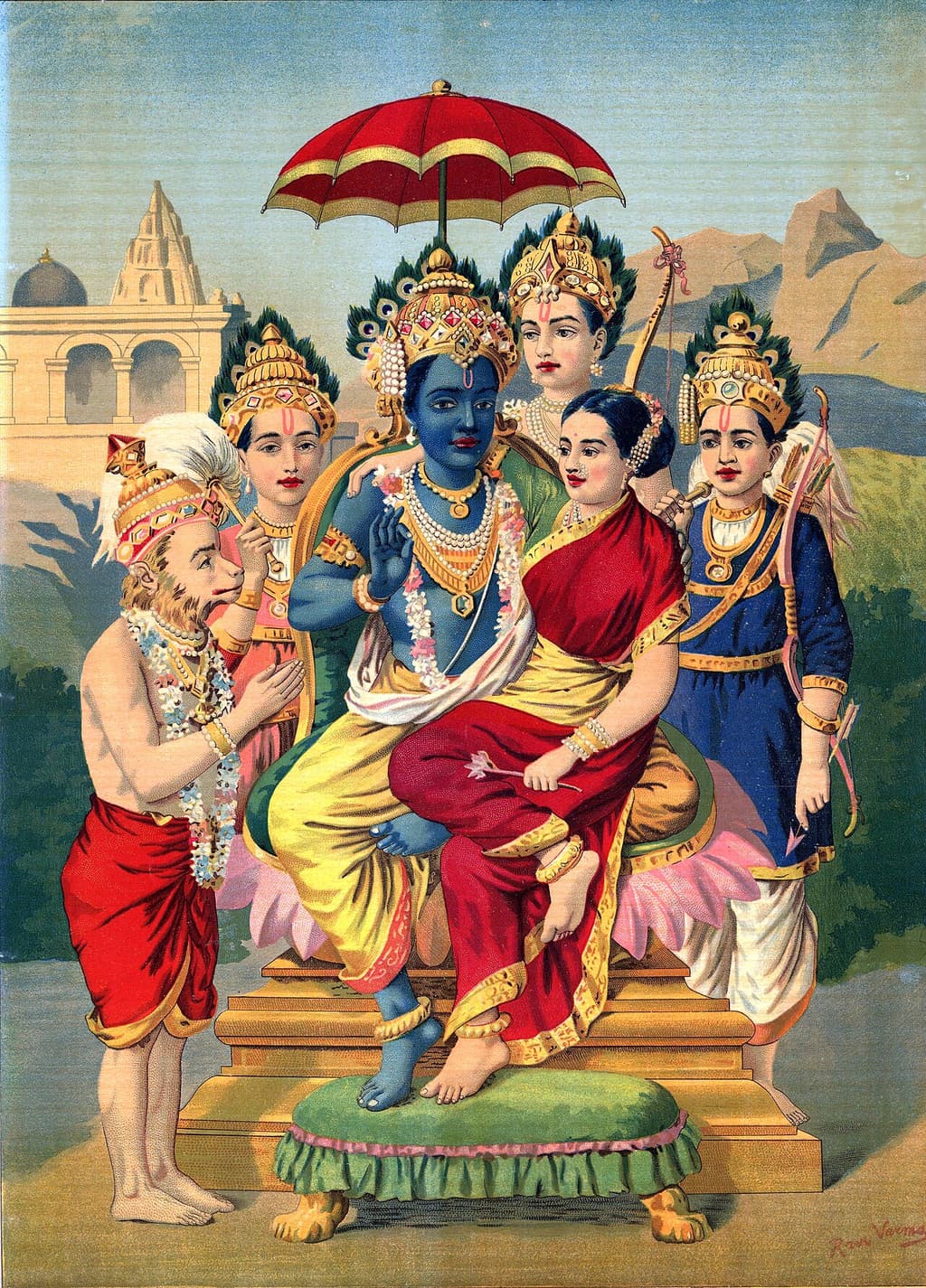
Raja Ravi Varma (d. 1906), Rama Panchayatan, before 1906. Lithograph after an oil painting.
Raja Ravi Varma died 1906, so the life-plus-70 term expired in 1977 (death year from the linked Wikidata creator item). Licence as recorded on the source page: Public domain. Source record · file on this site
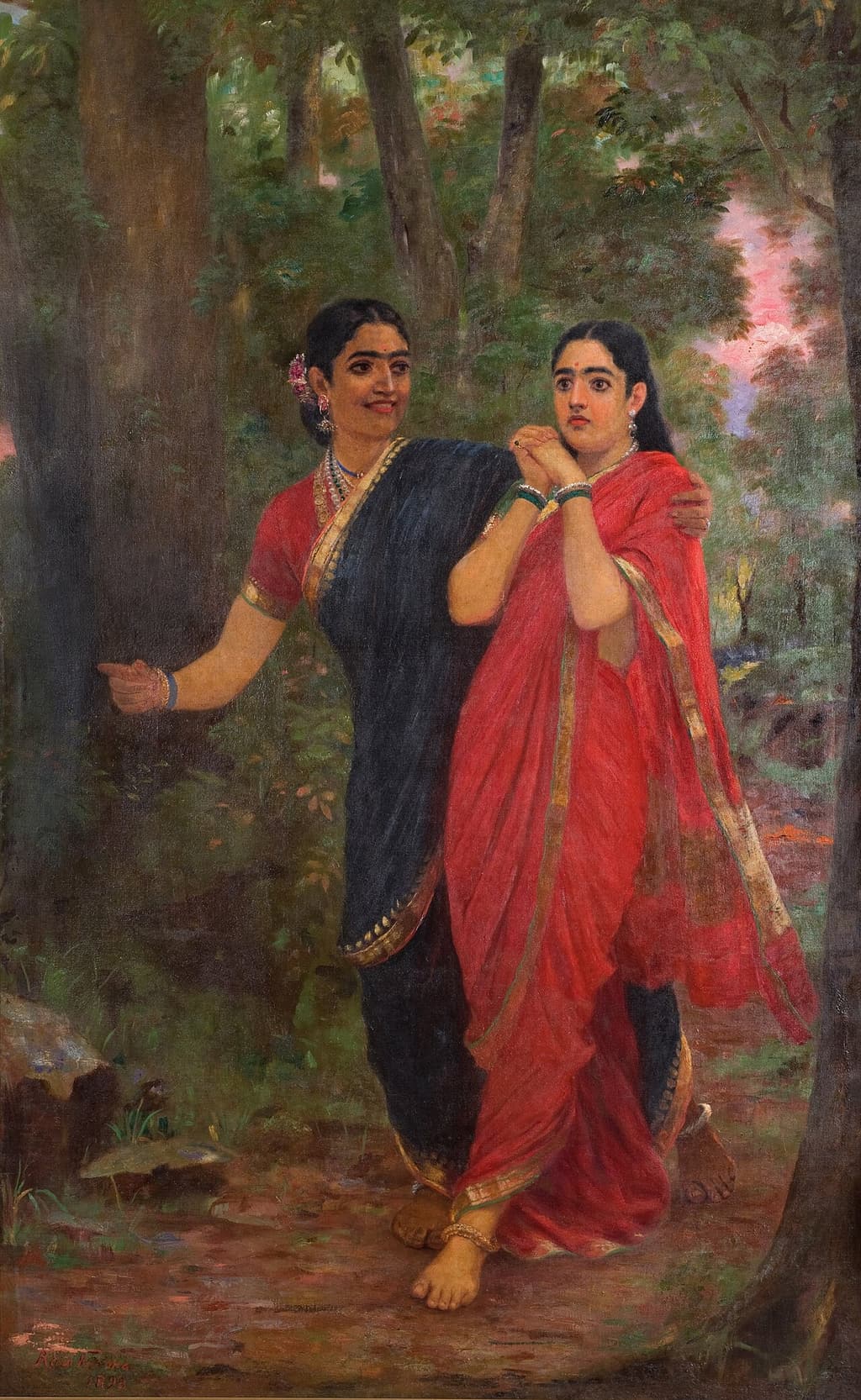
Raja Ravi Varma (d. 1906), Draupadi and Simhika, 1896. Oil on canvas.
Raja Ravi Varma died 1906, so the life-plus-70 term expired in 1977 (death year from the linked Wikidata creator item). Licence as recorded on the source page: Public domain. Source record · file on this site
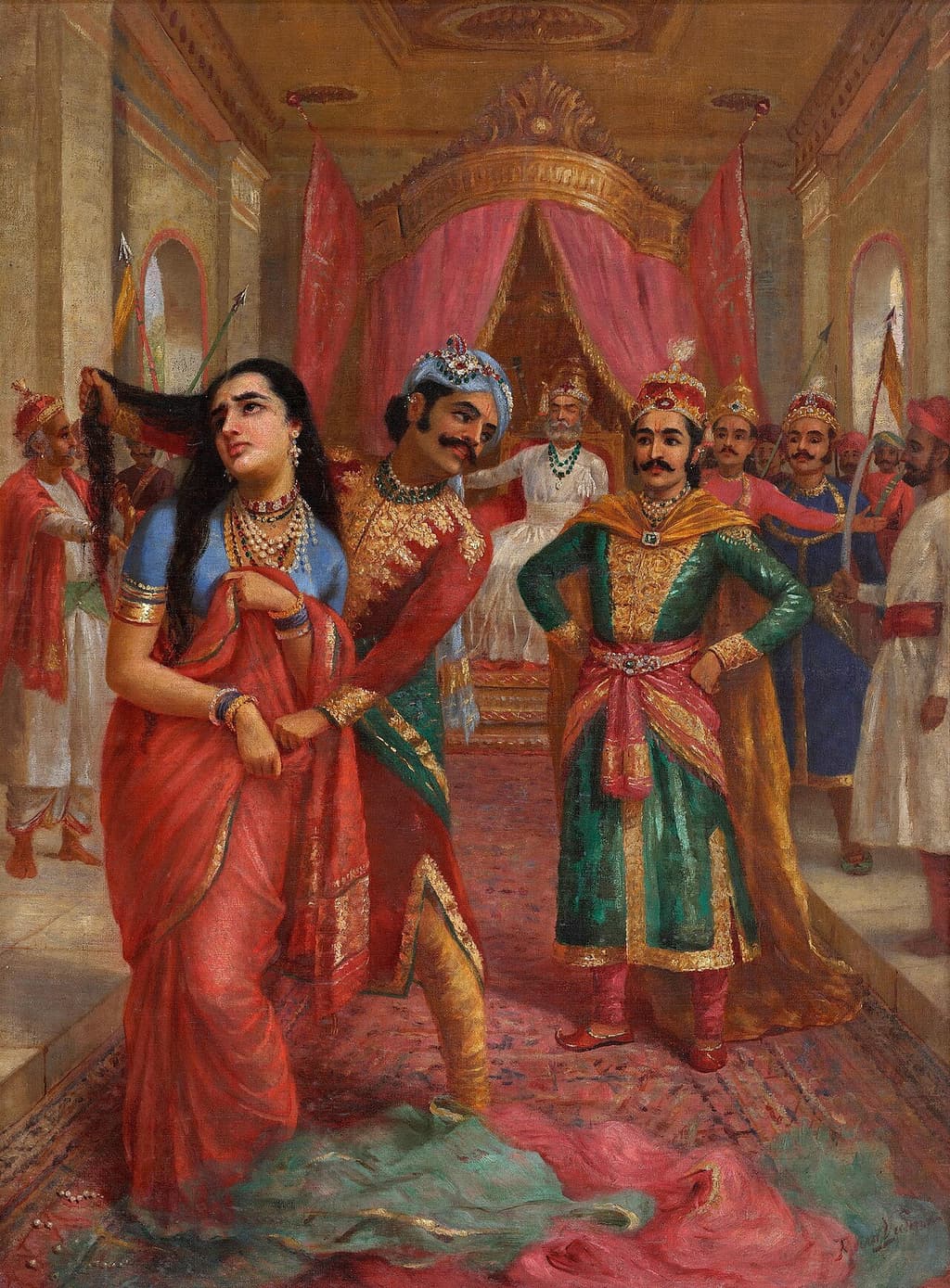
Raja Ravi Varma (d. 1906), Draupadi Vastraharan, c. 1888–1890. Oil on canvas.
Raja Ravi Varma died 1906, so the life-plus-70 term expired in 1977 (death year from the life dates stated on the source page). Licence as recorded on the source page: Public domain. Source record · file on this site
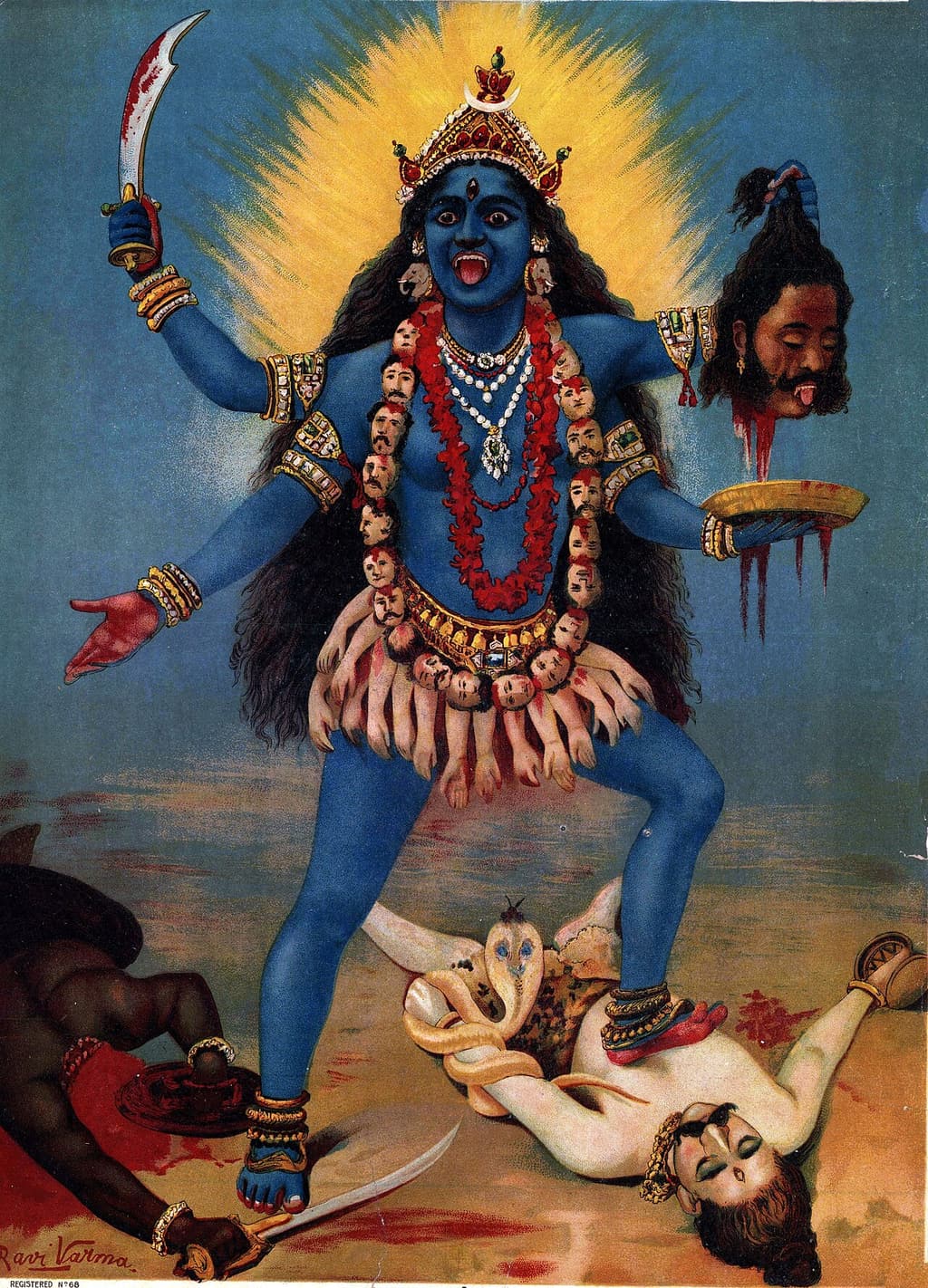
Raja Ravi Varma (d. 1906), Kali Trampling Shiva, c. 1910 printing, after Raja Ravi Varma. Chromolithograph after an oil painting.
Raja Ravi Varma died 1906, so the life-plus-70 term expired in 1977 (death year from the Wikidata record for Raja Ravi Varma, established from another work by the same hand in this set). Licence as recorded on the source page: Public domain. Source record · file on this site
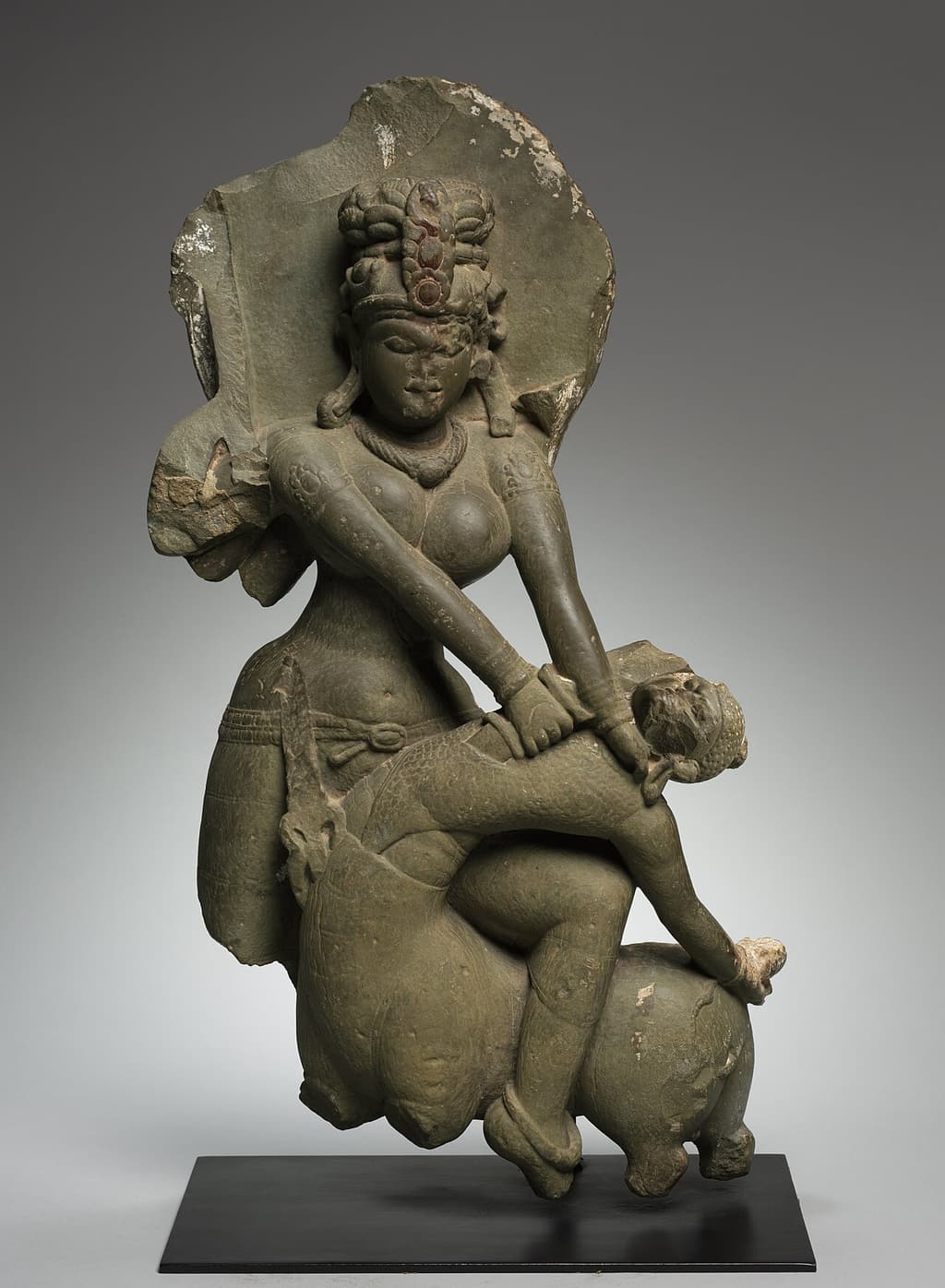
Unknown Indian sculptor, Durga Destroying the Buffalo Demon, c. 800 CE. Carved stone relief. Cleveland Museum of Art.
The relief was carved in India around the ninth century. The photograph is a separate copyrightable work and is used only because the holding institution released it under a CC0 public-domain dedication, which is the licence recorded on the source page. Licence as recorded on the source page: CC0. Source record · file on this site
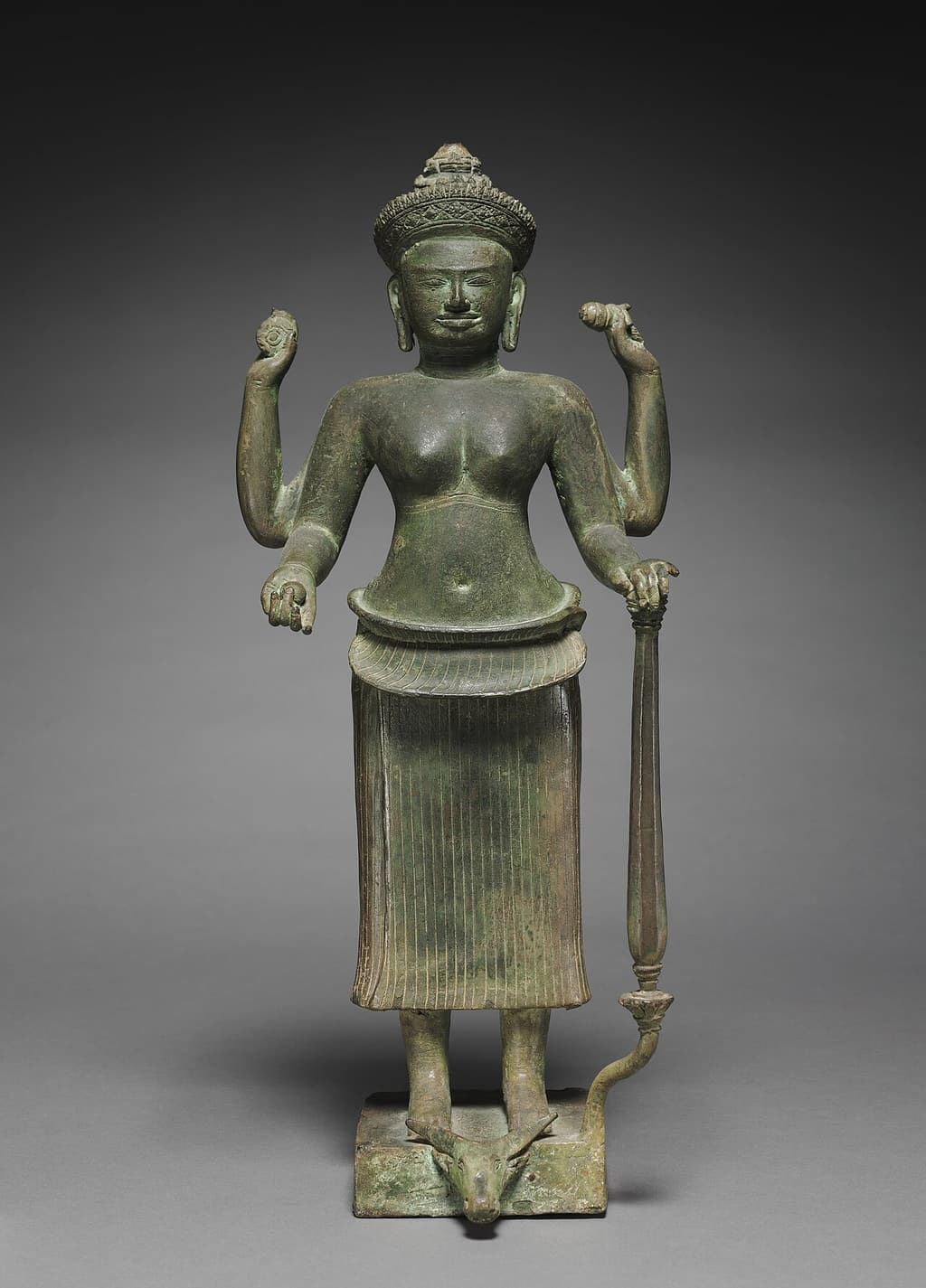
Unknown Indian bronze-caster, Durga as the Slayer of the Buffalo Demon, c. 900 CE. Cast bronze. Cleveland Museum of Art.
The bronze was cast in India around the tenth century. The photograph is a separate copyrightable work and is used only because the holding institution released it under a CC0 public-domain dedication, which is the licence recorded on the source page. Licence as recorded on the source page: CC0. Source record · file on this site
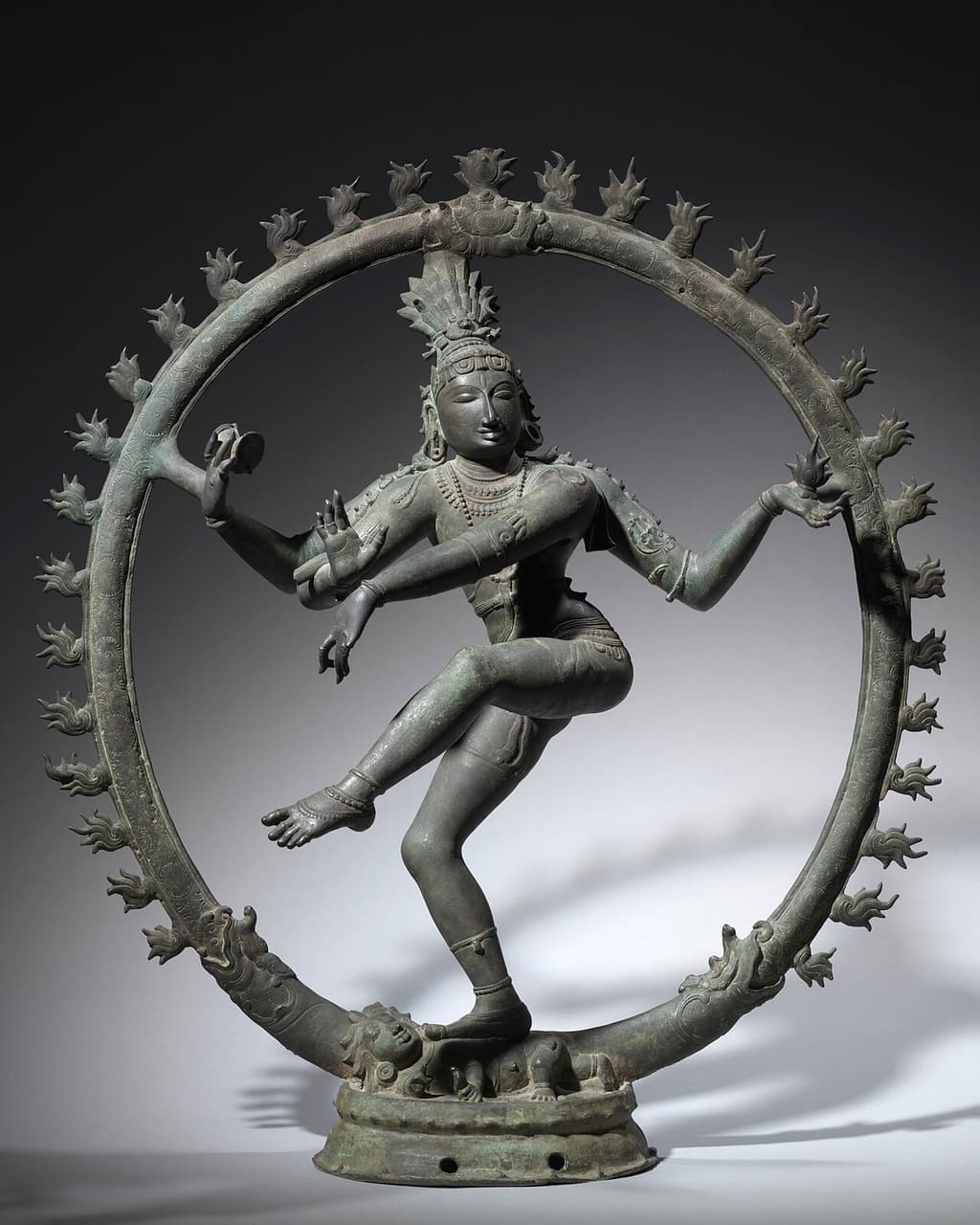
Unknown Chola-period bronze-caster, Nataraja, Shiva as the Lord of Dance, c. 1000 CE. Cast copper alloy, Chola period. Cleveland Museum of Art.
The bronze was cast in southern India around the eleventh century. The photograph is a separate copyrightable work and is used only because the holding institution released it under a CC0 public-domain dedication, which is the licence recorded on the source page. Licence as recorded on the source page: CC0. Source record · file on this site
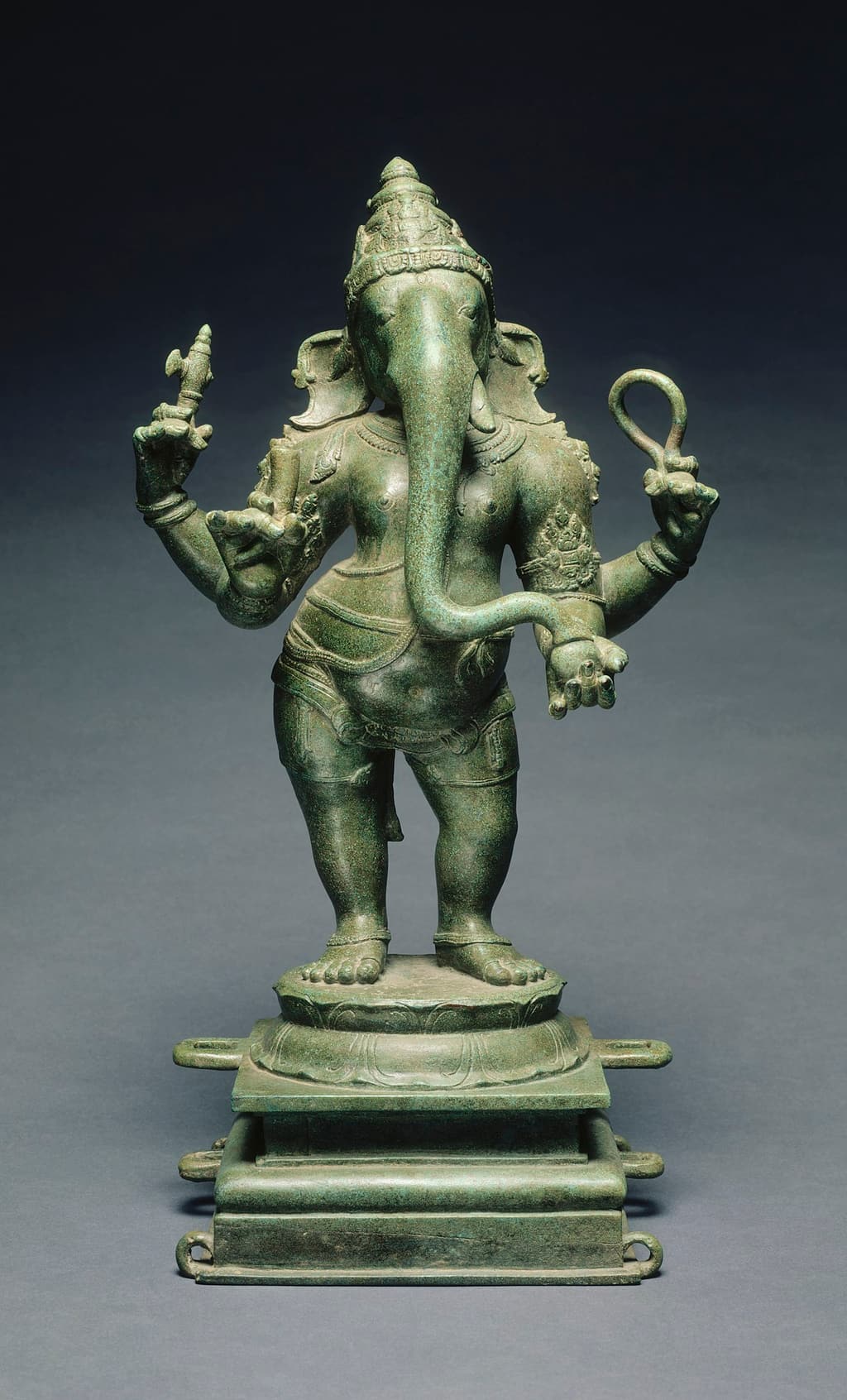
Unknown Indian sculptor, Ganesha, c. 1070 CE. Carved stone. Cleveland Museum of Art.
The sculpture was carved in India in the eleventh century. The photograph is a separate copyrightable work and is used only because the holding institution released it under a CC0 public-domain dedication, which is the licence recorded on the source page. Licence as recorded on the source page: CC0. Source record · file on this site
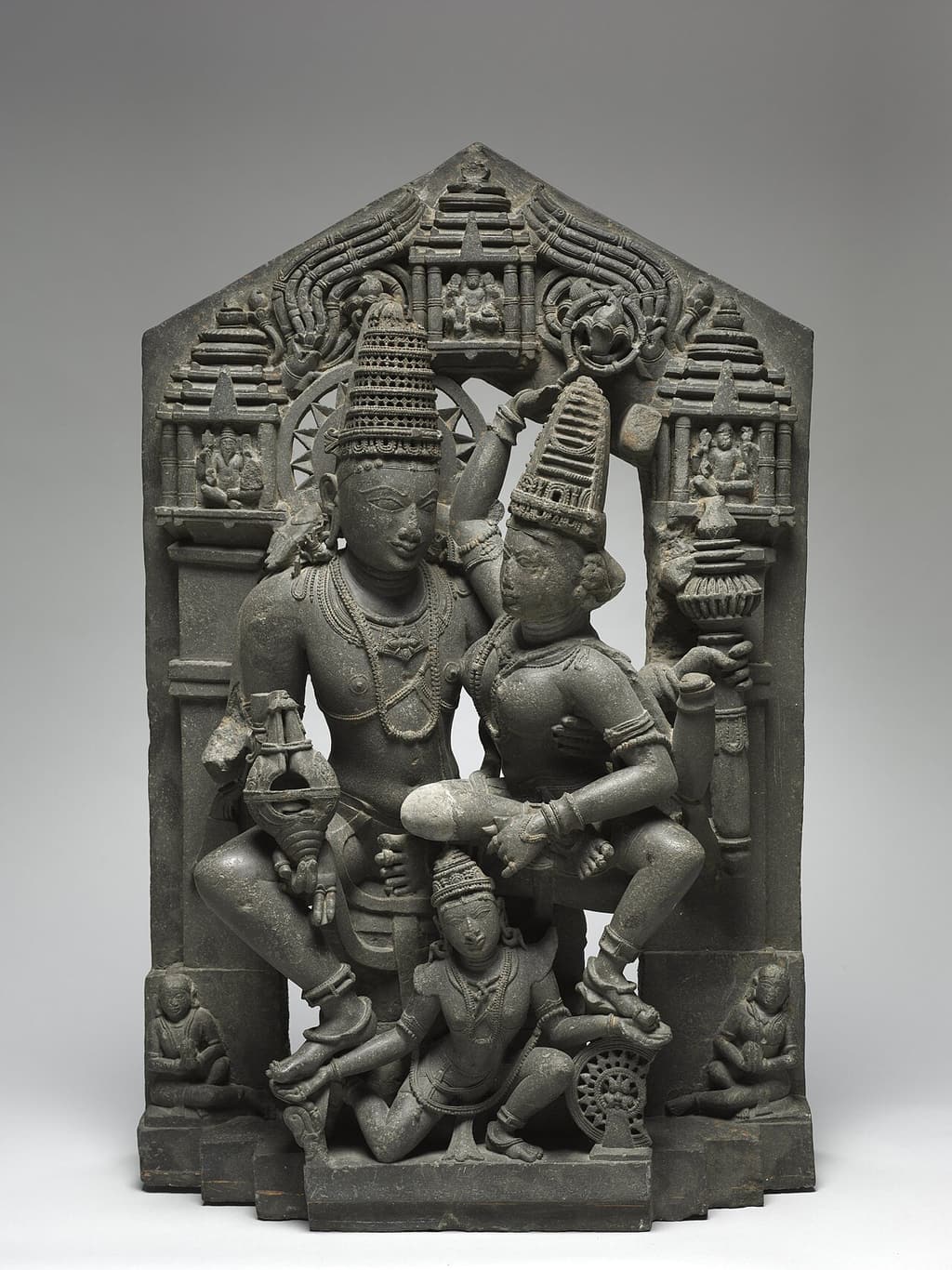
Unknown Indian sculptor, Vishnu and Shri Supported by Garuda, c. 1000 CE. Carved stone. Cleveland Museum of Art.
The sculpture was carved in India around the eleventh century. The photograph is a separate copyrightable work and is used only because the holding institution released it under a CC0 public-domain dedication, which is the licence recorded on the source page. Licence as recorded on the source page: CC0. Source record · file on this site
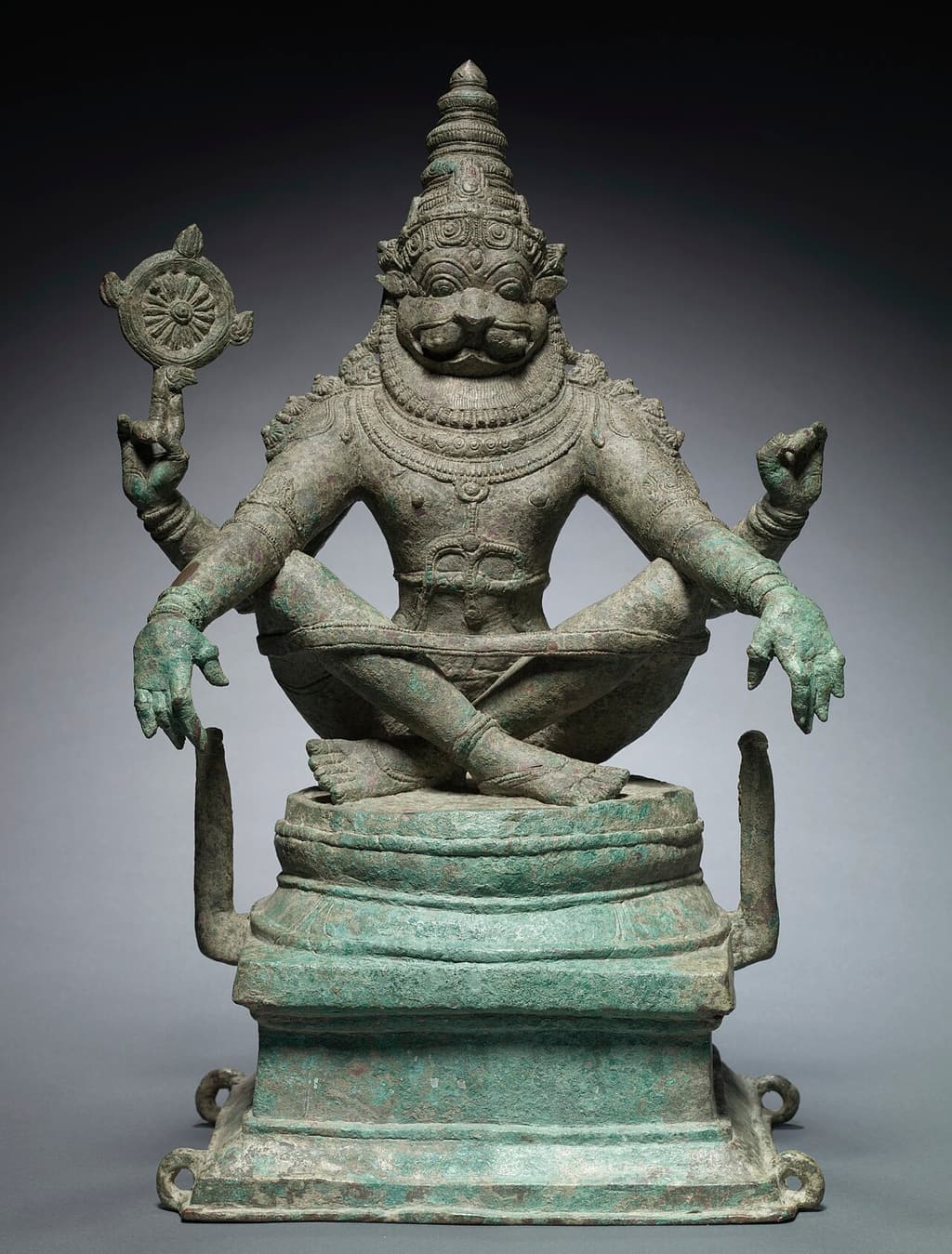
Unknown Indian sculptor, Yoga Narashimha, Vishnu in his Man-Lion Avatar, c. 1250 CE. Carved stone. Cleveland Museum of Art.
The sculpture was carved in India around the thirteenth century. The photograph is a separate copyrightable work and is used only because the holding institution released it under a CC0 public-domain dedication, which is the licence recorded on the source page. Licence as recorded on the source page: CC0. Source record · file on this site
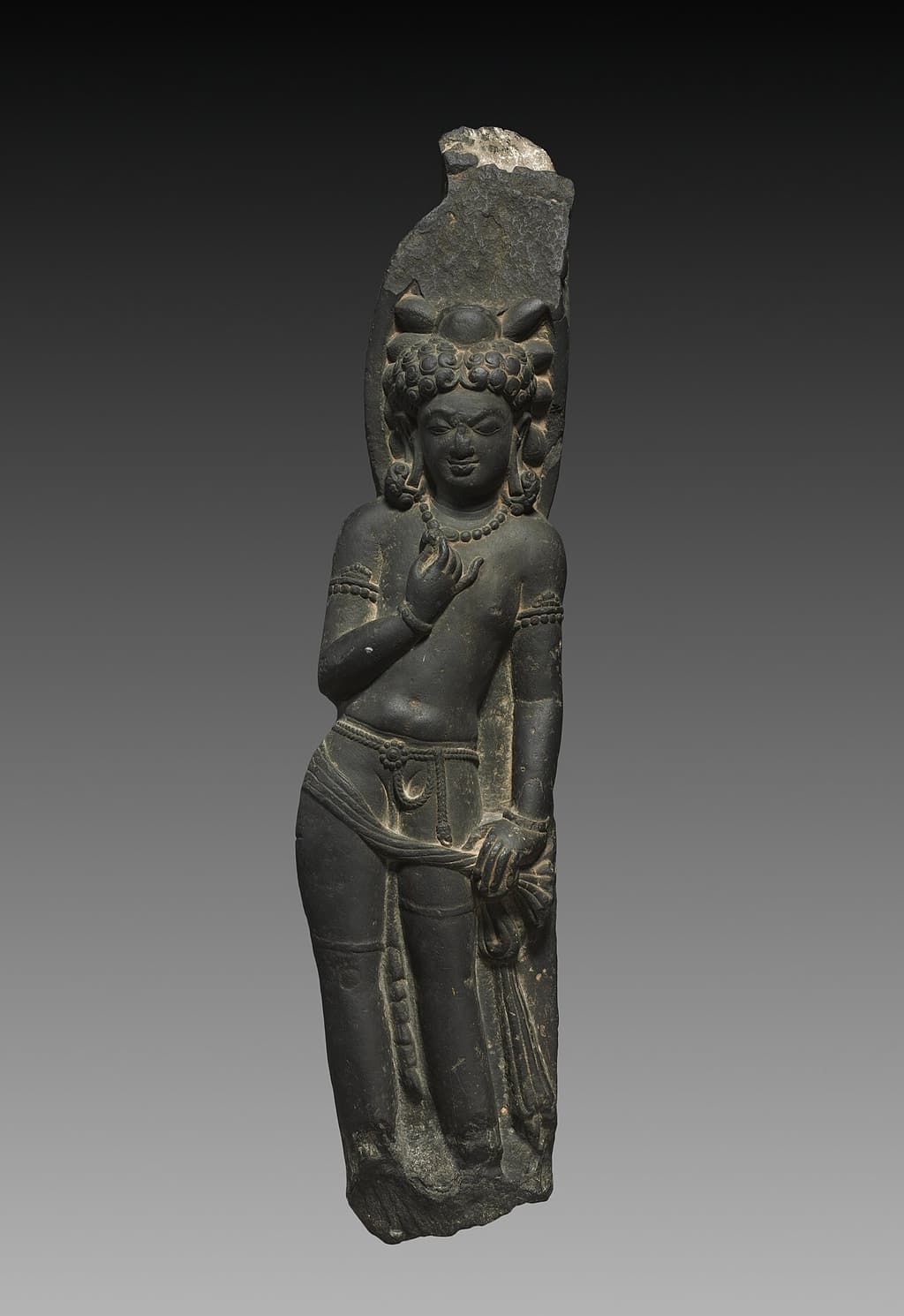
Unknown Indian sculptor, Personification of the Discus, c. 670 CE. Carved stone. Cleveland Museum of Art.
The sculpture was carved in India in the seventh century. The photograph is a separate copyrightable work and is used only because the holding institution released it under a CC0 public-domain dedication, which is the licence recorded on the source page. Licence as recorded on the source page: CC0. Source record · file on this site







.jpg)










Mesopotamian mythology
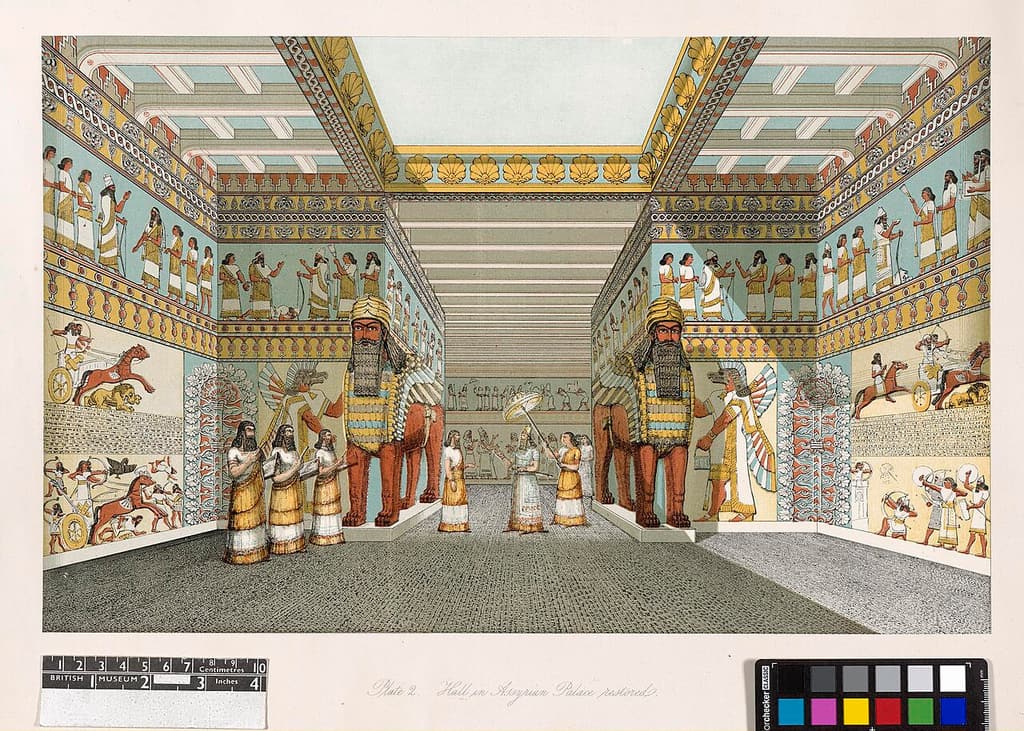
After Austen Henry Layard and George Scharf, Plate from The Monuments of Nineveh, 1849. Lithographed excavation plate after on-site drawings. British Museum.
Created in 1849 and published long before 1929, so United States copyright has expired, and no life-plus-70 term can still be running for a work of that date. The source record carries an explicit public-domain tag. Attribution taken verbatim from the file record, which credits the plate to Layard after Scharf's on-site drawings. Licence as recorded on the source page: Public domain. Source record · file on this site
.jpg)