Italy and the Roman world
Roman mythology
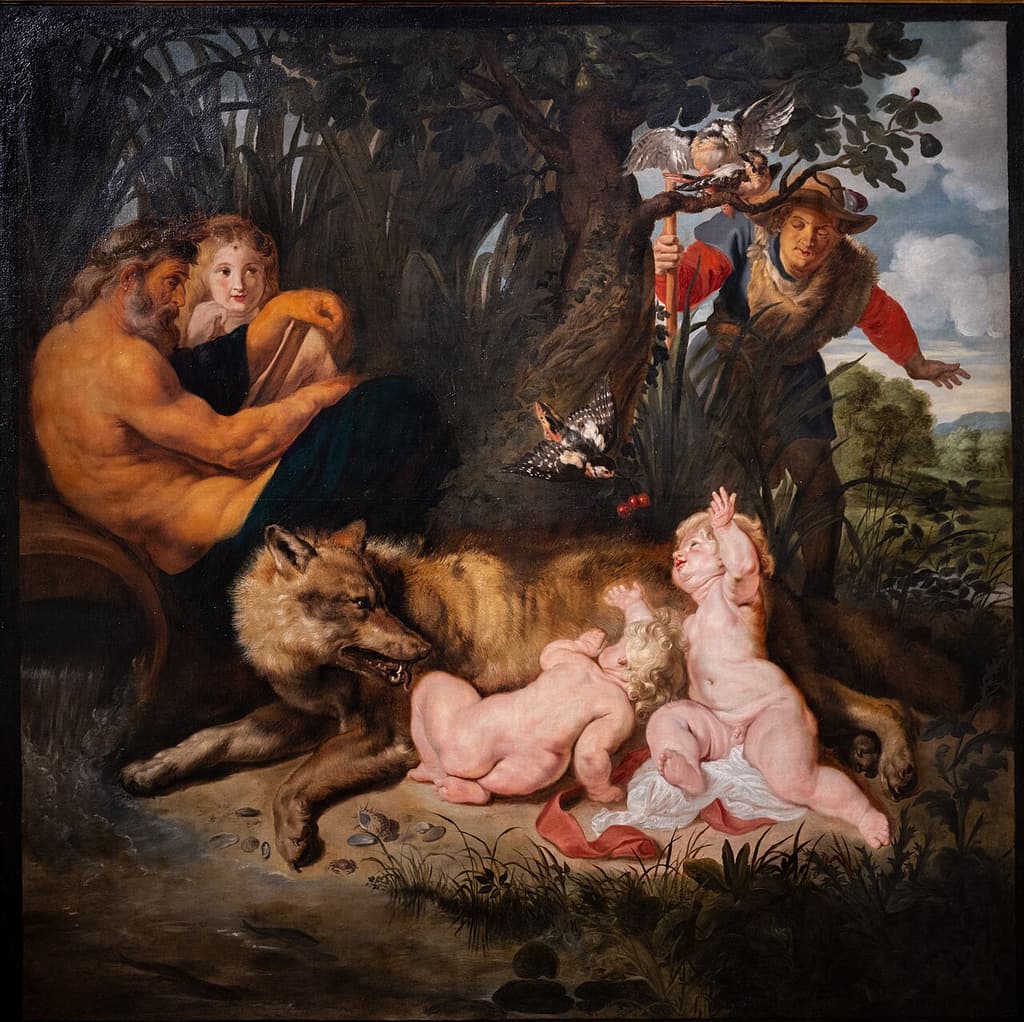
Roman mythology has a reputation problem: everyone has been told it is Greek mythology with the names changed. That belief is wrong in an interesting way, and getting it right transforms how the whole tradition reads.
What Rome had, and Greece did not, was a religion of procedure. Roman religious life was overwhelmingly about doing the right act, in the right words, at the right time, on behalf of the state — and if a syllable was fluffed, the rite was repeated from the beginning. Narrative myth was not what this religion ran on. When Rome met Greek culture and found it had comparatively few stories about its own gods, it borrowed them wholesale, and educated Romans from the third century BCE onward wrote about Jupiter using Zeus' biography. What did not get borrowed, because it could not be, was the machinery of Roman cult itself, and that machinery is where the genuinely Roman material lives.
The gods who were never Greek
The clearest evidence that Rome had its own religious tradition is the set of gods with no Greek counterpart at all.
- Janus, two-faced god of doorways, beginnings and transitions, whose temple gates stood open in war and shut in peace — closed a famous handful of times in Rome's entire history. He is invoked first in any list of gods, before Jupiter.
- Vesta, the hearth-flame of the state, served by the six Vestal Virgins, whose thirty-year vow of chastity was enforced with live burial. There is no cult statue: the goddess is the fire, and letting it go out was a state emergency.
- Terminus, the god of boundary stones, whose shrine was inside the Capitoline temple because when Jupiter's temple was built, Terminus refused to be moved — which Romans read as a promise that their borders would never retreat.
- The Lares and Penates, household spirits of place and of the store cupboard, receiving daily offerings at a shrine in the home. This, not the Capitol, was the religion most Romans practised most days.
- Quirinus, an archaic god of the assembled citizen body, third in the oldest triad with Jupiter and Mars, and so faded by the late Republic that Romans themselves were unsure what he had been.
Beside these sit the numina — powers without personality or myth, presiding over impossibly specific functions: the god of the door-hinge, the goddess of the child's first steps. Nothing in Greek religion resembles this, and it is the oldest layer of Roman practice.
Equations that fit and equations that do not
The interpretatio Romana — identifying a foreign god with a Roman one — was routine imperial practice, applied to Gaulish, Germanic, Egyptian and Syrian gods as readily as to Greek ones. Some equations were close. Others merely papered over a real difference:
- Jupiter and Zeus genuinely share an inherited Indo-European sky-father. What Rome added is institutional: a triad, the Capitoline temple, a place in every treaty and triumph, and a priesthood — while the narrative attached to him was borrowed almost wholesale.
- Mars and Ares are the least defensible pairing on the list. Ares was disliked by the Greeks who wrote about him; Mars was the father of Romulus, the guarantor of Rome's existence, second only to Jupiter, with an agricultural aspect in the oldest surviving Latin prayers. The two are set against each other in detail on the Ares and Mars comparison.
- Venus absorbed Aphrodite but arrived with functions — persuasion, civic good fortune, and above all ancestry, since the Julian family claimed descent from her through Aeneas — that made her a dynastic political asset in a way Aphrodite never was.
- Minerva takes Athena's wisdom and craft but not her role as a city's owner; she sits in the Capitoline triad as a member, not a patron.
- Saturn is equated with Cronus, yet his December festival, the Saturnalia, with its role reversals, gift-giving and licensed disorder, is entirely Italic and has no Greek equivalent.
The full pantheon comparison works through the whole set, including the pairs where the equation is essentially a translator's convenience.
Rome's real myths are about Rome
Where Greek myth is cosmological, the distinctively Roman stories are historical and political. They explain not how the world began but why Rome deserves to rule it, and they are told as history rather than as legend.
Virgil's Aeneid, written under Augustus, takes a minor Trojan from the Iliad and makes him the ancestor of Rome — connecting the city to the Homeric world, giving the Julian family a divine pedigree through Venus, and constructing a hero whose defining quality, pietas, is dutifulness rather than Greek heroic glory. Livy's early books give the twins and the she-wolf, the rape of the Sabine women, the Horatii, Lucretia and the expulsion of the kings: foundation stories that are moral instruction about Roman virtue in narrative form. Ovid's Fasti walks through the Roman calendar month by month explaining the origin of each festival, and is the single best surviving source for what the rites actually were, even where its explanations are guesses.
How the religion was run
Roman public religion was a department of the state, staffed by magistrates rather than a separate priesthood. Colleges of pontifices oversaw the calendar and the law of sacred things; augurs read the sky for whether the gods approved a proposed action, which could halt an election or an assembly; the haruspices, using an Etruscan technique, read the entrails of sacrificial animals. Nothing of public consequence — no battle, no vote, no founding — happened without the auspices being taken. The Sibylline Books, consulted in emergencies, repeatedly recommended importing a foreign cult, which is how Rome acquired the Magna Mater from Anatolia in 204 BCE and Asclepius from Epidaurus before that.
The Etruscan inheritance runs deeper than the haruspices. Rome's last kings were Etruscan, the Capitoline triad's temple was built on an Etruscan plan, and Etruscan gods — Tinia, Uni, Menrva — stand behind Jupiter, Juno and Minerva at least as directly as any Greek influence.
The imperial cult, and the mystery religions
From Augustus onward, the emperor's genius received offerings during his life and the senate voted him divine after his death — a political instrument as much as a theology, and one that made refusal a treasonable act rather than a theological disagreement, which is precisely the trap Christians and Jews found themselves in.
Meanwhile the empire's roads carried other religions in. Mithras, worshipped in windowless underground chambers by an all-male initiate hierarchy, is attested almost entirely by archaeology — hundreds of temples, no scripture at all. Isis arrived from Egypt, Cybele from Anatolia, Sol Invictus from Syria. By the third century CE a Roman soldier might be initiated into two or three of them.
The calendar was the religion
Rome's year was a grid of named days on which specific things had to happen, and the festivals preserve archaic practice that no myth explains. At the Lupercalia in February, young men ran through the city striking bystanders with strips of goatskin, which women sought out for fertility; nobody in antiquity could agree what god it belonged to. At the Parentalia the family visited the tombs and ate with the dead. At the Lemuria the head of the household walked through the house at midnight barefoot, spitting black beans over his shoulder and telling the ancestral ghosts to depart, nine times, without looking back. The Robigalia asked a god of wheat rust not to blight the crop. These rites are older than Rome's contact with Greece, they have no narrative attached, and they are what Roman religion looked like from the inside.
Four things people get wrong
- "Roman gods are Greek gods renamed." They were equated, deliberately and late, by writers who found Greek myth useful. The cults underneath are separate and often older.
- "Romans stopped believing and just went through the motions." This is Cicero's philosophical scepticism mistaken for public opinion. Attendance, dedications, vows fulfilled and curse tablets all say otherwise, right through the empire.
- "The gods of the Aeneid are the Roman religion." Virgil is writing literary epic in a Greek form for a Augustan political purpose. Ovid's Fasti and the surviving priestly records are far better evidence for actual practice.
- "Christianity replaced a dying paganism." Roman religion in the third century CE was crowded and vigorous, with imported cults thriving. What changed was imperial policy, not exhaustion.
Where to start
Read Book 2 of the Aeneid, the fall of Troy told by a survivor who watched his city burn, which needs no background at all to work and is the best single argument that Latin epic is not a warmed-over copy of anything. Then Livy's first book for the foundation legends. Then Ovid's Fasti for the actual religion — it is the volume where Roman gods stop looking like Greek ones in Latin dress.
One warning about translations: older English versions of Ovid and Virgil silently substitute Greek names for Roman ones, so a reader can finish the Metamorphoses without noticing it was written in Latin about Jupiter. Check which convention your edition uses before drawing conclusions from it.
The Roman family tree shows both the inherited Greek genealogies and the specifically Roman descent from Venus through Aeneas to the Julii. The figures written up so far are below.
gods
- Jupiterthe sky, the state, oaths
- Junomarriage, childbirth, the state's women
- Minervacrafts, trade guilds, strategy
- Marswar, agriculture and boundaries, the Roman people's ancestry
- Venusdesire, persuasion, the Julian ancestry
- Vestathe hearth of the state, the sacred fire, chastity as public duty
- Janusdoorways, beginnings, transitions
- Quirinusthe Roman citizen body, the deified Romulus, peaceful assembly
- Saturnsowing, the golden age, the treasury
- Neptunefresh water first, then the sea, horses
- Plutothe dead, underground wealth
- Ceresgrain, the plebeian order, law
- Dianathe hunt, the moon, the wild grove
- Mercurycommerce, profit, messages
- Vulcandestructive fire, forges, volcanoes
- Bacchuswine, freedom, fertility
- Bellonawar, the declaration of war, frenzy
- Fortunachance, fate, the outcome of ventures
- Terminusboundary stones, property limits, the immovable
- Faunuswoodland, flocks, prophecy in dreams
- Silvanuswoods, field boundaries, uncultivated land
- the Laresthe household, the crossroads, the family's continuity
- the Penatesthe storeroom, the family's provision, the state's continuity
- the Geniusthe personal divine double, generative power, the emperor's cult
- Floraflowering, spring, the crops in blossom
- Pomonaorchard fruit, grafting, cultivated abundance
- Cupiddesire, the arrow's wound